- SMALL ORDERS FOR STANDARD ITEMS. Contact Now
- OUTDOOR COOLING SOLUTIONS, MADE IN‑HOUSE. Contact Now
- COOLER BOXES THAT FIT REAL OUTDOOR LIFE. Contact Now

 LANGUAGE
 日本語
 Español
 عربى

Content
- 1 Compact Cooling for Everyday Mobility
- 2 Core Product Specifications
- 3 Food-Safe Interior Construction
- 4 Vacuum-Insulated Lid and EPS Insulation
- 5 Capacity for Cans, Snacks, and Personal Meals
- 6 Dual Carrying Design for Flexible Transport
- 7 Secure Closure and Spill Protection
- 8 Advantages Compared with Competing Cooler Formats
- 9 Applications Across Multiple Markets
- 10 Manufacturing Capabilities and Production Strength
- 11 Research, Development, and Product Improvement
- 12 OEM and ODM Customization Options
- 13 Bulk Packing and Distribution Considerations
- 14 Quality Management and Buyer Confidence
- 15 How to Use the Cooler Efficiently
- 16 Care, Cleaning, and Long-Term Use
- 17 Why This Product Offers Strong Commercial Potential
- 18 Q&A
- 18.1 What is the capacity of the cooler?
- 18.2 What are the product dimensions?
- 18.3 Is the inner liner suitable for direct food contact?
- 18.4 How long can the cooler keep items cold?
- 18.5 Does the cooler require electricity?
- 18.6 Can it be carried while hiking?
- 18.7 What colors are available?
- 18.8 Does the lid lock securely?
- 18.9 Is the cooler suitable for long camping trips?
- 18.10 Can the product be customized?
- 18.11 How many units are packed in one carton?
- 18.12 What manufacturing equipment supports production?
- 18.13 What should buyers check before placing a bulk order?
- 19 Conclusion
- 20 References
- 21 Product: 6L Mini Insulated Cooler with Carry Strap for Hiking
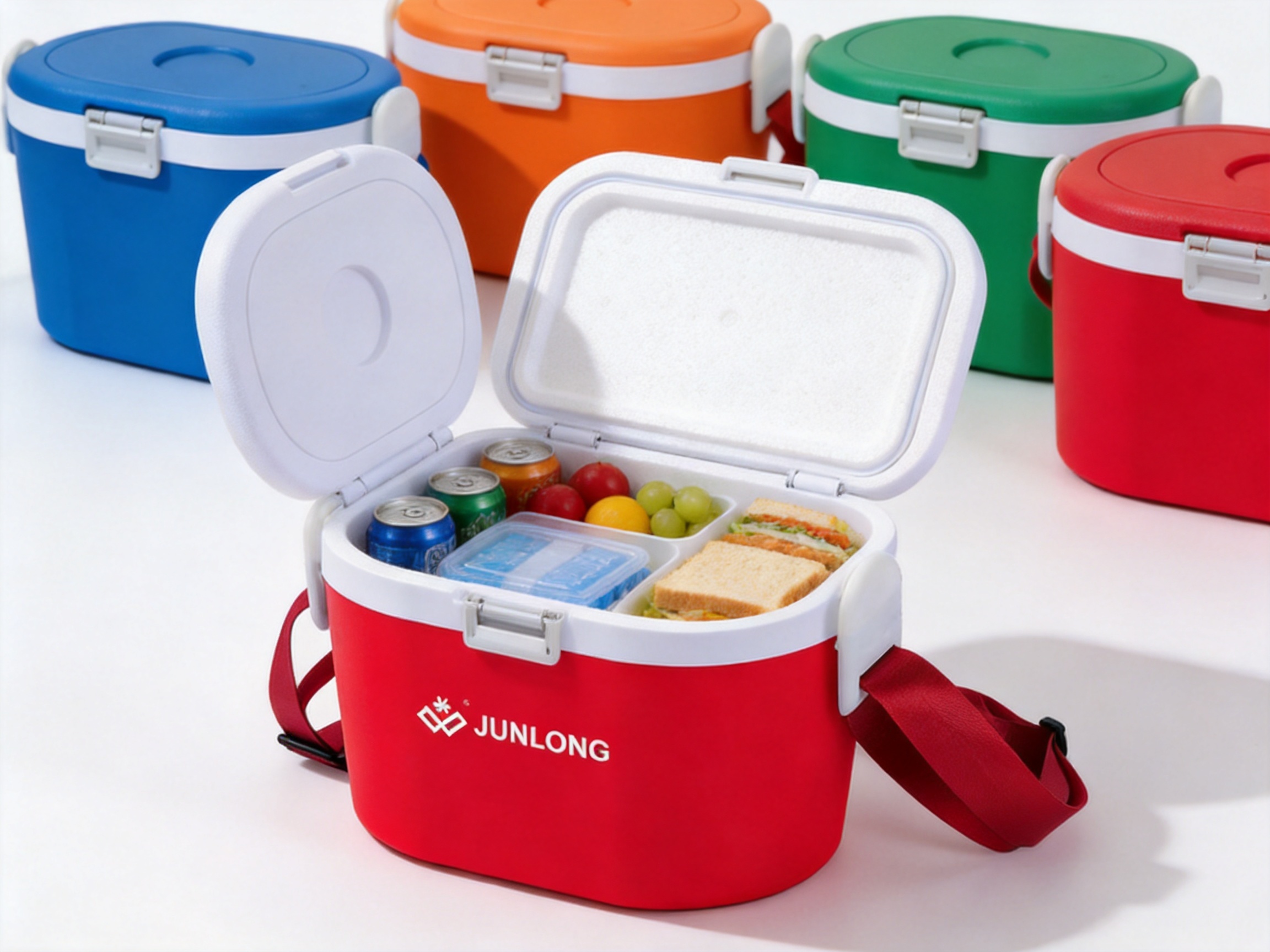
Portable cooling has become an important part of modern outdoor living. A short hike, school lunch, office break, beach visit, family picnic, fishing trip, or day excursion may only last a few hours, but food and beverages still need protection from heat, sunlight, and temperature changes. Large coolers can provide substantial storage, yet they are often inconvenient when only a small quantity of food or drinks is required. A compact insulated cooler offers a practical alternative by combining thermal protection, easy handling, and efficient use of space.
The 6L Mini Insulated Cooler with Carry Strap for Hiking is designed for users who value portability without giving up dependable cooling performance. Its compact 310 × 215 × 200mm structure is small enough for everyday transport while offering sufficient capacity for snacks, meals, and several beverage cans. With an insulated body, a vacuum-insulated lid, a food-grade inner liner, a secure locking design, and both shoulder-strap and hand-carry options, it is suited to a wide variety of daily and outdoor applications.
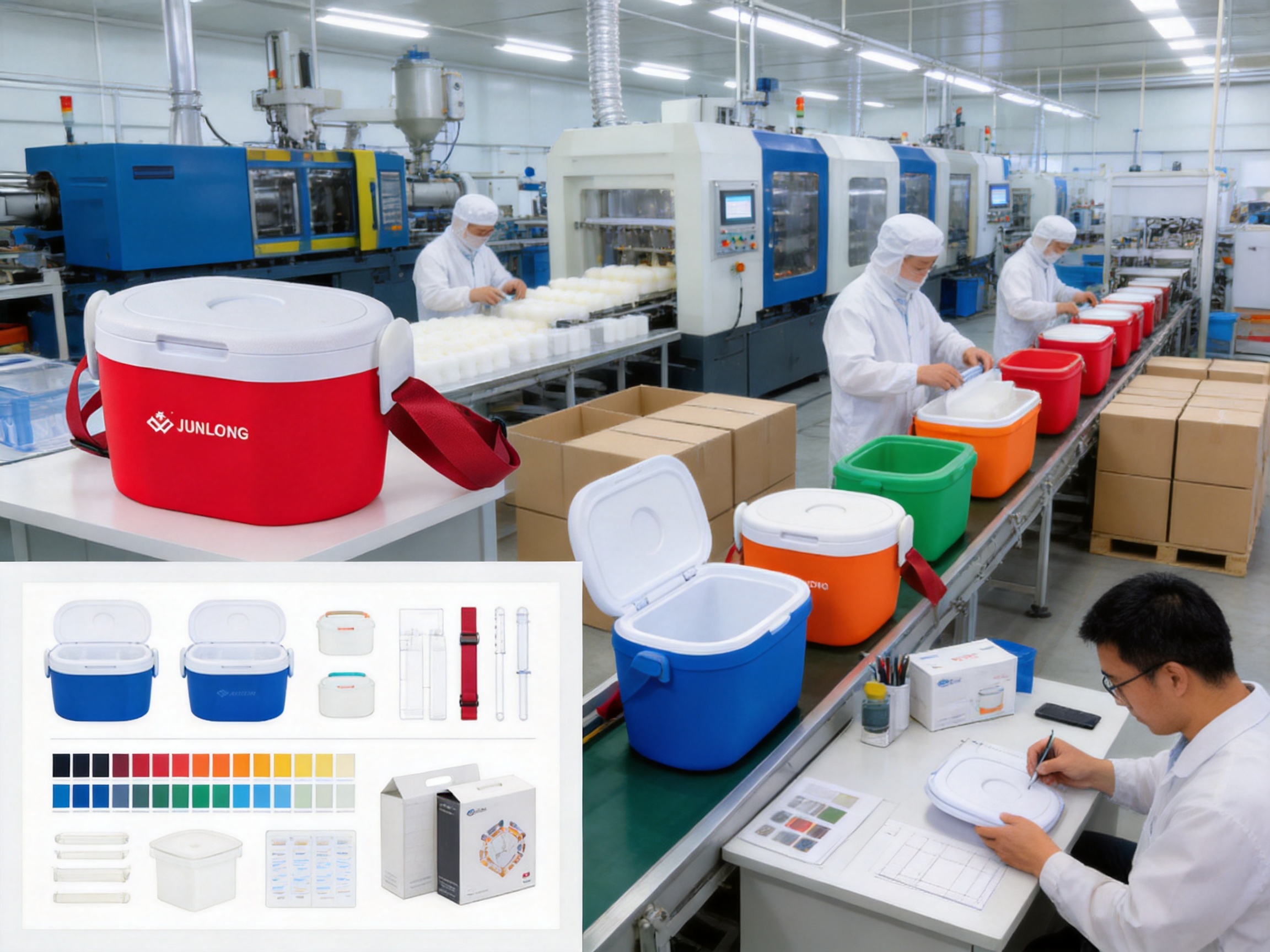
This cooler is also the result of an organized manufacturing system operated by an experienced outdoor products manufacturer. The production process combines product development, injection molding, blow molding, foaming equipment, quality management, and customization services. This combination allows buyers to source a finished portable cooler while also receiving support for color, logo, packaging, product development, and OEM or ODM requirements.
Compact Cooling for Everyday Mobility
The key advantage of a small cooler is that it matches the storage needs of short trips. Many users do not need a large chest cooler capable of holding food for several days. They need a compact container for a lunch, a few drinks, fresh fruit, medicine, snacks, or a small meal. A 6L capacity provides enough internal space for personal use or for a small group sharing refreshments during a short activity.
The product measures 310 × 215 × 200mm, making it relatively easy to place in a car, on a boat, under a desk, beside a picnic blanket, or inside a larger travel bag. Its rectangular structure makes the available volume practical because it can accommodate cans, food boxes, sandwich containers, and small bottles more efficiently than irregularly shaped bags.
Compact dimensions also reduce the burden of transportation. A cooler that is too large may be difficult to carry when walking between locations. It may occupy valuable trunk space and become inconvenient to store after use. The smaller format of this model is intended for users who want cooling capacity without the excessive size and weight of a full-size outdoor cooler.
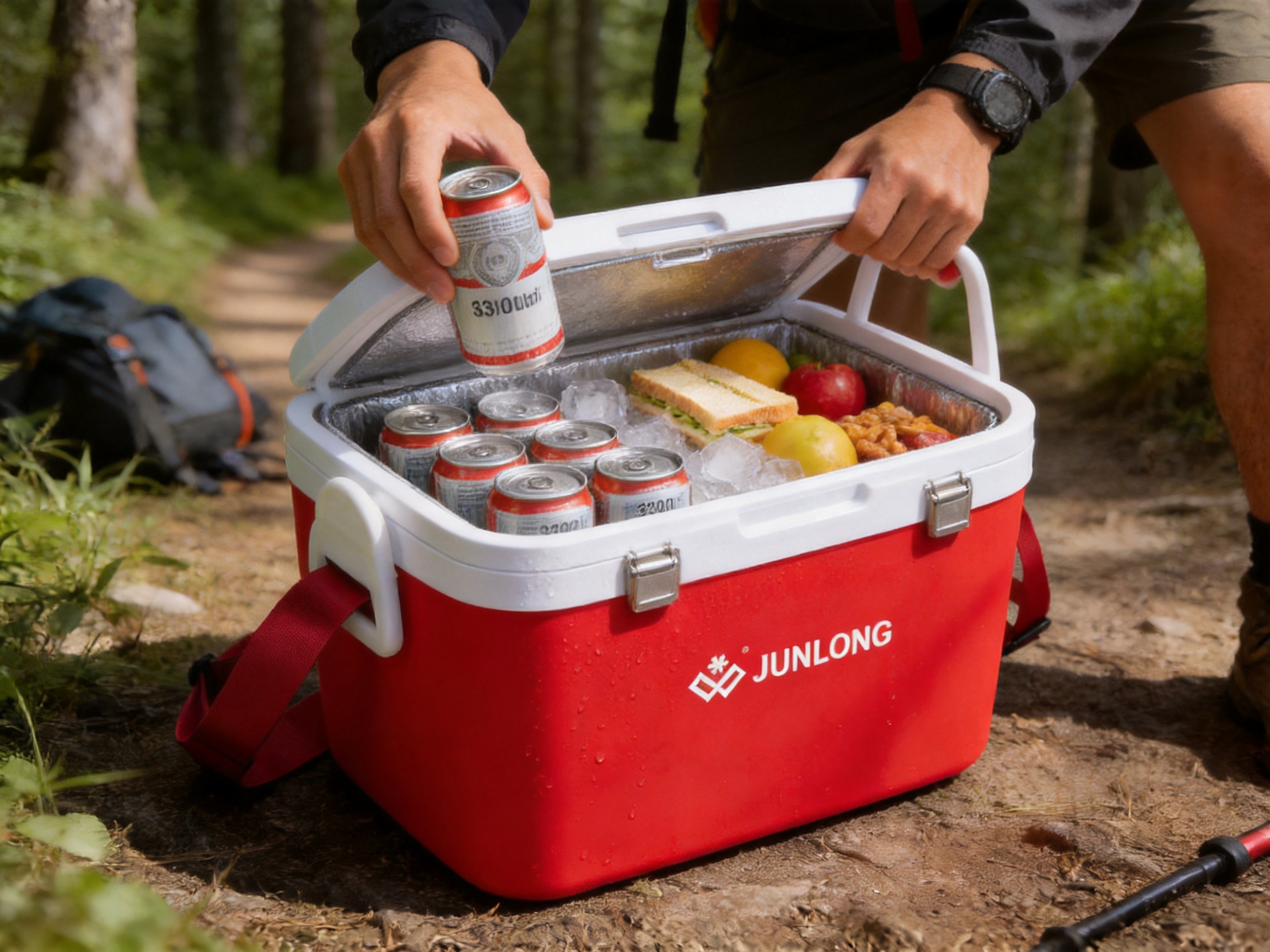
The cooler is especially suitable for short-distance hiking. During a day hike, users generally need a limited quantity of food and beverages, while every additional item contributes to the total load. A compact insulated box allows essential refreshments to be organized in one protected container. The detachable adjustable shoulder strap enables hands-free carrying, allowing users to keep both hands available for walking poles, backpacks, equipment, or other outdoor accessories.
Compared with a basic non-insulated plastic container, this cooler provides a dedicated thermal barrier. Compared with a large hard cooler, it offers a more convenient personal format. Compared with a soft cooler bag, its rigid construction can provide better shape retention, easier stacking, and more structured protection for the contents.
Core Product Specifications
| Item | Specification |
|---|---|
| Product type | Portable insulated cooler box |
| Model | JL-B-006BL |
| Capacity | 6 litres |
| Product dimensions | 310 × 215 × 200mm |
| Recommended use | Hiking, picnics, lunches, beach visits, office meals, travel, and short outdoor activities |
| Inner liner | Food-grade PP suitable for direct food contact |
| Insulation structure | EPS insulation in the cooler body with a vacuum-insulated lid design |
| Cooling duration | Up to 48 hours under suitable conditions, depending on ice, ambient temperature, loading, and opening frequency |
| Beverage capacity | Approximately 6–8 cans of 330ml cola |
| Carrying system | Detachable adjustable shoulder strap and handle |
| Available colors | Blue, orange, green, and red |
| Packing quantity | 8 pieces per carton |
| Carton dimensions | 625 × 485 × 430mm |
| Carton gross weight | 7.2kg |
| Carton net weight | 6.2kg |
The specification profile demonstrates that the product is designed for practical commercial use as well as individual ownership. The compact capacity is straightforward for retailers to explain, while the range of colors can support different market preferences and merchandising strategies. The carton configuration of eight units helps distributors plan inventory, warehouse space, and shipment quantities.
For buyers evaluating the product, actual thermal performance will depend on several conditions. The amount and temperature of ice, the initial temperature of the contents, the outside temperature, how often the lid is opened, and whether the cooler is exposed to direct sunlight can all affect the result. The stated 48-hour insulation time should therefore be understood as a performance reference under appropriate test or usage conditions rather than a guarantee that every load will remain at the same temperature in every environment.
Food-Safe Interior Construction
One of the most useful characteristics of the cooler is its food-grade polypropylene inner liner. The inner liner is designed to come into direct contact with food, which is important for users who place sandwiches, fruit, packaged meals, vegetables, or other refreshments inside the container. A suitable liner creates a cleaner and more organized storage environment than placing food directly inside a general-purpose transport box.
Polypropylene is widely used in food-related products because it offers a combination of low weight, durability, cleanability, and resistance to everyday handling. The smooth interior can make it easier to wipe away moisture and food residue after use. This is particularly valuable during outdoor activities, where spills are more likely and access to cleaning facilities may be limited.
The food-grade interior also makes the cooler appropriate for commercial and institutional applications. Retailers may market it for lunches, camping, travel, or refreshments. Schools, offices, event organizers, catering businesses, and promotional product distributors can also consider it when a compact food and beverage container is needed.
Users should still follow normal food safety practices. The inner liner should be cleaned after use, food should be packed in appropriate containers or wrapping, and perishable items should be kept at suitable temperatures. The cooler is a storage and temperature-maintenance product; it does not replace proper refrigeration procedures or safe food-handling practices.
Vacuum-Insulated Lid and EPS Insulation
The product uses a vacuum-insulated lid together with EPS insulation in the body. These components are important because the lid and body must work as one thermal system. If the lid fits poorly, warm air can enter and cooled air can escape, reducing the effectiveness of the insulation. A structured locking lid helps close the opening and supports more consistent temperature control.
EPS, or expanded polystyrene, is commonly used in insulated products because it contains air-filled cells that slow heat transfer. In a cooler box, the insulating layer separates the internal storage area from the surrounding environment. This helps slow the warming process when ice or chilled goods are placed inside.
The vacuum-insulated lid is intended to provide an additional barrier at one of the most important parts of the cooler. Because the lid is opened whenever items are added or removed, its insulation and closure performance can have a direct effect on overall efficiency. The combination of a rigid lid, insulation, and locking structure creates a more controlled environment than a simple open container.
Thermal performance is also influenced by how the cooler is loaded. Pre-chilling beverages and food, using sufficient ice or cold packs, minimizing empty air space, and keeping the lid closed can help extend cooling time. Placing the cooler in shade or inside a vehicle with temperature control can further reduce heat gain.
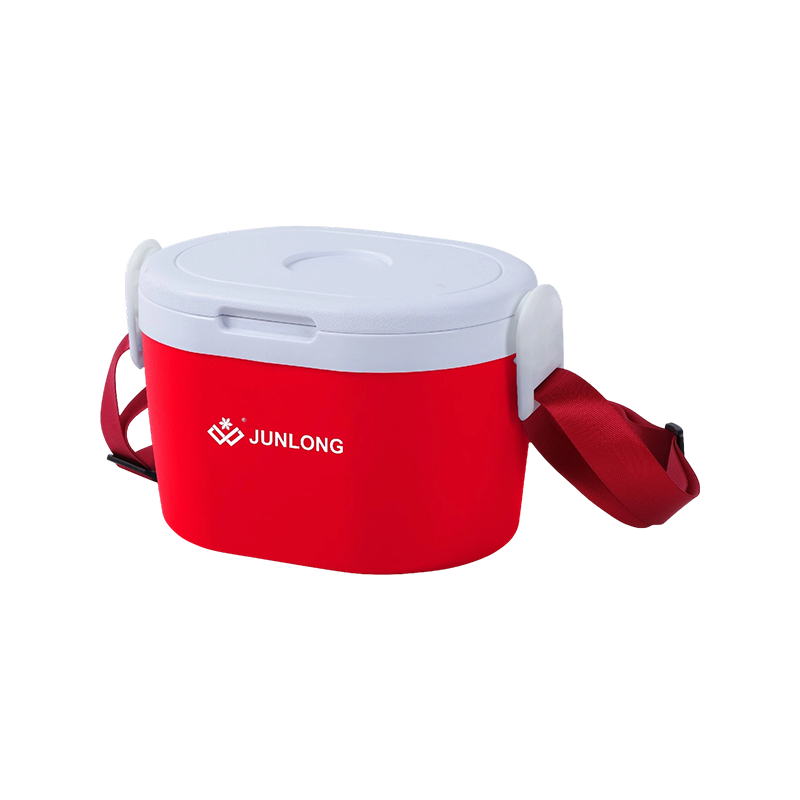
6L Mini Insulated Cooler with Carry Strap for Hiking
Capacity for Cans, Snacks, and Personal Meals
A 6L cooler is compact, but it is not limited to a single beverage. The product can hold approximately 6–8 cans of 330ml cola, depending on the arrangement and the use of ice or cold packs. This gives users a practical supply of refreshments for a personal outing or a small group activity.
Cans are easy to organize because their cylindrical form can be placed in rows. Users can also combine beverages with small snacks, sandwiches, fruit, energy bars, or packaged meals. The best arrangement depends on the intended use. For a lunch, food containers can be placed in the bottom with cold packs around them. For beverages, cans can be grouped together to maximize the available space.
The cooler can also be useful for non-food applications that require short-term temperature protection. Depending on applicable safety requirements, users may transport certain personal-care products, temperature-sensitive supplies, or small quantities of specialty goods. Any regulated medical or laboratory material should be packed according to its specific storage requirements and should not be assumed to remain within a required temperature range simply because it is placed in an insulated container.
Because the cooler is relatively small, it encourages users to pack only what they need. This can improve organization and reduce unnecessary carrying weight. A smaller container is also easier to clean, easier to place in a refrigerator before an outing, and easier to store between uses.
Dual Carrying Design for Flexible Transport
Portability is one of the central strengths of this model. The dual carrying design includes a shoulder strap and a handle, allowing users to select the most suitable carrying method. The adjustable strap can be used for hands-free transport, while the handle is convenient for quick movement over short distances.
A detachable shoulder strap is particularly useful for hiking and walking. Users can position the cooler across the body or over one shoulder, depending on personal preference. The adjustable structure helps accommodate different body sizes and clothing layers. When the strap is not required, it can be removed to reduce clutter during storage or when the cooler is being carried by hand.
The handle provides another level of convenience for activities such as moving the cooler from a vehicle to a picnic table, carrying it from an office kitchen to a desk, or transporting it from a hotel room to a beach area. Offering two carrying options makes the product more adaptable than a container designed only with fixed side handles or only with a shoulder strap.
When the cooler is fully loaded, users should carry it in a way that keeps the lid upright and avoids excessive swinging. The strap and handle should be inspected regularly for visible wear, especially if the cooler is used frequently or transported over rough ground.
Secure Closure and Spill Protection
A portable cooler must do more than maintain temperature. It should also help keep the contents inside the container during transportation. The secure locking lid is designed to reduce accidental opening and help prevent spills when the cooler is moved from one place to another.
A firm closure can be valuable during travel because coolers may be placed in car trunks, on boat decks, beside camping equipment, or under tables. Sudden movement can cause cans and food containers to shift. A properly closed lid helps keep the contents contained and protects the interior from unnecessary exposure to warm air.
The locking design also supports better thermal management. Every time a cooler is opened, warm air enters and cooled air leaves. A lid that closes securely can help maintain the internal environment between uses. Users can improve this effect by opening the cooler only when necessary and closing it promptly after removing or adding items.
Although the product is designed to help prevent spills, it should not be treated as a pressure-sealed container for liquids. Bottles, food boxes, and drink cans should be closed properly before being placed inside. The cooler should be kept upright when possible, particularly when it contains melted ice or liquid-rich food.
Advantages Compared with Competing Cooler Formats
Compared with Soft Cooler Bags
Soft cooler bags are flexible and often lightweight, but their shape can collapse when empty or when other objects are placed on top. A rigid cooler box offers more stable internal dimensions, which can make packing easier. The rigid outer structure also provides a degree of protection for delicate food containers and cans.
A hard-sided cooler can be wiped clean more easily after a spill, while some fabric bags may require more careful cleaning and drying. The structured lid and body can also be more suitable for stacking during storage or transport. For customers who want the convenience of a bag but prefer the protection of a box, a compact cooler with a shoulder strap provides a useful compromise.
Compared with Large Family Coolers
Large coolers are appropriate for extended camping, big gatherings, and high-volume food storage. However, their size can become a disadvantage when the user only needs refreshments for one or two people. They may take up substantial vehicle space, be difficult to lift when full, and require more ice than necessary.
The 6L format is more efficient for short trips. It reduces the temptation to carry excessive supplies and can be transported by one person without the bulk associated with a large chest cooler. It is also easier to place in a compact car, office, classroom, or apartment.
Compared with Basic Plastic Storage Boxes
Ordinary plastic storage boxes may protect food from dirt and physical contact, but they do not necessarily provide insulation. Without an insulated body and lid, the contents can quickly reach the surrounding temperature. The dedicated thermal construction of this cooler gives it a clear functional advantage for chilled food and beverages.
The product also integrates carrying features, a food-grade liner, and a closing system. Buyers do not need to combine a general storage box with a separate bag or improvised insulation material. The result is a purpose-built product that is easier to use for outdoor cooling.
Compared with Small Refrigerator Units
Electric portable refrigerators can offer active cooling, but they usually require a power source, cables, additional operating space, and higher purchase and maintenance costs. They can also be heavier and less convenient for short outings. A passive insulated cooler does not require electricity, making it suitable for hiking, parks, beaches, boats, and locations without convenient power access.
For many users, the simplicity of adding ice or cold packs is an advantage. The cooler can be prepared quickly and used immediately without connecting it to a vehicle or battery. This makes it a practical solution for everyday outdoor activities where active refrigeration is unnecessary.
Applications Across Multiple Markets
The cooler is suitable for individual consumers, retailers, distributors, hospitality businesses, promotional product suppliers, and outdoor equipment sellers. Its compact format gives it broad appeal because it can be positioned as a personal lunch cooler, a hiking accessory, a beverage carrier, or a small picnic box.
Hiking and Day Trips
Hikers can use the cooler for chilled drinks, sandwiches, fruit, and snacks. The shoulder strap supports hands-free movement, while the compact structure avoids the burden of a large cooler. It is particularly suitable for day hikes where users return the same day and do not need extensive food storage.
Picnics and Beach Visits
For a picnic or beach visit, the cooler can keep beverages and small meals organized in one portable unit. The bright color options can make it easier to identify the cooler among other outdoor equipment. The rigid construction also helps protect contents from being compressed by bags or blankets.
School and Office Lunches
The food-grade inner liner and modest capacity make the product suitable for lunch storage. It can hold a meal, snacks, and a drink without requiring a large insulated bag. Office users may appreciate the structured design because it can be placed under a desk or carried between departments.
Travel and Vehicle Use
During road trips, the cooler can be placed in the passenger area or trunk for convenient access to cold beverages and snacks. Its dimensions are suitable for many vehicle storage areas, although users should measure the available space before purchasing for a specific vehicle compartment.
Small Events and Promotional Programs
Businesses can use compact coolers for outdoor events, employee gifts, seasonal promotions, sporting activities, and branded campaigns. The available color choices and OEM or ODM options create opportunities for visual customization. A practical product that is used repeatedly can provide longer promotional exposure than a disposable giveaway.
Manufacturing Capabilities and Production Strength
The manufacturer behind this product operates an independent factory covering approximately 12,000 square metres and employs more than 100 people. The company integrates product development, production, and sales, allowing it to coordinate several stages of the supply process within one organization.
This integrated structure can be valuable for buyers because it reduces the distance between product design, manufacturing feedback, quality control, and customer communication. When a product requires a change in color, packaging, structure, logo placement, or material specification, an integrated manufacturer can often assess the request more efficiently than a trading organization that depends entirely on external factories.
The production facilities include automatic injection molding machines, blow molding machines, and foaming equipment. These technologies support the manufacture of different types of outdoor cooling and water-storage products. Injection molding is suitable for producing precise plastic components with repeatable dimensions. Blow molding can be used for hollow plastic structures and containers. Foaming equipment supports the creation of insulation layers used to improve thermal performance.
Manufacturing equipment alone does not determine final product quality. Process control, tooling accuracy, material selection, assembly standards, worker training, and inspection procedures all contribute to the result. The company’s quality management system is intended to provide stable production and consistent output for customers in domestic and international markets.
Automatic machinery can improve repeatability by controlling important production parameters. Consistent temperature, pressure, cycle time, and material flow help reduce variation between units. Repeatability is especially important for cooler boxes because the lid, body, liner, strap attachment points, and insulation components must work together accurately.
Foaming processes require careful control because the distribution and structure of the insulating material can influence thermal performance. A well-controlled insulation process helps create a more consistent barrier within the body. Assembly inspection is also necessary to ensure that the lid closes correctly and that components are properly fitted.
Research, Development, and Product Improvement
A dedicated research and development team enables the manufacturer to respond to changing market requirements. Outdoor consumers increasingly look for products that are portable, attractive, easy to clean, durable, and suitable for multiple uses. Retailers and distributors also require products that can be differentiated through color, packaging, capacity, and design.
Product development may begin with a customer drawing, sample, functional requirement, or market concept. The manufacturer can evaluate the proposed structure, material needs, tooling requirements, production feasibility, and target cost. This approach is useful for buyers who want a product that reflects a specific brand identity or regional market preference.
For the 6L cooler, development considerations include the relationship between external dimensions and internal capacity, the balance between insulation thickness and usable space, the placement of the shoulder strap, the security of the lid, and the practical arrangement of the liner. A compact cooler must use its space efficiently because every millimetre affects the final capacity and portability.
Continuous improvement can also focus on user experience. Examples may include making the strap easier to adjust, improving the lid seal, refining the handle shape, simplifying cleaning, strengthening attachment points, or optimizing packaging. Small improvements can make a significant difference when a product is used repeatedly.
OEM and ODM Customization Options
OEM and ODM services allow buyers to adapt the cooler to their own commercial requirements. OEM production may involve manufacturing an existing product with a customer’s logo, selected color, packaging, or labeling. ODM cooperation may involve greater participation in design and product development, including changes based on drawings, samples, or new performance goals.
Color customization can help distributors create a coordinated product range. The standard model is available in blue, orange, green, and red, while larger orders may allow additional color discussions subject to material availability, production quantity, and technical feasibility.
Logo customization can be used for retail brands, corporate gifts, sports teams, hospitality companies, outdoor organizations, and promotional campaigns. The suitable logo method depends on the material, surface shape, logo complexity, durability requirements, and desired appearance. Buyers should confirm artwork formats, color standards, placement, and approval procedures before production.
Packaging customization is also important for retail presentation. A customer may require branded cartons, product labels, instruction inserts, barcode information, color boxes, or protective packaging for international transport. Good packaging should protect the cooler while also communicating capacity, use cases, care instructions, and brand identity.
When requesting customization, buyers should provide clear information about target markets, expected annual volume, preferred colors, logo files, packaging requirements, delivery destination, inspection standards, and required certifications. Early communication helps reduce changes after tooling or production has begun.
Bulk Packing and Distribution Considerations
Each carton contains eight units, and the carton measures 625 × 485 × 430mm. This packing configuration provides a practical basis for wholesale planning. Distributors can calculate carton quantities, warehouse requirements, container loading plans, and estimated shipping volume before placing an order.
Retailers should consider both product storage and display space. Because the cooler is compact, several units can be placed together in an outdoor recreation section, seasonal display, camping aisle, or promotional area. Bright colors may support visual merchandising, while a clear product specification can help customers understand capacity and intended use.
For international distribution, buyers should confirm the required export packaging, carton markings, documentation, labeling, and inspection arrangements. They should also review whether the destination market has specific requirements for food-contact materials, plastic products, packaging materials, or consumer goods.
Warehouse teams should store cartons in a clean and dry environment, away from sharp objects, excessive heat, direct sunlight, and heavy loads that could deform the packaging. Proper handling helps preserve the appearance of the product before it reaches the customer.
Quality Management and Buyer Confidence
Quality management is especially important for insulated coolers because the product includes multiple functional elements. Buyers should evaluate the accuracy of the dimensions, the fit of the lid, the stability of the handle, the strength of strap attachment points, the cleanliness of the inner liner, the consistency of colors, and the condition of the insulation structure.
A structured quality process may include incoming material checks, first-piece approval, in-process inspection, assembly checks, appearance inspection, packing verification, and pre-shipment review. The exact inspection plan should be agreed upon by the buyer and manufacturer according to the order requirements.
For customized projects, sample approval is an important stage. A buyer should review a production sample or pre-production sample for color, logo position, packaging, dimensions, closure function, and overall appearance. Once the sample is approved, the manufacturer can use it as a reference for mass production.
Thermal performance testing should be conducted under defined conditions. A meaningful evaluation should specify the amount of ice or cold packs, starting temperatures, ambient temperature, test duration, opening frequency, and measurement method. Without consistent test conditions, different results may be difficult to compare.
Clear communication between the buyer and factory supports better results. Product drawings, inspection checklists, packaging specifications, and approved samples can reduce ambiguity. This is one reason an experienced manufacturer with product development and quality management capabilities can provide value beyond basic production capacity.
How to Use the Cooler Efficiently
Before use, the cooler can be pre-chilled if practical. Placing cold packs or chilled beverages inside before the activity begins reduces the initial thermal load. Warm food and drinks require more cooling energy, so pre-cooling can improve the overall experience.
Cold packs or ice should be distributed around the contents rather than concentrated in one area. A balanced arrangement helps expose more items to the cooling source. Users should avoid overfilling the cooler because excessive pressure may prevent the lid from closing correctly.
The lid should remain closed as much as possible. Users can organize frequently needed items near the top, reducing the time spent searching through the contents. If the cooler is being used by several people, deciding in advance where beverages and food are placed can help minimize repeated opening.
Keeping the cooler in shade is preferable to placing it in direct sunlight. During vehicle travel, the cooler should be secured so that it does not slide or tip. After use, the interior should be emptied, cleaned, and dried before the lid is closed for long-term storage.
Care, Cleaning, and Long-Term Use
Routine cleaning helps maintain hygiene and appearance. Food residue, melted ice, and drink spills should be removed as soon as possible. A soft cloth or sponge with mild cleaning solution is generally suitable for the interior and exterior, followed by clean water and thorough drying.
Users should avoid harsh abrasive tools that could scratch the liner or outer surface. Strong chemicals may also affect plastic appearance or leave residues. The cooler should not be exposed unnecessarily to high heat, open flames, or prolonged direct sunlight.
The shoulder strap, handle, lid, and closure should be checked periodically. If a component shows signs of damage, the cooler should not be overloaded. Careful handling is particularly important when the cooler is used on rough trails or transported with other heavy equipment.
When storing the product, it is useful to leave the lid slightly open after the cooler has been cleaned and dried, provided the storage environment is safe. This can help reduce trapped moisture and unwanted odors. The cooler should be kept away from sharp tools and objects that could puncture or deform the structure.
Why This Product Offers Strong Commercial Potential
The product combines several features that are easy for customers to understand: 6L capacity, compact dimensions, food-grade interior, insulation, carrying flexibility, a secure lid, multiple colors, and suitability for outdoor use. These characteristics make it relatively straightforward to position in both online and physical retail channels.
Its broad use range can reduce dependence on a single seasonal market. The cooler may be promoted for summer travel and beach activities, but it also has year-round applications for office lunches, school meals, road trips, fishing, sporting events, and workplace gifts.
The product’s compact size can also make it attractive for first-time cooler buyers. Customers who do not want to invest in a large cooler may prefer a smaller and more affordable format. At the same time, regular outdoor users may purchase several units for different family members, vehicles, or activity types.
For wholesale buyers, the combination of standard product availability and customization support creates flexibility. A distributor may begin with standard colors and later develop a private-label version after confirming market demand. The manufacturer’s ability to support design, production, packaging, and quality coordination can simplify this progression.
Q&A
What is the capacity of the cooler?
The cooler has a 6-litre capacity. It can hold approximately 6–8 cans of 330ml cola, depending on how the contents are arranged and how much space is reserved for ice or cold packs.
What are the product dimensions?
The external product dimensions are 310 × 215 × 200mm. These compact dimensions are suitable for personal outings, office use, short trips, and vehicle transport.
Is the inner liner suitable for direct food contact?
The inner liner is made from food-grade PP and is designed to come into direct contact with food. Users should still clean the liner regularly and follow standard food-safety practices.
How long can the cooler keep items cold?
The product is specified with an insulation time of up to 48 hours under suitable conditions. Actual performance depends on ice quantity, cold-pack type, starting temperature, outside temperature, direct sunlight, and how frequently the lid is opened.
Does the cooler require electricity?
No. It is a passive insulated cooler that uses insulation together with ice or cold packs. This makes it suitable for locations without access to electrical power.
Can it be carried while hiking?
Yes. The cooler includes an adjustable, detachable shoulder strap for hands-free carrying and a handle for hand transport. The compact design is intended for short hikes and other mobile outdoor activities.
What colors are available?
The standard color options are blue, orange, green, and red. Buyers seeking other colors should discuss minimum order quantities, color matching, and material availability with the manufacturer.
Does the lid lock securely?
The cooler includes a secure locking lid designed to help maintain the internal temperature and reduce the risk of spills during normal transportation. Users should keep the cooler upright when possible and ensure that bottles and food containers are properly closed.
Is the cooler suitable for long camping trips?
It can be useful as a personal or supplementary cooler during camping, but its 6L capacity is best suited to small quantities and short activities. Larger groups or extended trips may require a higher-capacity cooler.
Can the product be customized?
OEM and ODM customization services are available. Options may include product development based on drawings or samples, color selection, logo application, packaging, and other project-specific requirements.
How many units are packed in one carton?
Each carton contains eight units. The carton dimensions are 625 × 485 × 430mm, which can help buyers plan storage and shipping.
What manufacturing equipment supports production?
The factory operates automatic injection molding machines, blow molding machines, and foaming equipment. These facilities support the production of plastic outdoor cooling and water-storage products and help manage different manufacturing requirements.
What should buyers check before placing a bulk order?
Buyers should confirm capacity, dimensions, colors, logo requirements, packaging, order quantity, inspection standards, delivery terms, applicable certifications, and any destination-market requirements. A sample approval process is recommended for customized orders.
Conclusion
The 6L Mini Insulated Cooler with Carry Strap for Hiking is a practical solution for users who need compact, portable, and organized cooling. Its 310 × 215 × 200mm format makes it easier to carry and store than many larger coolers, while its insulated body, vacuum-insulated lid, food-grade PP liner, secure closure, and dual carrying system provide the features required for everyday outdoor use.
Its advantages are particularly clear when compared with ordinary storage boxes, soft bags, and oversized family coolers. It provides more structure than a flexible bag, more thermal protection than a basic plastic container, and greater portability than a large cooler. The 6L capacity is well suited to personal lunches, drinks, snacks, day hikes, picnics, beach visits, office breaks, and short road trips.
For commercial buyers, the product also benefits from the manufacturing strength of an established outdoor products factory. Integrated research and development, automatic molding equipment, foaming capability, quality management, OEM and ODM services, and packaging support provide a foundation for stable supply and customized projects.
By combining practical design with organized production capabilities, this compact cooler can serve both end users seeking convenient temperature protection and businesses looking for a customizable outdoor product. It is a small-format cooler designed to make daily cooling tasks simpler, more portable, and more adaptable.
References
1. Product specification sheet for the 6L portable insulated cooler, including model, capacity, dimensions, packing information, and carrying design.
2. Manufacturer-provided technical information concerning the food-grade PP inner liner, EPS insulation, vacuum-insulated lid, and stated cooling duration.
3. Manufacturer-provided company profile covering factory facilities, product development, injection molding, blow molding, foaming equipment, and quality management.
4. General food-storage and outdoor-cooling principles concerning pre-chilling, ice distribution, lid-opening frequency, shade, cleaning, and safe handling of perishable food.
5. General references on plastic product manufacturing, injection molding, blow molding, expanded polymer insulation, and quality inspection procedures.
6. General guidance for OEM and ODM product development, including sample approval, color confirmation, logo application, packaging review, and pre-shipment inspection.
Product: 6L Mini Insulated Cooler with Carry Strap for Hiking

Product Recommendation
link
Office
- TEL: +86-574-63787606
- Phone: +86-13777994798
- E-mail: sales@nbjunlong.com
- WhatsApp: 13777967488
- Address: No. 1, Lane 3, Development Road, Longtouchang, Longshan Town, Cixi City, Zhejiang Province, China
Get In Touch
Copyright © Ningbo Junlong Outdoor Products Co., Ltd. All Rights Reserved.
China Plastic Insulated Cooler Box Manufacturer Custom Cooler Box Supplier
