- SMALL ORDERS FOR STANDARD ITEMS. Contact Now
- OUTDOOR COOLING SOLUTIONS, MADE IN‑HOUSE. Contact Now
- COOLER BOXES THAT FIT REAL OUTDOOR LIFE. Contact Now

 LANGUAGE
 日本語
 Español
 عربى

Content
- 1 A Complete Cooling Solution in Three Practical Sizes
- 2 Product Specifications at a Glance
- 3 Why the Three-Piece Format Offers an Advantage
- 4 Insulation Designed for Everyday Temperature Control
- 5 Food-Grade PP and PE Materials
- 6 Manufacturing Strengths Behind the Product
- 7 Quality and Process Control Considerations
- 8 OEM and ODM Customization Potential
- 9 Applications for Home, Work, and Travel
- 10 Comparison with Single-Size Cooler Purchases
- 11 Design Value for Retailers and Distributors
- 12 Practical Use and Care Recommendations
- 13 Why Manufacturing Integration Matters to Buyers
- 14 Questions and Answers
- 14.1 What products are included in the cooler set?
- 14.2 What is the total listed capacity?
- 14.3 What is the listed overall size?
- 14.4 What is the listed weight?
- 14.5 What materials are used?
- 14.6 What is the 1-liter jug suitable for?
- 14.7 What is the 5-liter cooler suitable for?
- 14.8 What is the 25-liter cooler suitable for?
- 14.9 How do the included ice packs support cooling?
- 14.10 Does the cooler make food cold?
- 14.11 Can the three products be used separately?
- 14.12 Is the set suitable for OEM or private-label projects?
- 14.13 What manufacturing equipment does the supplier have?
- 14.14 Where is the manufacturer located?
- 14.15 What should buyers confirm before placing a bulk order?
- 15 Conclusion
- 16 References
- 17 Product: 3-Piece Insulated Cooler Box Set with Ice Packs – Picnic Combo (1L+5L+25L)
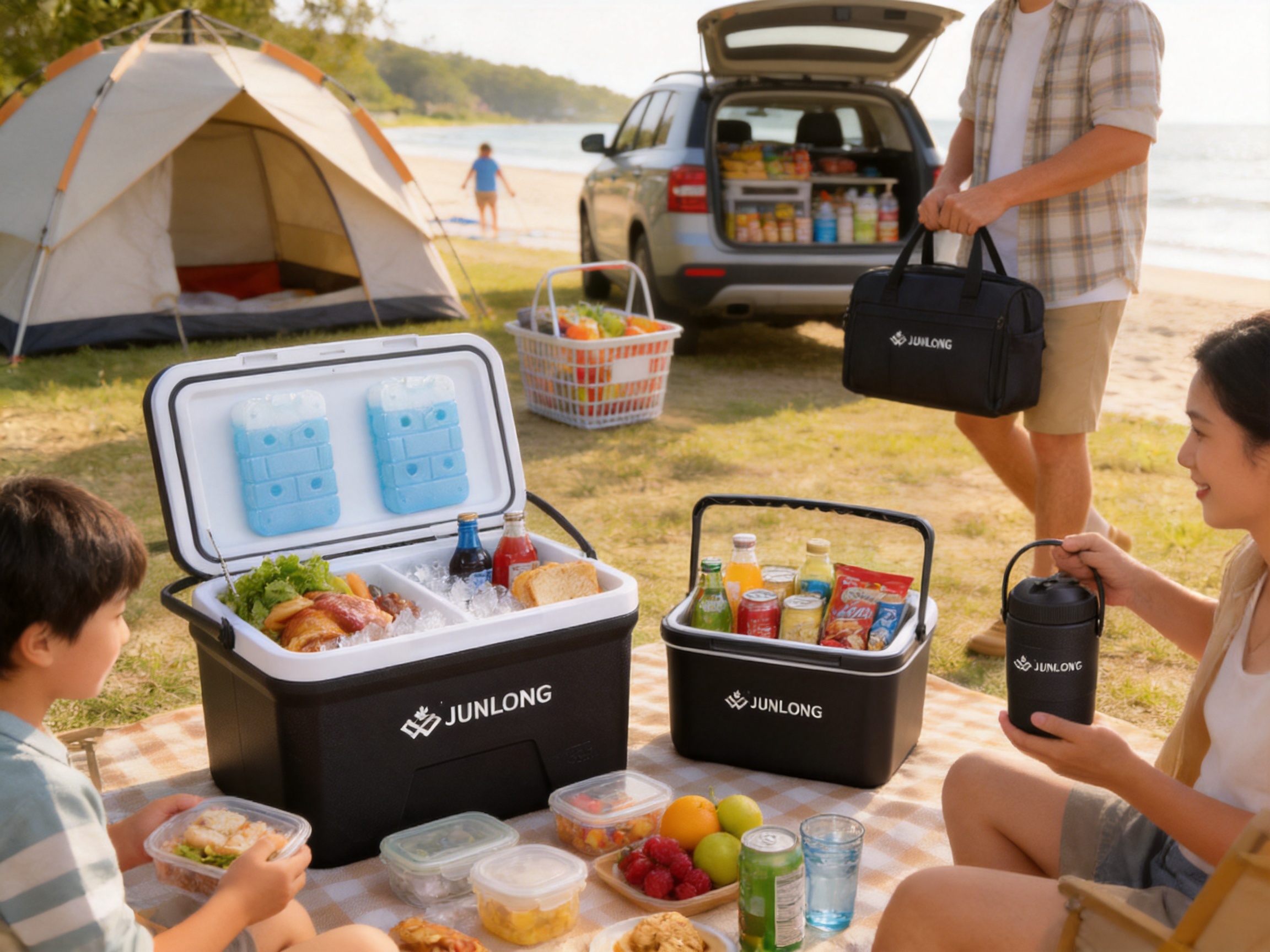
Reliable temperature control is essential whenever food, beverages, medicines, groceries, or prepared meals must remain cool away from a refrigerator. A single cooler may be useful for one particular activity, but it is not always practical for every situation. A compact container can be convenient for a packed lunch yet too small for a family outing, while a large cooler can provide excellent capacity but become unnecessarily bulky for everyday use. A coordinated cooler set solves this problem by offering several sizes that work independently or together.
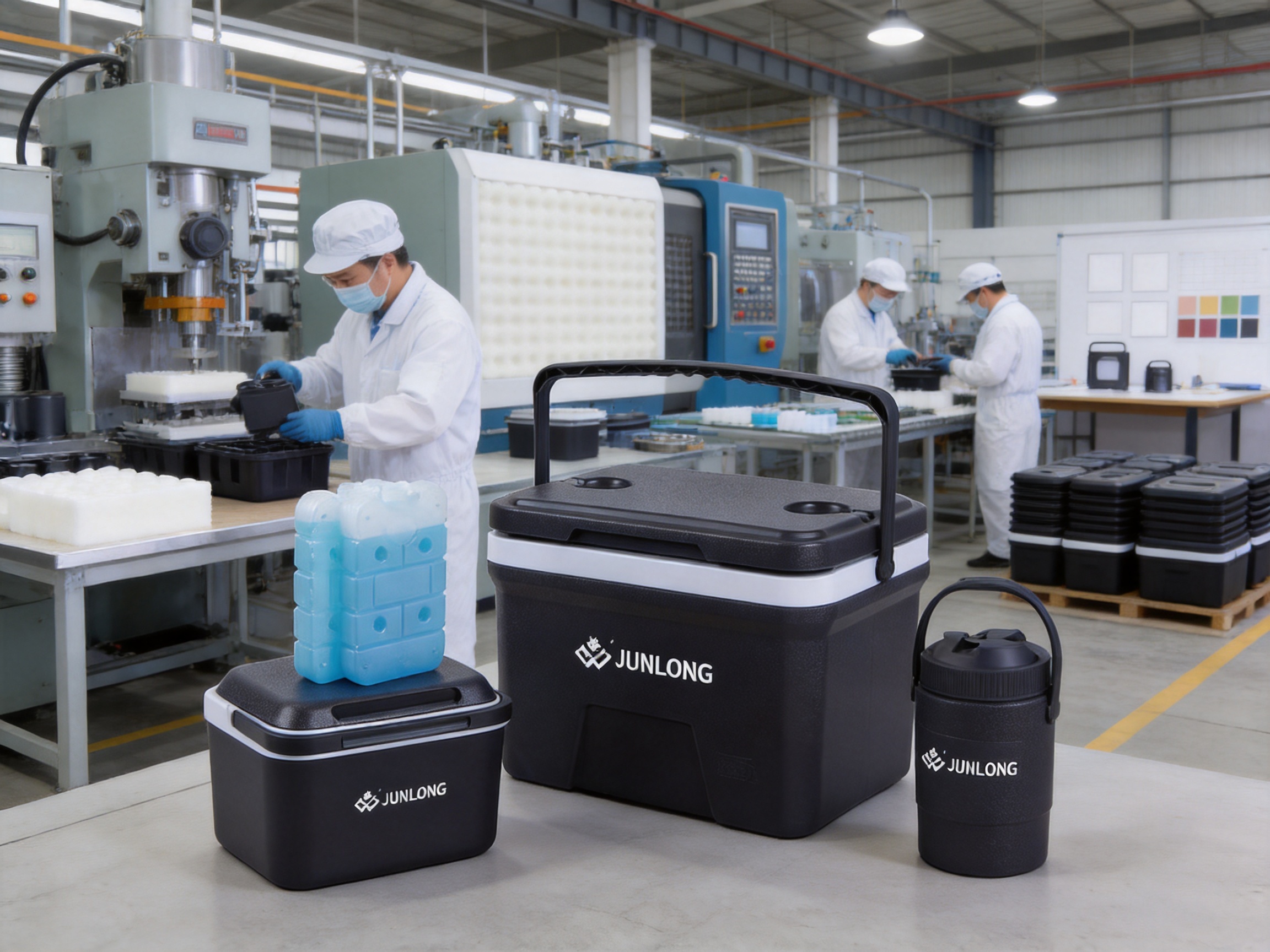
The 3-Piece Insulated Cooler Box Set with Ice Packs is designed as a flexible cooling package for home, travel, outdoor recreation, and commercial distribution. It combines a 1-liter insulated thermal jug, a 5-liter picnic cooler box, and a 25-liter insulated cooler container. The set also includes two 500 milliliter ice packs, providing an additional cold-storage solution for the largest container. With a total listed capacity of 1 liter, 5 liters, 25 liters, and two 500 milliliter ice packs, the package is suitable for personal meals, small refreshment loads, grocery transport, weekend picnics, and family camping.
Rather than forcing users to purchase multiple unrelated products, this combination offers a consistent approach to insulated storage. Each piece is sized for a different purpose, while the shared materials and coordinated design make the set easy to organize. The 25-liter cooler includes a dedicated lid ice-pack compartment, allowing the supplied ice packs to be positioned where they can support more effective cooling. The products are made from food-grade PP and PE materials with high-performance insulation, combining practical durability with safe handling for everyday use.
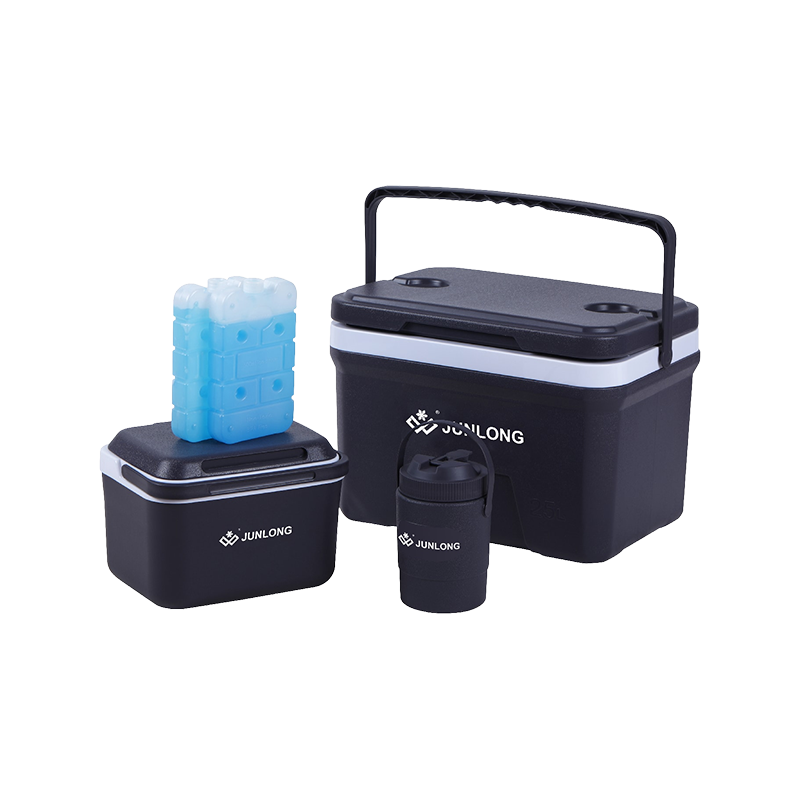
3-Piece Insulated Cooler Box Set with Ice Packs – Picnic Combo (1L+5L+25L)
A Complete Cooling Solution in Three Practical Sizes
The strongest advantage of a multi-size cooler set is flexibility. Cooling requirements change from day to day. A worker may need only a small container for lunch, a parent may need a medium box for drinks and snacks, and a family may require a larger container for several meals and beverages. The three pieces in this set address these different requirements without making the user carry the largest cooler for every task.
The 1-liter insulated thermal jug is the most compact item in the set. Its size is well suited to an individual drink, a small serving of food, a snack, or a personal packed meal. It can be used for commuting, office lunches, short-distance travel, school activities, and daily shopping. Because it occupies little space, it can be placed in a backpack, work bag, vehicle compartment, or picnic basket more easily than a full-size cooler.
The 5-liter picnic cooler box provides a practical middle option. It offers more room than a personal thermal jug but remains easier to carry than a large family cooler. This size can hold refreshments for a small group, several lunch portions, fruit, sandwiches, or a combination of snacks and drinks. It is suitable for day trips, outdoor lunches, sporting activities, beach visits, and short journeys where moderate storage volume is needed.
The 25-liter insulated container is the main capacity component. It is intended for larger quantities of food and beverages, including family picnic supplies, camping provisions, groceries, chilled ingredients, and refreshments for group activities. Its larger internal volume makes it more practical for extended outdoor use. The lid ice-pack compartment adds a dedicated space for cold packs, helping users arrange the cooling components without placing them loosely among the stored items.
Using the three products together also improves organization. The large cooler can carry the main food and beverage load, the medium cooler can be assigned to snacks or drinks, and the small jug can be reserved for an individual serving. Alternatively, users can take only the item that matches the day’s requirements. This modular approach can reduce unnecessary carrying, simplify packing, and help keep different types of food separated.
Product Specifications at a Glance
| Item | Capacity or Quantity | Primary Use | Included Feature |
|---|---|---|---|
| Insulated thermal jug | 1 liter | Personal drinks, meals, and small portions | Compact insulated construction |
| Picnic cooler box | 5 liters | Lunches, snacks, beverages, and short outings | Portable medium-capacity storage |
| Insulated cooler container | 25 liters | Family picnics, camping, groceries, and group refreshments | Lid ice-pack compartment |
| Ice packs | 2 x 500 milliliters | Supporting cold retention in the large cooler | Designed for use with the 25-liter container |
| Total listed package | 1 liter + 5 liters + 25 liters + 2 x 500 milliliters | Multi-purpose cooling for personal and group needs | Three coordinated insulated products with ice packs |
| Overall listed size | 465 x 330 x 320 millimeters | Set packaging or product specification reference | Useful for logistics and storage planning |
| Listed weight | 4,700 grams | Transport and shipment planning | Complete package reference |
The listed dimensions are 465 x 330 x 320 millimeters, and the listed weight is 4,700 grams. These specifications are important for buyers planning warehouse storage, retail packaging, transportation, container loading, or e-commerce fulfillment. For distributors, knowing the package size and weight in advance supports more accurate freight calculations and helps determine shelf, pallet, and carton requirements.
Why the Three-Piece Format Offers an Advantage
Many cooler products are sold as individual items designed around one capacity. An individual cooler may perform well within its intended use, but consumers who need several sizes must purchase different products separately. That can result in inconsistent designs, varying insulation performance, different cleaning requirements, and less efficient storage. A coordinated three-piece set provides a more unified solution.
The first advantage is size flexibility. The user does not have to select between a small cooler and a large cooler for every outing. The 1-liter, 5-liter, and 25-liter capacities create a practical progression from personal use to group use. This makes the set appropriate for households with changing schedules and for businesses that want to offer customers a complete outdoor cooling package.
The second advantage is improved preparation. Food and drinks can be sorted according to size, category, or destination. For example, the 25-liter unit can carry main meal ingredients, the 5-liter box can store beverages or snacks, and the 1-liter jug can hold an individual serving. Organized packing can reduce the time spent searching through one large container and may help avoid unnecessary opening of the primary cooler.
The third advantage is purchasing efficiency. A complete set can offer better product coordination than buying three unrelated coolers. Retailers can present the package as an immediately usable solution rather than asking customers to assemble their own combination. Importers and distributors can also market the set to outdoor retailers, household goods stores, supermarkets, camping suppliers, promotional-product businesses, and online sellers.
The fourth advantage is broader market coverage. A single product may appeal to one narrow consumer group, while a multi-size set can serve office workers, families, campers, picnic organizers, travelers, shoppers, and event users. This wider application can help retailers build more product descriptions, promotional themes, and sales channels around the same basic package.
Insulation Designed for Everyday Temperature Control
The purpose of an insulated cooler is to slow the transfer of heat between the stored contents and the outside environment. A cooler does not generate cold in the same way as a refrigerator. Instead, it works by combining an insulated structure with pre-chilled contents, frozen ice packs, and a lid that limits exposure to ambient conditions. The quality of the insulation, the fit of the lid, the packing method, and the frequency of opening all influence actual cooling performance.
This set uses high-performance insulation within its cooler products. The insulated construction is intended to help maintain the temperature of food and beverages for longer than a conventional non-insulated container. When paired with the two 500 milliliter ice packs, the 25-liter cooler provides a practical arrangement for extending cold retention during outdoor use.
The dedicated lid compartment in the 25-liter cooler is especially useful because it gives the ice packs a defined position. Loose cold packs may shift during transportation or be covered by heavier items. A lid compartment helps keep them at the upper section of the cooler, where they can support a more organized cooling layout. It can also free up internal storage space that would otherwise be occupied by the packs.
Users can improve performance by pre-chilling the cooler when appropriate, freezing the ice packs before use, minimizing the time the lid remains open, and loading chilled food rather than warm food whenever possible. Keeping the cooler out of direct sunlight can also help reduce heat exposure. These practices are general operating recommendations for insulated storage and do not replace temperature controls required for highly perishable goods or regulated products.
Food-Grade PP and PE Materials
The products are constructed from food-grade polypropylene and polyethylene materials, supported by insulation. Polypropylene, commonly identified as PP, is widely used in household storage products because it offers a useful balance of strength, low weight, and resistance to everyday handling. Polyethylene, or PE, is also widely used in molded consumer products and can contribute to toughness and practical surface performance.
Material selection affects more than appearance. It influences the cooler’s resistance to regular transport, its ability to maintain structural shape, its cleanability, and its suitability for contact with food-related items. The use of food-grade materials supports safer everyday handling when products are used as intended. Users should still follow normal hygiene practices, including cleaning surfaces after use, drying the products thoroughly, and avoiding storage of unsuitable substances.
Plastic construction also provides a useful weight advantage compared with many rigid metal alternatives. Lower weight can make a cooler easier to transport to a picnic site, campsite, sports field, workplace, or vehicle. At the same time, molded plastic allows manufacturers to produce repeatable shapes, integrated compartments, and coordinated product designs at commercial scale.
For buyers evaluating competing cooler sets, the material description is an important consideration. A product should not be judged only by color or external style. The structural materials, insulation design, lid configuration, molding quality, and intended use all contribute to long-term value. This set combines food-grade PP and PE with insulated construction to address these practical purchasing criteria.
Manufacturing Strengths Behind the Product
The product is manufactured by Ningbo Junlong Outdoor Products Co., Ltd., an outdoor cooling and water-storage manufacturer established in 2000. The company is located in Cixi, Ningbo, Zhejiang Province, an important manufacturing area in the Yangtze River Delta. Its experience in outdoor product development, production, and sales provides a foundation for manufacturing cooler boxes, insulated jugs, ice buckets, and outdoor water containers for domestic and overseas markets.
The company operates an independent factory covering 12,000 square meters and employs more than 100 people. This scale supports a more integrated production structure than a purely trading-oriented operation. Product development, material preparation, molding, foaming, assembly, inspection, packaging, and order coordination can be managed through an organized manufacturing system.
The factory includes automatic injection molding machines, blow molding machines, and foaming equipment. These three production capabilities are important for an insulated cooler manufacturer because different components and product structures may require different forming methods. Injection molding can support accurate production of rigid plastic parts and detailed components. Blow molding can be used for suitable hollow plastic structures. Foaming equipment supports the insulation layer that contributes to thermal performance.
Automated injection molding can improve process consistency by controlling material delivery, mold filling, pressure, cooling, and cycle timing. Consistency is important when manufacturing lids, bodies, handles, compartments, and other parts that must fit together correctly. Repeated production under controlled parameters can help reduce variation between batches and support more reliable assembly.
Blow molding capability expands the manufacturer’s ability to produce suitable hollow forms and containers. Depending on the specific product structure, this process can help create durable plastic bodies with practical wall geometry. A manufacturer with more than one molding method can evaluate the appropriate process for different product categories rather than relying on a single production technique for every design.
Foaming equipment is central to insulated cooler production. The insulation layer must be integrated into the product structure so that it supports thermal resistance while maintaining a practical balance of weight, durability, and internal capacity. Controlled foaming production can contribute to more even insulation distribution and more repeatable product performance. The exact insulation formula and process parameters depend on the product design and manufacturing requirements.
The company also maintains a creative research and development team and a quality management system. These capabilities support continuous product improvement, new product development, and adaptation to different customer requirements. For buyers seeking OEM or ODM products, an established development and manufacturing structure can be more valuable than a simple catalog of finished products because it creates opportunities for design adjustment and commercial customization.
Quality and Process Control Considerations
Quality in an insulated cooler is the result of multiple manufacturing details rather than one single feature. The plastic material must be suitable for the intended application. Molded parts must maintain their dimensions. The lid should align with the cooler body. The insulation must be formed consistently. Handles, closures, compartments, and surfaces should be checked for practical operation and finish.
A rigorous quality management approach can help coordinate these requirements across different production stages. Incoming materials may be reviewed before use, molded components may be inspected for visible defects and dimensional consistency, and assembled products may be checked for fit and function. Packaging inspections can also help protect the product during storage and transportation.
For a cooler set, quality control must cover the relationship between the three sizes as well as each item individually. The 1-liter jug should be convenient for personal use, the 5-liter cooler should remain practical to carry, and the 25-liter container should provide the expected storage volume and lid-compartment function. The supplied ice packs should match the intended use of the larger cooler and be packaged appropriately for shipment.
Commercial buyers may also need specific inspection standards depending on their market. These can include appearance requirements, color matching, logo placement, packaging specifications, labeling, barcode information, carton strength, and sampling procedures. A manufacturer with its own factory and development team is better positioned to discuss these requirements directly and convert them into an organized production plan.
OEM and ODM Customization Potential
The manufacturer offers OEM and ODM services for customers requiring more than standard products. OEM production allows a buyer to sell a product under its own brand or according to its own commercial specifications. ODM cooperation can involve adapting an existing design or developing a product around a customer’s concept, drawing, sample, capacity target, or market position.
Customization options may include product development based on drawings or samples, color selection, logo application, and packaging design. These options are useful for importers, retailers, wholesalers, outdoor brands, promotional-product distributors, and businesses creating private-label product lines. A cooler set can be customized to fit a particular brand identity, seasonal campaign, retail category, or regional consumer preference.
Color customization can help a product match a brand’s visual system or distinguish different capacity levels. Logo customization can improve brand recognition when the cooler is used at outdoor events, company activities, sports competitions, hospitality programs, or promotional campaigns. Packaging customization can support retail presentation, shipping requirements, multilingual labeling, and product education.
For an OEM or ODM project, buyers should provide clear specifications at the beginning. Useful information includes required capacities, target dimensions, material expectations, insulation goals, handle or closure preferences, color references, logo artwork, package format, destination market, estimated order quantity, and inspection requirements. Early communication can reduce revisions and help the factory evaluate tooling, sample development, production timing, and packaging arrangements.
The existing three-piece structure provides a strong starting point for customization. A buyer may use the set as supplied, request new colors, add a private label, revise the packaging, or discuss changes to the capacity combination. Because the product family already covers 1-liter, 5-liter, and 25-liter uses, it can support a coherent product range rather than a single isolated item.
Applications for Home, Work, and Travel
The set is suitable for office workers who bring meals and beverages from home. The 1-liter jug can be used for a personal portion or drink, while the 5-liter box can accommodate a larger lunch or snacks for colleagues. The 25-liter container can be useful when several employees share refreshments during a meeting, training session, or workplace event.
For grocery transportation, the insulated containers can provide temporary temperature support between the store and the home. The 25-liter cooler is appropriate for a larger shopping load, while the smaller pieces can be used for separate items. Users should follow local food-safety guidance and avoid treating a cooler as a replacement for refrigerated storage when products require controlled temperatures for extended periods.
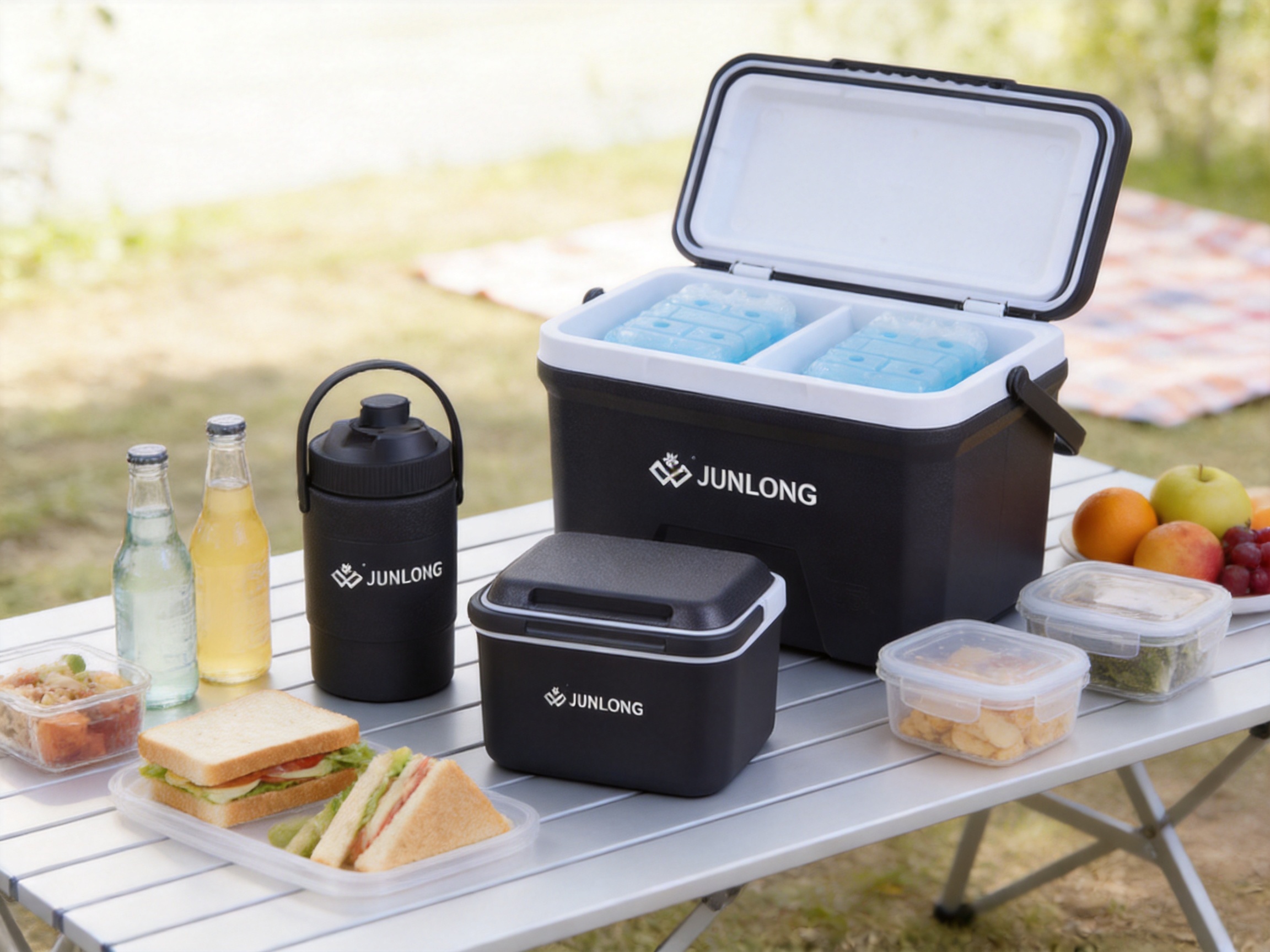
For picnics, the set supports organized outdoor meal preparation. The 25-liter container can hold the principal food and drink supply, the 5-liter box can store snacks or items that need frequent access, and the 1-liter jug can serve one person. The two ice packs can be frozen in advance and placed in the larger cooler’s lid compartment.
For camping, the 25-liter capacity provides space for chilled ingredients, beverages, and prepared food for a small group. The 5-liter cooler can function as a secondary unit for frequently accessed items, reducing the need to open the largest container repeatedly. The compact jug can be assigned to a camper’s personal meal, drink, or snack.
For beach trips and outdoor recreation, the cooler set offers a choice of carrying sizes. A short outing may require only the 1-liter or 5-liter product, while a full-day family trip may justify the 25-liter container. The plastic construction is suited to regular outdoor handling, although users should store the products responsibly and avoid unnecessary exposure to extreme conditions beyond their intended use.
Comparison with Single-Size Cooler Purchases
A single-size cooler can be appropriate when a user has a very specific and unchanging requirement. However, it may be less versatile for households or businesses with varied use cases. A 1-liter container is easy to carry but has limited capacity. A 25-liter box offers more storage but can be excessive for a quick lunch. The three-piece format provides a more adaptable solution across these situations.
| Evaluation Point | Three-Piece Cooler Set | Single Small Cooler | Single Large Cooler |
|---|---|---|---|
| Capacity flexibility | Three coordinated sizes for different activities | Limited to personal or small-volume use | High capacity but less convenient for small loads |
| Organization | Items can be divided among three containers | All items share one small space | Small items may be difficult to organize in a large cavity |
| Portability | Users can select the appropriate size | Usually very portable | May be heavier or less convenient when lightly loaded |
| Family and group use | Suitable for personal, small-group, and family needs | May require additional containers | Suitable for groups but may not meet personal convenience needs |
| Cold-pack arrangement | Includes two 500 milliliter ice packs and a lid compartment on the 25-liter unit | Depends on separate accessories | Depends on the product design and separately purchased packs |
| Retail value | Can be marketed as a complete cooling package | Usually positioned as an individual item | Usually positioned around capacity alone |
This comparison does not mean that every consumer needs a set. Instead, it shows why the package can provide stronger overall utility for people whose cooling needs change. The set reduces the compromise between portability and capacity and creates a more complete solution than a single cooler purchased in isolation.
Design Value for Retailers and Distributors
Retailers often need products that are easy to explain and relevant to several customer groups. A three-piece cooler package has a straightforward selling proposition: one set provides a personal jug, a medium picnic cooler, a large family cooler, and two ice packs. This simple message can be used in product listings, store displays, seasonal campaigns, and outdoor-living promotions.
The set can be positioned for spring and summer activities, travel periods, camping seasons, school outings, family gatherings, and holiday shopping. It may also be suitable for household organization and grocery transport throughout the year. Because the products are not limited to one type of outdoor activity, retailers can promote them in multiple departments, including camping, picnic equipment, household storage, travel accessories, and food transportation.
For distributors, the package offers opportunities to serve both consumer and business customers. Outdoor retailers may focus on camping and recreation. Supermarkets may use the set for seasonal displays. Promotional distributors may offer customized versions for corporate events. Hospitality suppliers may use smaller units for guest activities or catering support. Private-label brands can request customized colors, logos, and packaging to create a distinct market identity.
The stated package dimensions and weight also assist with distribution planning. A listed size of 465 x 330 x 320 millimeters and a listed weight of 4,700 grams provide initial information for warehouse layout, shipping quotations, carton planning, and online fulfillment. Final logistics calculations should be confirmed with the manufacturer based on the actual order configuration, packaging method, and shipping quantity.
Practical Use and Care Recommendations
Before use, the cooler and jug should be cleaned according to the care instructions supplied with the product. Ice packs should be frozen as directed before being placed in the cooler. Chilled food and beverages generally provide better results than warm contents because the insulation is intended to slow temperature change rather than rapidly cool a large quantity of warm material.
The 25-liter cooler should be packed so that the lid closes correctly and the supplied ice packs can remain in the designated compartment. Avoid overfilling the container or placing items in a way that interferes with the lid. Frequent opening allows warm air to enter, so users can improve cold retention by planning access and keeping frequently used items in the 5-liter cooler when practical.
After use, remove food residues and moisture from the interior. Clean the relevant surfaces with a suitable mild cleaning solution, rinse as appropriate, and allow the product to dry before storage. Ice packs should be handled according to their packaging and should not be punctured, cut, or used if damaged. The cooler should be stored in a clean, dry location away from sharp objects that could damage the plastic or insulation.
Coolers used for food should not be assumed to provide unlimited temperature control. Highly perishable foods, medicines, and temperature-sensitive materials may require validated storage procedures, monitoring devices, or specialized equipment. The product is designed as an insulated outdoor cooling solution, and users should evaluate the requirements of the material being transported before use.
Why Manufacturing Integration Matters to Buyers
When purchasing an insulated cooler for a private-label or wholesale program, the manufacturer’s production capabilities can be as important as the product itself. A supplier that integrates development, molding, foaming, assembly, and sales support can provide a more direct path from design concept to finished product. This can reduce communication gaps and make it easier to address technical questions.
Integrated manufacturing also supports better control over product consistency. When key processes are managed within an independent factory, the supplier can coordinate material choices, mold conditions, insulation production, assembly requirements, and packaging standards. This does not eliminate the need for buyer inspection, but it provides a stronger operational foundation for repeat orders and long-term cooperation.
The company’s more than 20 years of operating history, independent 12,000-square-meter facility, automatic molding equipment, foaming capability, R&D resources, and quality management system demonstrate a manufacturing-oriented business structure. These strengths are relevant to buyers that require stable supply, product customization, technical communication, and ongoing product development.
The product range covering ice buckets, insulated cooler jugs, outdoor water containers, and cooler boxes also gives the manufacturer experience across related outdoor categories. This broader category knowledge can support coordinated product programs, allowing customers to source multiple types of outdoor cooling or water-storage products from one supplier.
Questions and Answers
What products are included in the cooler set?
The set includes one 1-liter insulated thermal jug, one 5-liter picnic cooler box, one 25-liter insulated cooler container, and two 500 milliliter ice packs. The large cooler includes a dedicated lid compartment intended for the ice packs.
What is the total listed capacity?
The listed capacity is 1 liter plus 5 liters plus 25 liters, together with two 500 milliliter ice packs. The separate pieces are designed to be used independently or as a coordinated cooling package.
What is the listed overall size?
The listed size is 465 x 330 x 320 millimeters. Buyers should confirm whether this measurement refers to the complete packaged set or the applicable product configuration when preparing detailed logistics plans.
What is the listed weight?
The listed weight is 4,700 grams. Final shipment weight may vary depending on packaging, order quantity, and customized components, so commercial buyers should confirm the final logistics data before placing an order.
What materials are used?
The products are made from food-grade PP and PE materials with high-performance insulation. These materials support practical durability, molded construction, and everyday handling when the products are used as intended.
What is the 1-liter jug suitable for?
The 1-liter jug is suitable for personal drinks, small meals, snacks, office use, commuting, school activities, and short trips. Its compact size makes it easier to carry when a large cooler is unnecessary.
What is the 5-liter cooler suitable for?
The 5-liter cooler is designed for moderate loads such as lunches, snacks, beverages, fruit, and refreshments for a small group. It is suitable for picnics, sports activities, beach outings, and day trips.
What is the 25-liter cooler suitable for?
The 25-liter cooler is intended for larger quantities of food and beverages, including family picnics, camping provisions, grocery transport, chilled ingredients, and group refreshments.
How do the included ice packs support cooling?
The two 500 milliliter ice packs can be frozen before use and placed in the dedicated lid compartment of the 25-liter cooler. They help support cold retention when used with chilled contents and appropriate packing practices.
Does the cooler make food cold?
An insulated cooler is designed to slow temperature change rather than operate like a refrigerator. For best results, users should load chilled contents, freeze the ice packs in advance, limit lid opening, and keep the cooler away from direct heat whenever possible.
Can the three products be used separately?
Yes. Each item has its own practical application. Users can take only the 1-liter jug for personal use, the 5-liter box for a small outing, or the 25-liter cooler for a larger load. They can also use all three together for organized family or group activities.
Is the set suitable for OEM or private-label projects?
The manufacturer offers OEM and ODM customization. Available options may include development based on drawings or samples, product colors, logos, and packaging. Detailed requirements should be discussed before production so that tooling, samples, materials, packaging, and inspection standards can be confirmed.
What manufacturing equipment does the supplier have?
The factory includes automatic injection molding machines, blow molding machines, and foaming equipment. These capabilities support the production of molded plastic parts, suitable hollow structures, and insulation systems used in outdoor cooling products.
Where is the manufacturer located?
The manufacturer is located in Cixi, Ningbo, Zhejiang Province, China, within the Yangtze River Delta manufacturing region. The company operates an independent factory and serves customers in China and overseas markets.
What should buyers confirm before placing a bulk order?
Buyers should confirm product specifications, colors, logo requirements, packaging, labeling, order quantity, sample approval, inspection procedures, delivery schedule, shipping dimensions, and any market-specific compliance or documentation requirements.
Conclusion
The 3-Piece Insulated Cooler Box Set with Ice Packs provides a versatile answer to the common problem of choosing between portability and capacity. Its 1-liter jug serves personal needs, its 5-liter cooler supports small outings, and its 25-liter container provides larger storage for family activities, camping, groceries, and group refreshments. The included two 500 milliliter ice packs and the large cooler’s lid compartment add practical value to the temperature-control system.
The set’s advantages come from its coordinated capacities, food-grade PP and PE construction, high-performance insulation, organized ice-pack placement, and broad range of applications. Compared with purchasing one cooler for one narrow use, the three-piece format offers more flexibility, better organization, and stronger retail positioning.
For commercial buyers, the supplier’s independent 12,000-square-meter factory, more than 100 employees, automatic injection molding machines, blow molding machines, foaming equipment, R&D team, and quality management system provide important manufacturing support. The company’s OEM and ODM capabilities further allow customers to develop customized colors, logos, packaging, and product solutions.
As a result, this cooler package can function as a practical consumer product and as a foundation for private-label, wholesale, and distribution programs. It is designed to make everyday cooling more convenient while giving buyers access to a manufacturer equipped to support product development, repeat production, and long-term outdoor-product cooperation.
References
1. Product specification sheet for the 3-Piece Insulated Cooler Box Set with Ice Packs, including capacities, dimensions, weight, materials, and included accessories.
2. Manufacturer-provided company information for Ningbo Junlong Outdoor Products Co., Ltd., including factory size, employee resources, production equipment, product categories, and customization services.
3. General principles of insulated food and beverage transport, including the use of pre-chilled contents, frozen cold packs, limited lid opening, and protection from direct heat.
4. General technical information on polypropylene and polyethylene materials used in molded household and outdoor products.
Product: 3-Piece Insulated Cooler Box Set with Ice Packs – Picnic Combo (1L+5L+25L)

Product Recommendation
link
Office
- TEL: +86-574-63787606
- Phone: +86-13777994798
- E-mail: sales@nbjunlong.com
- WhatsApp: 13777967488
- Address: No. 1, Lane 3, Development Road, Longtouchang, Longshan Town, Cixi City, Zhejiang Province, China
Get In Touch
Copyright © Ningbo Junlong Outdoor Products Co., Ltd. All Rights Reserved.
China Plastic Insulated Cooler Box Manufacturer Custom Cooler Box Supplier
