- SMALL ORDERS FOR STANDARD ITEMS. Contact Now
- OUTDOOR COOLING SOLUTIONS, MADE IN‑HOUSE. Contact Now
- COOLER BOXES THAT FIT REAL OUTDOOR LIFE. Contact Now

 LANGUAGE
 日本語
 Español
 عربى

Content
- 1 1. A Practical Medium-Capacity Format
- 2 2. Food-Grade PP and PE Construction
- 3 3. EPS Foam Insulation for Extended Cooling
- 4 4. Comfortable Handling for Fully Loaded Use
- 5 5. Advantages Compared with Common Cooler Alternatives
- 6 6. Suitable Applications
- 7 7. Product Specifications at a Glance
- 8 8. Manufacturing Strength and Integrated Production
- 9 9. Research, Development, and Quality Management
- 10 10. OEM and ODM Customization Options
- 11 11. How to Use the Cooler for Better Cold Retention
- 12 12. Cleaning, Hygiene, and Long-Term Care
- 13 13. Purchasing Considerations for Wholesale Buyers
- 14 14. Frequently Asked Questions
- 14.1 Q1: What is the capacity of this cooler?
- 14.2 Q2: What are the product dimensions?
- 14.3 Q3: What materials are used?
- 14.4 Q4: How long can it keep contents cold?
- 14.5 Q5: Is the lid secure during transport?
- 14.6 Q6: Is the cooler suitable for family gatherings?
- 14.7 Q7: Is it suitable for fishing?
- 14.8 Q8: How much does the empty cooler weigh?
- 14.9 Q9: Can the product be customized?
- 14.10 Q10: What makes it different from a soft-sided cooler?
- 14.11 Q11: Is this cooler intended for commercial food storage?
- 14.12 Q12: Where is the manufacturer located?
- 15 15. Overall Value Proposition
- 16 References
- 17 Product: 24L Portable Twist-Lid Foam Insulated Cooler
Choosing the right cooler box is about more than selecting the largest available capacity. A practical outdoor cooler must balance insulation, food safety, carrying comfort, durability, internal organization, and ease of cleaning. It should be suitable for a short trip to the beach, yet capable of supporting a full day at a sports event, fishing location, family gathering, camping site, or barbecue. The 24L Portable Twist-Lid Foam Insulated Cooler is designed around this balance, providing substantial storage capacity in a portable format.
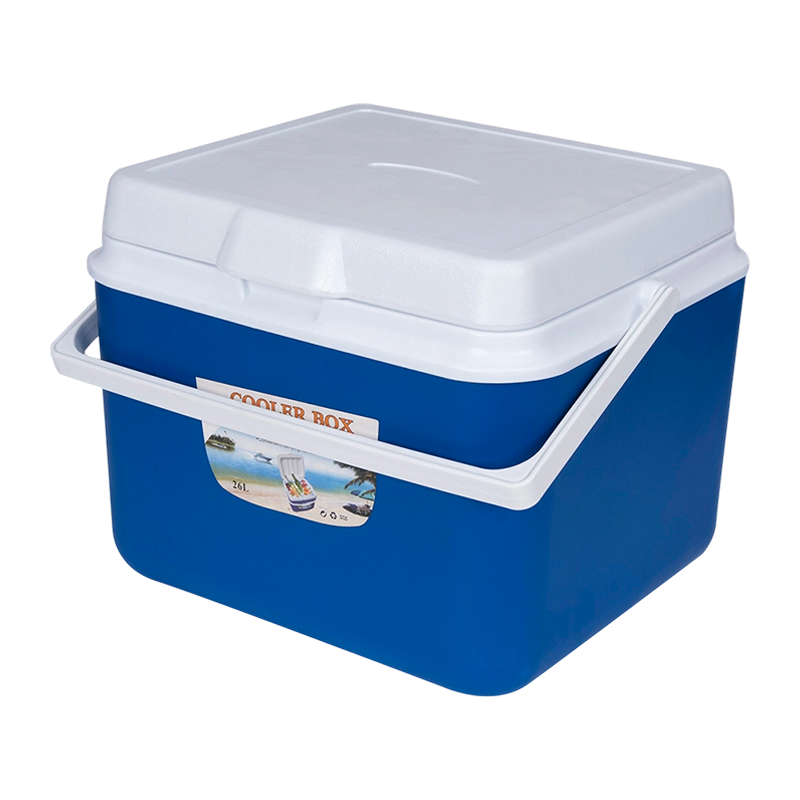
With a 24-liter volume, food-grade PP and PE materials, EPS insulation, a secure twist-open lid, and a sturdy ergonomic handle design, this medium-sized cooler box is intended for users who need more space than a personal lunch cooler without moving into the size and weight of a large commercial ice chest. Its dimensions are 450 × 270 × 405 mm, and its listed net weight is approximately 2.6 kg before contents and ice are added.
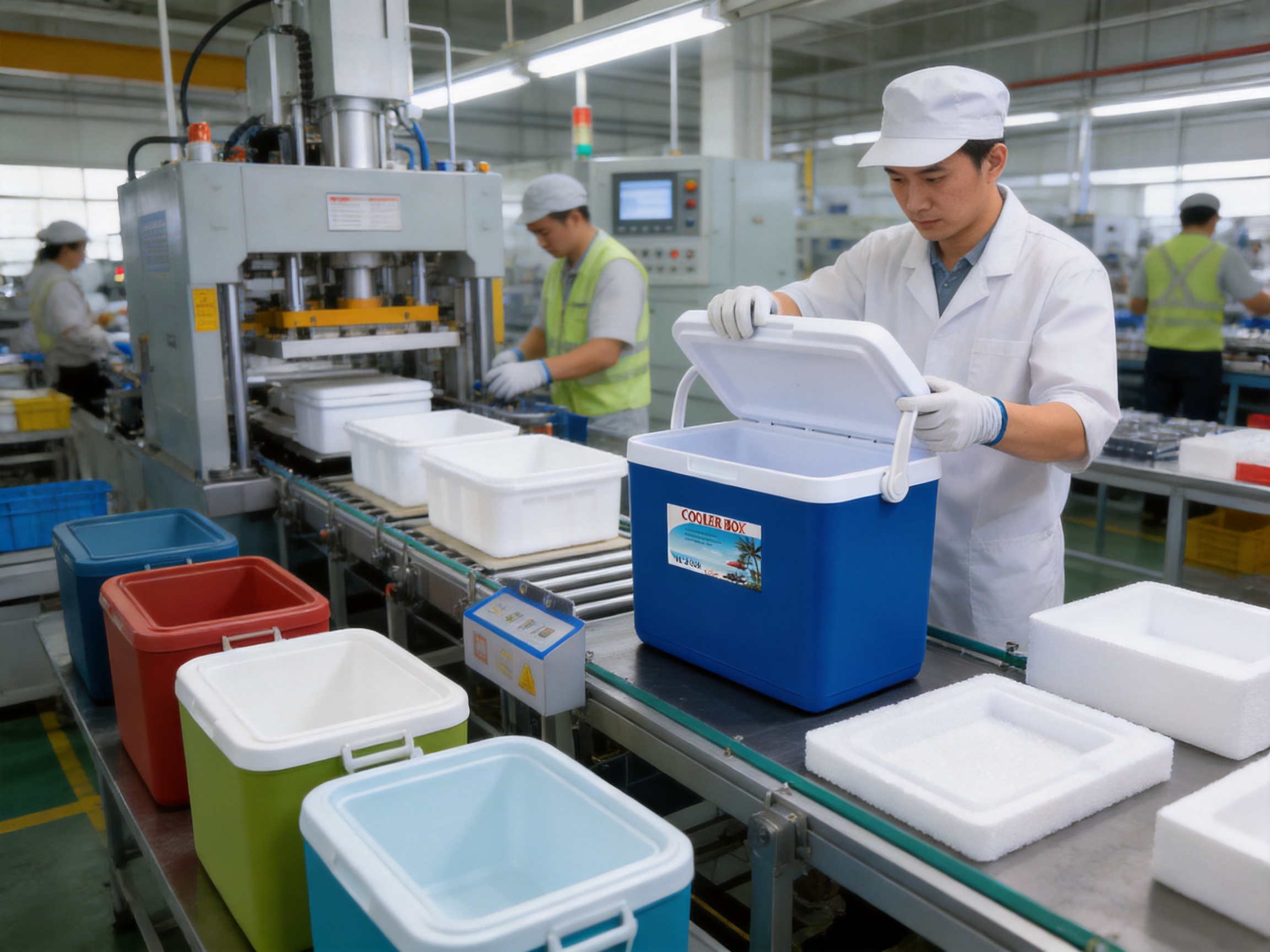
The cooler is manufactured by Ningbo Junlong Outdoor Products Co., Ltd., a Chinese outdoor products manufacturer with experience in cooler boxes, cooler jugs, ice buckets, and outdoor water containers. The company combines product development, injection molding, blow molding, foaming, quality management, and OEM/ODM services within its own manufacturing operation. This integrated capability is important for buyers seeking consistent production quality, customized designs, and reliable long-term supply.
This article examines the product’s construction, capacity, insulation performance, practical advantages, manufacturing background, customization potential, and suitability for different outdoor applications. It also compares the design with common alternatives and explains what distributors, retailers, hospitality businesses, sports organizations, and end users should consider when selecting a 24-liter insulated cooler.
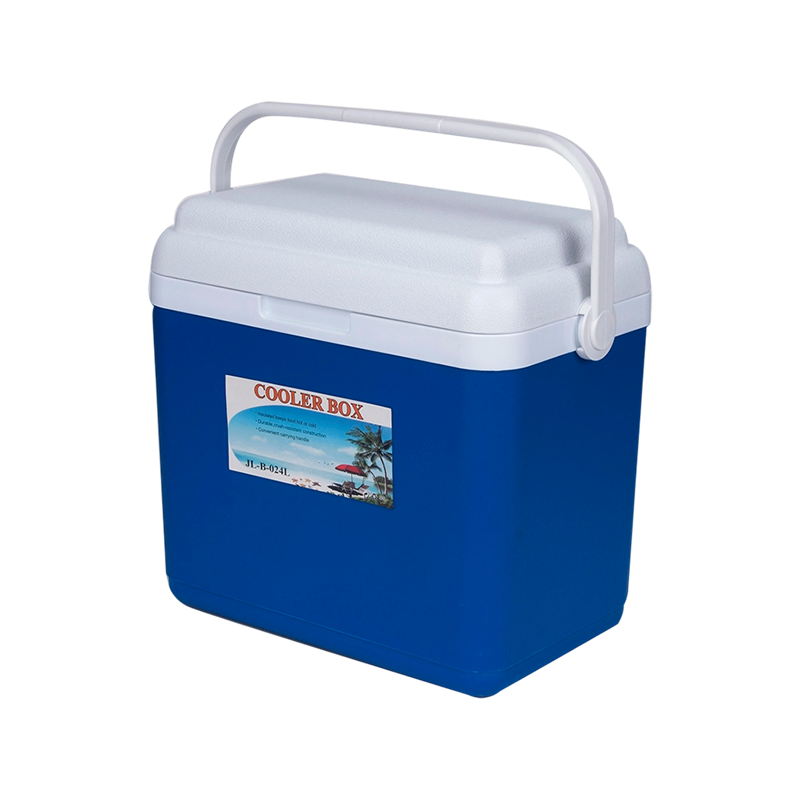
24L Portable Twist-Lid Foam Insulated Cooler
1. A Practical Medium-Capacity Format
Cooler boxes in the medium-capacity category occupy an important position between compact personal coolers and large family or commercial ice chests. A cooler that is too small may require several units for a single outing, while a very large cooler can become difficult to transport, lift, store, and clean. The 24-liter format provides a useful middle ground for people who need enough room for drinks, prepared food, fruit, ice packs, and containers without carrying a bulky oversized box.
The 450 × 270 × 405 mm external dimensions provide a relatively tall and narrow profile compared with some low, wide cooler designs. This form can be convenient when storage space is limited, such as inside a vehicle trunk, beneath a workbench, in a camping shelter, or beside a picnic table. Its vertical height also offers useful internal volume for bottles, cans, food containers, and taller packaged products.
The listed capacity of 24 liters is suitable for group refreshment and meal storage. According to the product information, the cooler can hold up to 39 cans of 330 ml cola under an appropriate arrangement. Actual usable capacity will depend on the amount of ice, ice packs, dividers, food containers, and packaging used, but the stated can-loading capacity gives buyers a clear reference point.
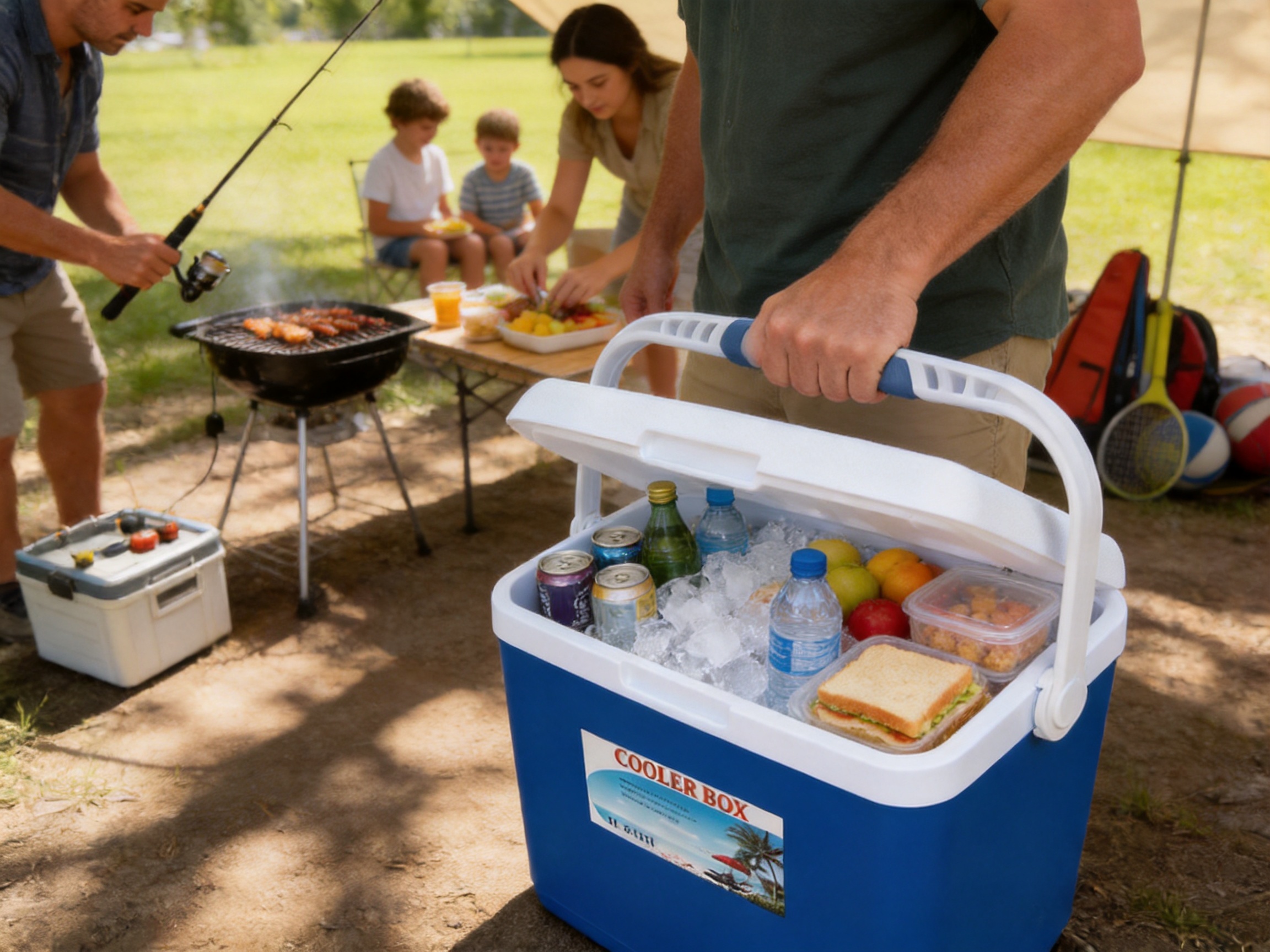
For a small family, a group of coworkers, a sports team, or several fishing partners, one 24-liter cooler may be sufficient for a day trip. It can also work as one unit within a larger catering or event setup. For example, one cooler can be dedicated to beverages, another to raw ingredients, and another to ready-to-eat foods. This separation can support better organization and help reduce unnecessary opening of the main food compartment.
Capacity without excessive bulk
One of the main advantages of the design is that it offers meaningful storage volume while remaining more manageable than a large heavy-duty chest. A fully loaded cooler always becomes heavier because of drinks, food, ice, and containers. Starting with a listed product weight of approximately 2.6 kg helps keep the total carrying load more practical than a heavier construction made with thick metal walls or oversized hardware.
The product is therefore well suited to users who need portable capacity rather than permanent stationary storage. It can be carried from a vehicle to a campsite, from a parking area to a sports field, or from a kitchen to an outdoor dining area without requiring two people in ordinary use.
2. Food-Grade PP and PE Construction
The cooler uses food-grade PP and PE materials in its construction. Polypropylene is commonly used for rigid food-contact components because it combines low weight, chemical resistance, impact tolerance, and ease of molding. Polyethylene is also widely used in storage and outdoor products because it provides toughness and resistance to everyday handling. The combination allows the cooler to be designed for practical food and beverage use while remaining suitable for repeated outdoor transport.
The food-grade PP inner liner is specified as suitable for direct contact with food. This is an important feature for users who place packaged meals, fruit, sandwiches, seafood, drinks, or other provisions inside the cooler. A food-contact liner is easier to understand and manage than an interior that is intended only for secondary packaging or indirect storage.
Food-grade construction does not eliminate the need for proper hygiene. Users should still wash the interior after use, remove spilled liquids promptly, dry the cooler before storage, and follow any relevant food-safety procedures for raw and cooked ingredients. The cooler should also be used within the temperature and handling conditions recommended by the buyer’s local food-safety requirements.
Advantages of molded plastic over metal alternatives
Compared with many metal coolers, molded plastic designs can offer lower empty weight, greater resistance to surface corrosion, and more flexibility in shaping handles, corners, lids, and body contours. Plastic surfaces are also generally easier to wash after outdoor use. For customers in humid, coastal, or rainy environments, corrosion resistance can be a meaningful advantage.
Compared with fabric soft-sided coolers, a rigid PP and PE body offers stronger structural support and better protection for delicate contents. A hard shell is less likely to collapse when loaded, and it can help prevent food containers from being crushed during transport. The rigid form also makes the interior easier to wipe and sanitize.
Compared with thin-wall plastic storage boxes without dedicated insulation, the foam-insulated structure is better suited to maintaining chilled contents over an extended period. The difference is especially important when the cooler will be used away from refrigerators, such as during camping, fishing, road travel, outdoor work, and sports activities.
3. EPS Foam Insulation for Extended Cooling
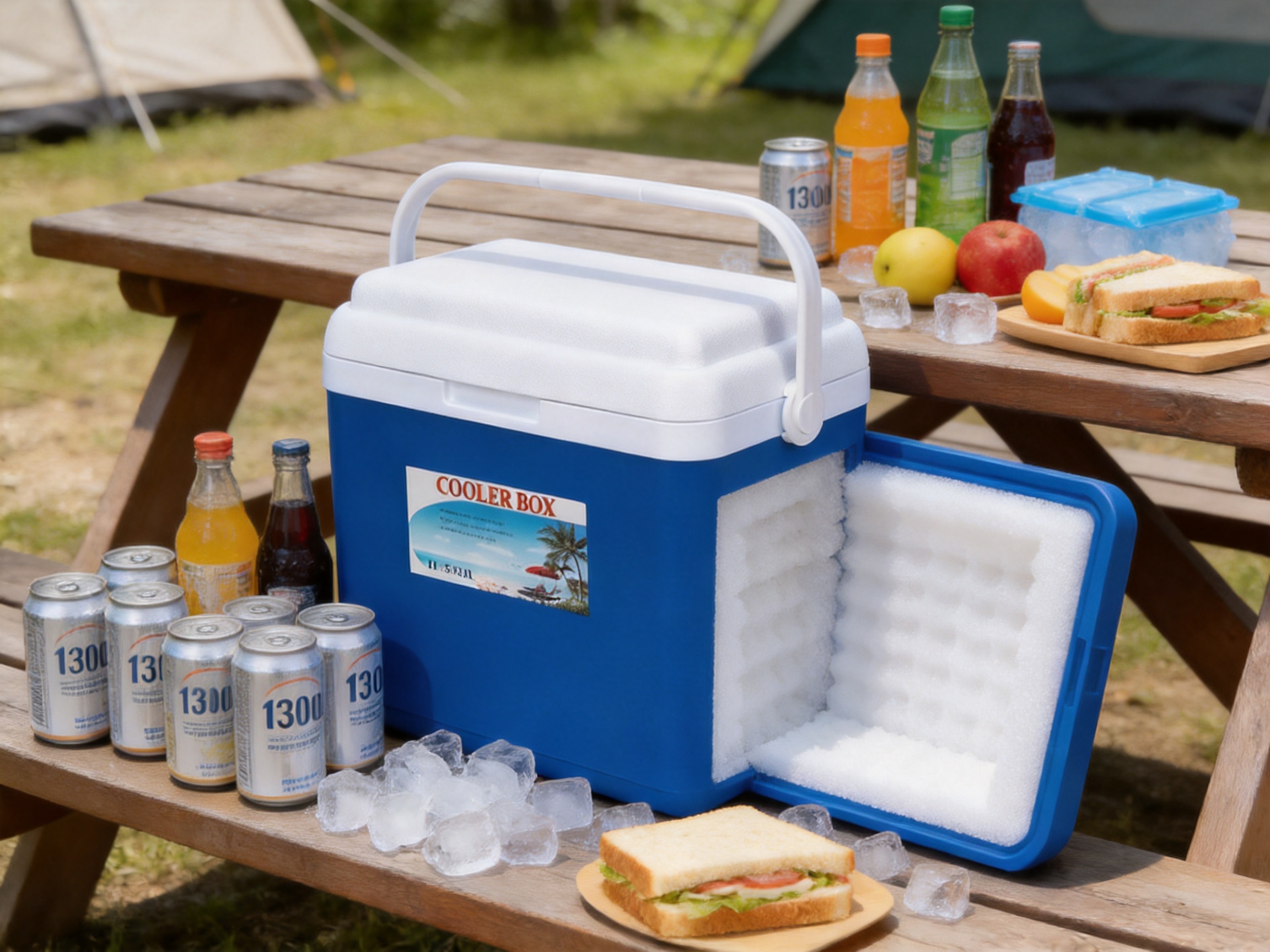
The product uses EPS insulation in the body, together with an insulated lid structure. Expanded polystyrene, commonly called EPS, is a lightweight cellular material that contains many small air pockets. These air pockets reduce the speed at which heat moves through the cooler walls. When the cooler is loaded with pre-chilled products and an appropriate amount of ice or ice packs, the insulated construction helps preserve a cold internal environment.
The product information states an insulation time of up to 24 hours for the vacuum lid and body EPS insulation system. Actual cooling duration depends on several conditions, including starting product temperature, ice quantity, ambient temperature, direct sunlight, opening frequency, internal empty space, and how efficiently the lid is closed. The 24-hour figure should therefore be understood as a reference under suitable operating conditions rather than a universal result in every climate and loading situation.
Good cooling performance begins before the cooler leaves the house. Chilling beverages and food in a refrigerator before loading reduces the initial heat entering the cooler. Pre-cooling the interior, using sufficient ice or cold packs, minimizing empty air space, and keeping the lid closed as much as possible can all contribute to longer retention. The insulated walls and lid then work as part of a complete cold-storage system.
Why the lid matters
The lid is one of the most important parts of a cooler because it is opened frequently and often represents a major source of heat transfer. This model features a twist-open lid intended to provide a secure closure after loading. A properly closed lid helps maintain the insulation barrier and reduces accidental opening during transport.
The twist-lid format can also support a straightforward user experience. Instead of managing multiple loose fasteners or complicated mechanisms, the user turns the lid to open or secure it. This can be useful at a campsite, on a boat, beside a sports field, or during a busy outdoor meal when quick access is important.
A secure lid is especially valuable when a cooler is transported in a vehicle or carried across uneven ground. It helps keep the contents contained and can reduce the chance of the lid shifting during normal movement. Buyers should still keep the cooler upright when possible and should not treat a cooler lid as a pressure-sealed container unless the product is specifically certified for that purpose.
4. Comfortable Handling for Fully Loaded Use
A cooler’s portability depends on more than its empty weight. Once filled with cans, bottles, food, and ice, the load can become substantial. The product is designed with strong and sturdy handle features, including ergonomic handle grooves intended to make carrying more comfortable. These grooves can help users maintain a more natural grip and reduce the strain caused by carrying a smooth, difficult-to-hold surface.
Handle design also affects how safely a cooler can be moved. A stable grip gives users better control when walking across grass, sand, gravel, or uneven ground. It can also make it easier to lift the cooler into a vehicle, place it under a table, or move it away from direct sun during an outdoor event.
For group use, the handle design may be particularly helpful because the cooler is likely to be opened, moved, and repositioned several times throughout the day. A weak or uncomfortable handle can become a failure point in repeated use, while a properly integrated molded handle can provide a cleaner appearance and reduce the need for separate hardware.
Transport and placement considerations
Before filling the cooler, users should consider the complete loaded weight and the distance it must be carried. The 24-liter size is practical for many one-person carrying situations, but a full cooler can still be heavy. When carrying over long distances, using two people or a suitable cart may be preferable. During vehicle transport, placing the cooler on a stable level surface helps prevent tipping and protects the lid from unnecessary stress.
The compact footprint can be convenient for placement in a car, recreational vehicle, camping area, worksite, or outdoor serving station. However, users should leave enough clearance to open the twist lid fully. A cooler placed beneath a low shelf or tightly against a wall may be difficult to access even when its footprint fits the available space.
5. Advantages Compared with Common Cooler Alternatives
Outdoor cooler products vary significantly in design, material, insulation method, and target use. The 24-liter foam-insulated cooler is not intended to replace every type of cooler. Its value comes from combining moderate capacity, rigid food-contact construction, foam insulation, portability, and a secure lid in a single product.
| Cooler type | Typical strengths | Potential limitations | Where the 24-liter rigid cooler has an advantage |
|---|---|---|---|
| Soft-sided fabric cooler | Lightweight, foldable, easy to store | Less structural protection, can be harder to clean, limited support for heavy contents | Provides a rigid food-contact interior, improved protection, and easier interior cleaning |
| Small personal lunch cooler | Very portable and compact | Limited space for group meals or several drinks | Offers substantially greater capacity for families, teams, and shared outdoor activities |
| Large heavy-duty ice chest | High capacity and strong long-duration storage potential | Heavier, bulkier, and more difficult to carry or store | Provides a more manageable medium-size option for everyday group outings |
| Uninsulated plastic box | Low cost and simple construction | Does not provide meaningful thermal protection | Uses EPS insulation and an insulated lid to support cold retention |
| Metal cooler | Rigid appearance and strong shell construction | Often heavier and more vulnerable to dents or corrosion | Uses molded plastic for lower weight, corrosion resistance, and integrated ergonomic features |
These comparisons should be interpreted according to the intended application. A soft cooler may be the best option for a short walk with a few snacks, while a large ice chest may be better for a multi-day base camp. The 24-liter model is particularly attractive when a user wants a rigid, insulated, medium-capacity product that remains reasonably portable.
Balanced performance rather than excessive size
Many cooler buyers overestimate how much capacity they need and then discover that the product is difficult to carry or store. A larger box may hold more, but unused space can also require more ice and increase the total loaded weight. A 24-liter product can provide a better balance for normal day trips, where the priority is keeping a practical amount of food and drinks cold without transporting a commercial-scale container.
The medium capacity is also useful for retailers and distributors. It appeals to a broad consumer group, including campers, anglers, families, construction workers, delivery teams, athletes, and outdoor event organizers. Products in this size range can be easier to merchandise because they meet everyday needs without requiring a large display footprint.
6. Suitable Applications
Camping weekends
Camping users often need a cooler that can store breakfast items, lunch ingredients, drinks, condiments, and snacks while remaining portable around the campsite. The insulated walls help slow warming, while the rigid body protects food containers from pressure and accidental impacts. A 24-liter volume is appropriate for a couple, a small family, or a group using the cooler alongside a separate dry-food container.
The cooler can be placed near an outdoor cooking area, inside a tent vestibule, or beneath a shaded canopy. It should be kept out of direct sunlight whenever possible, since radiant heat can increase the internal temperature and shorten ice retention. The twist lid allows users to access supplies while helping protect the contents between meals.
Fishing trips
Fishing trips often require cold storage for drinks, bait, packed meals, or a limited quantity of catch. The food-grade inner liner and washable plastic construction are useful for this environment. After use, the cooler can be emptied, rinsed, and cleaned to reduce odors and residue.
Users handling raw fish or other seafood should follow appropriate hygiene practices. Raw contents should be sealed or separated from ready-to-eat food, and the cooler should be thoroughly cleaned after every use. The cooler’s insulation is helpful for maintaining low temperatures, but it does not replace the need for adequate ice, safe handling, and timely refrigeration after returning home.
Sports teams and outdoor events
Sports teams can use the cooler to hold bottled water, canned beverages, fruit, energy products, sandwiches, and recovery snacks. The listed capacity of up to 39 cans of 330 ml cola provides a clear example of how the unit can support shared refreshment. The medium size is easier for a coach, event organizer, or volunteer to position beside a field than a much larger chest.
For tournaments or full-day events, multiple coolers can be organized by purpose. One can hold drinks, one can store fruit and packaged foods, and another can be reserved for specialized nutrition products. This arrangement reduces unnecessary opening and makes stock management more convenient.
Family gatherings and BBQ parties
At a barbecue or family gathering, a cooler can keep beverages cold while freeing refrigerator space inside the home. It can be positioned near the dining area or outdoor grill, allowing guests to access drinks without repeatedly entering the kitchen. The rigid design also provides a stable storage container for packaged foods during transport.
For food safety, raw meat should be sealed separately from ready-to-eat food, and different coolers can be used when the event involves a large quantity of ingredients. After the gathering, the cooler should be drained and cleaned rather than left closed with moisture or food residue inside.
Worksites and road travel
Outdoor workers, drivers, technicians, and service teams may benefit from a cooler that can hold meals and drinks during long shifts. Its 24-liter capacity is large enough for several employees to share, while the molded body is more durable and easier to clean than many fabric lunch bags.
For road trips, the cooler can be loaded with chilled drinks, sandwiches, fruit, and snacks. The relatively compact dimensions make it easier to place in a vehicle than an oversized chest. Travelers should ensure that the lid remains accessible and that the cooler is secured so it does not move during driving.
7. Product Specifications at a Glance
| Specification | Product information |
|---|---|
| Product type | Portable twist-lid foam-insulated cooler |
| Capacity | 24 liters |
| Category | Medium cooler box, approximately 15 to 38 liters |
| Dimensions | 450 × 270 × 405 mm |
| Material | Food-grade PP and PE with EPS insulation |
| Approximate product weight | 2,600 g |
| Lid design | Twist-open insulated lid |
| Stated capacity example | Up to 39 cans of 330 ml cola |
| Stated insulation reference | Up to 24 hours under suitable conditions |
| Handle design | Strong, sturdy, ergonomic molded handle grooves |
| Customization support | OEM and ODM development, color, logo, and packaging options |
Specifications should be confirmed with the supplier before mass ordering, particularly when a project requires a specific color, logo, packaging configuration, regulatory document, carton size, or testing standard. Production details can vary according to customization requirements and destination-market expectations.
8. Manufacturing Strength and Integrated Production
The company behind the cooler was founded in 2000 and operates from Cixi, Ningbo, Zhejiang Province, an important manufacturing area in the Yangtze River Delta. Its business integrates product development, production, and sales, with a specialization in outdoor cooling and water-storage products.
The company operates an independent factory covering approximately 12,000 square meters and employs more than 100 people. Its equipment includes automatic injection molding machines, blow molding machines, and foaming equipment. These capabilities are directly relevant to the production of cooler boxes and related outdoor products because different components and product families may require different molding and insulation processes.
Injection molding capability
Injection molding is commonly used to produce accurate, repeatable plastic components such as cooler bodies, inner liners, lids, handles, caps, and fittings. In the process, suitable plastic material is heated and injected into a prepared mold under controlled pressure. After cooling, the molded component can be removed and inspected.
Automatic injection molding equipment can support consistent cycle times and repeatable dimensions. For a cooler box, dimensional consistency is important because the body, inner liner, lid, handle areas, and other components must work together correctly. A stable molding process can also help improve surface appearance, reduce variation, and support efficient large-volume production.
Foaming and insulation production
Foaming equipment is essential for products that use a foam insulation layer. The insulation must be positioned correctly between the outer shell and inner liner so that the completed cooler provides a continuous thermal barrier. Process control can influence insulation distribution, structural support, weight, and overall product consistency.
In a well-managed production environment, foaming is coordinated with shell and liner design rather than treated as an unrelated step. This integrated approach helps the manufacturer develop products in which insulation, wall thickness, lid construction, and external shape work together. It also supports product improvements when customers request different dimensions, capacities, or performance characteristics.
Blow molding capability
Blow molding is widely used for hollow plastic products, including many outdoor water containers and cooler-related components. The ability to use both injection molding and blow molding gives a manufacturer broader production flexibility. It can select a process based on the geometry, wall structure, volume, and performance needs of a particular product.
For buyers, manufacturing flexibility can simplify supplier management. A company with multiple relevant processes may be able to support a broader product range, coordinate development more efficiently, and offer complementary outdoor products from the same source.
9. Research, Development, and Quality Management
Outdoor products must satisfy both functional and practical requirements. A cooler should look appealing, but its value ultimately depends on whether the lid closes correctly, the body withstands normal handling, the inner liner is suitable for intended use, and the insulation performs consistently. Product development therefore requires attention to ergonomics, materials, manufacturing feasibility, and user behavior.
The company states that it has a creative research and development team and a rigorous quality management system. These capabilities can support improvements in product structure, handle comfort, lid operation, insulation arrangements, color selection, packaging, and production efficiency.
Quality management begins with material selection and extends through molding, foaming, assembly, inspection, packing, and shipment. For a cooler box, useful inspection points may include dimensional accuracy, lid fit, handle strength, surface quality, liner condition, material identification, foam distribution, and packaging protection. Specific inspection standards and test reports should be agreed between the supplier and buyer for each project.
Consistency as a supplier advantage
For importers and private-label customers, consistency can be as important as the performance of a single sample. A product that looks excellent during initial approval but varies significantly in mass production can create retail complaints, returns, and inventory problems. An integrated factory with established processes can help reduce this risk by controlling more stages internally.
Buyers should still use a clear approval process. A suitable procedure may include reviewing technical drawings, approving a production sample, confirming material and color references, defining acceptable tolerances, inspecting pre-production units, and conducting final random inspections. These steps help align expectations between the manufacturer and the customer.
10. OEM and ODM Customization Options
The manufacturer provides OEM and ODM services for customers seeking branded or customized cooler products. OEM production may involve manufacturing an existing product with a buyer’s logo, colors, packaging, and market presentation. ODM development may involve adapting an existing structure or creating a product based on a customer’s drawings, samples, capacity requirements, or functional brief.
Potential customization areas include:
- Exterior color and color combinations
- Printed, molded, or applied logos
- Retail packaging and shipping cartons
- Product labels and instruction materials
- Handle and lid color coordination
- Capacity or dimensional adjustments
- Product development based on drawings or reference samples
Customization should be managed carefully because changes to a cooler can affect tooling, insulation, wall thickness, cycle time, carton dimensions, product weight, and shipping cost. A logo or color change may be relatively simple, while a change to capacity or lid architecture may require new tooling and additional testing.
Customization for different markets
Retailers may prefer bright colors and prominent branding for recreational consumers. Corporate buyers may request subdued colors, private-label packaging, or logo placement aligned with an existing product range. Sports organizations may require team colors, while hospitality businesses may prefer coordinated coolers for events and catering.
Different destination markets may also have specific requirements for food-contact materials, labeling, packaging, recycling information, and documentation. Buyers should communicate these requirements at the beginning of the project rather than after production has started. Early technical communication can reduce delays and help the supplier recommend a suitable manufacturing path.
11. How to Use the Cooler for Better Cold Retention
The cooler’s insulation provides the foundation for cold retention, but user practices have a major effect on performance. Before loading, chill drinks and food whenever possible. If time allows, place a small amount of ice or cold water in the cooler temporarily to lower the interior temperature, then drain it before adding the final contents.
Use sufficient ice or cold packs to fill the available spaces around the products. Cold air alone is less effective than direct contact with ice or well-frozen packs. Arrange the items so that frequently needed products are near the top, reducing the time the lid remains open.
Keep the cooler in the shade and avoid placing it on hot asphalt, metal surfaces, or inside a closed vehicle under direct sunlight. If the cooler must remain in a vehicle, ventilation and shade can help reduce heat exposure. Close the twist lid fully after each use and check that no food packaging prevents the lid from seating properly.
Do not drain melted ice too early if the remaining cold water is still helping surround the contents. However, if the cooler contains food that must remain dry, use sealed containers or suitable waterproof packaging. Once the trip is finished, drain the cooler, wash the interior, wipe the lid and handle areas, and allow the product to dry completely before storage.
12. Cleaning, Hygiene, and Long-Term Care
A food-contact cooler should be cleaned after every significant use. Remove all food, packaging, ice, and liquid residue. Wash the interior with mild detergent and clean water, paying attention to corners, lid surfaces, handle grooves, and areas where spilled beverages may collect. Avoid harsh tools that could scratch the plastic surface.
After washing, rinse thoroughly and dry the cooler with the lid open. Storing a damp cooler with the lid closed can encourage unpleasant odors and make future cleaning more difficult. If odors develop, follow the cleaning recommendations suitable for the cooler materials and avoid unapproved chemicals that could damage the PP or PE surfaces.
Inspect the lid and handles periodically. The twist mechanism should operate smoothly, and the handle should not show cracks, severe deformation, or looseness. Do not overload the cooler beyond its practical capacity, and avoid using the lid as a seat or step unless the product has specifically been designed and rated for that purpose.
13. Purchasing Considerations for Wholesale Buyers
Wholesale customers should evaluate more than the unit price. A complete purchasing assessment may include product capacity, material specifications, insulation construction, sample quality, packaging efficiency, minimum order quantity, lead time, shipping volume, customization cost, inspection procedures, and after-sales communication.
The 24-liter format may be especially attractive for product portfolios that need a medium cooler between small personal units and large family models. Distributors can position it as a general-purpose cooler for camping, sports, fishing, family outings, worksite meals, and short road trips. Its broad application range can help reduce dependence on a single seasonal use case.
Packaging should protect the cooler from scratches, compression, and impact during international shipment. Buyers should request packaging details, carton dimensions, pallet information if applicable, and loading quantities before finalizing a purchase. Efficient packaging can influence landed cost and warehouse utilization as much as the product’s factory price.
Questions buyers should ask before ordering
- What materials and colorants are used in the food-contact inner liner?
- What is the confirmed net weight and packed shipping weight?
- How is the 24-liter capacity measured?
- What conditions apply to the stated 24-hour insulation reference?
- What are the available colors, logo methods, and packaging options?
- Are product drawings and pre-production samples available?
- What inspection standards are applied before shipment?
- What is the production lead time for standard and customized orders?
- What documentation is available for the intended destination market?
14. Frequently Asked Questions
Q1: What is the capacity of this cooler?
The cooler has a listed capacity of 24 liters. The product information also states that it can hold up to 39 cans of 330 ml cola, depending on how the cans are arranged and how much ice or cold-pack space is required.
Q2: What are the product dimensions?
The listed dimensions are 450 × 270 × 405 mm. Buyers should confirm whether a specific quotation refers to external dimensions, internal dimensions, or packed dimensions.
Q3: What materials are used?
The cooler is made with food-grade PP and PE materials and uses EPS foam insulation. The food-grade PP inner liner is specified as suitable for direct food contact.
Q4: How long can it keep contents cold?
The product information states an insulation time of up to 24 hours for the insulated lid and body under suitable conditions. Actual performance depends on ice quantity, starting temperature, ambient conditions, sunlight, opening frequency, and loading arrangement.
Q5: Is the lid secure during transport?
The cooler features a twist-open lid designed to close securely during normal use. Users should close it fully and transport the cooler upright whenever possible.
Q6: Is the cooler suitable for family gatherings?
Yes. Its 24-liter capacity is suitable for drinks, snacks, prepared foods, and picnic supplies for a small family or group. It can also be used as one of several coolers at a larger event.
Q7: Is it suitable for fishing?
It can be used for drinks, bait, packed meals, or a limited quantity of catch. Users should apply proper separation and hygiene procedures when storing raw seafood or other perishable products.
Q8: How much does the empty cooler weigh?
The listed product weight is approximately 2,600 grams. The total carrying weight will be higher after adding food, drinks, ice, and containers.
Q9: Can the product be customized?
The manufacturer offers OEM and ODM services, including development based on drawings or samples and options for colors, logos, and packaging. Exact customization conditions depend on the project.
Q10: What makes it different from a soft-sided cooler?
The rigid molded body provides stronger structural support, a food-contact inner liner, and a more washable interior. It is less foldable than a soft cooler, but it is better suited to protecting contents and supporting heavier loads.
Q11: Is this cooler intended for commercial food storage?
It is designed for outdoor cooling and food and beverage storage. Commercial users should confirm local regulations, required certifications, temperature-control procedures, and the suitability of the product for their specific operation.
Q12: Where is the manufacturer located?
The manufacturer is located in Cixi, Ningbo, Zhejiang Province, China, within the Yangtze River Delta manufacturing region.
15. Overall Value Proposition
The 24L Portable Twist-Lid Foam Insulated Cooler is designed for users who need a dependable medium-size cooler rather than a small lunch bag or an oversized ice chest. Its combination of 24-liter capacity, molded food-grade PP and PE construction, EPS insulation, twist-lid closure, and integrated handle design addresses the main requirements of everyday outdoor cooling.
Its advantages over many basic alternatives include stronger rigid-body protection than soft-sided products, better thermal support than uninsulated plastic boxes, more manageable portability than large heavy-duty coolers, and lower corrosion risk than many metal designs. The ability to hold up to 39 standard 330 ml cans gives the capacity a clear practical reference, while the stated 24-hour insulation performance provides a useful benchmark when the cooler is properly loaded and used.
For distributors and private-label buyers, the manufacturer’s integrated production capabilities add another layer of value. Automatic injection molding, blow molding, foaming equipment, product development, and quality management create a foundation for both standard products and customized programs. OEM and ODM support can help businesses create cooler products that match their brand identity, sales channel, packaging strategy, and target market.
For end users, the most important benefits are simple: enough room for shared food and drinks, a rigid and washable structure, practical insulation, comfortable carrying features, and a secure lid. When paired with pre-chilled contents, adequate ice, shade, limited opening, and proper cleaning, the cooler is well equipped for camping, fishing, sports, family gatherings, barbecues, worksite meals, and road travel.
References
1. Product specification and technical information supplied for the 24L Portable Twist-Lid Foam Insulated Cooler.
2. Manufacturer information concerning outdoor cooler boxes, cooler jugs, ice buckets, and outdoor water containers.
3. Manufacturer-provided information concerning factory facilities, molding equipment, foaming equipment, research and development, and quality management.
4. General principles of insulated food and beverage transport, including pre-chilling, ice loading, shade management, and hygienic cleaning practices.
5. General materials knowledge concerning polypropylene, polyethylene, expanded polystyrene insulation, injection molding, blow molding, and foam-processing methods.
Product: 24L Portable Twist-Lid Foam Insulated Cooler

Product Recommendation
link
Office
- TEL: +86-574-63787606
- Phone: +86-13777994798
- E-mail: sales@nbjunlong.com
- WhatsApp: 13777967488
- Address: No. 1, Lane 3, Development Road, Longtouchang, Longshan Town, Cixi City, Zhejiang Province, China
Get In Touch
Copyright © Ningbo Junlong Outdoor Products Co., Ltd. All Rights Reserved.
China Plastic Insulated Cooler Box Manufacturer Custom Cooler Box Supplier
