- SMALL ORDERS FOR STANDARD ITEMS. Contact Now
- OUTDOOR COOLING SOLUTIONS, MADE IN‑HOUSE. Contact Now
- COOLER BOXES THAT FIT REAL OUTDOOR LIFE. Contact Now

 LANGUAGE
 日本語
 Español
 عربى

Content
- 1 Product Overview
- 2 Thermal Insulation for Everyday Use
- 3 Advantages of the Multilayer Material Structure
- 4 Portable One-Litre Capacity
- 5 Convenient Drinking and Sealing Features
- 6 Comparison with Common Alternative Containers
- 7 Applications Across Different Markets
- 8 Manufacturing Capabilities Behind the Product
- 9 Quality Management and Production Control
- 10 OEM and ODM Customization Options
- 11 Commercial Benefits for Wholesale Buyers
- 12 Recommended Use and Care
- 13 Purchasing Checklist for Importers and Distributors
- 14 Q&A
- 14.1 What is the capacity of the cooler jug?
- 14.2 What materials are used?
- 14.3 How much does the product weigh?
- 14.4 What are the approximate dimensions?
- 14.5 Can the jug hold both warm and cold contents?
- 14.6 How long can it maintain temperature?
- 14.7 Does it have a drinking outlet?
- 14.8 Does the lid include a sealing feature?
- 14.9 Is it suitable for food?
- 14.10 Can the product be customized?
- 14.11 What manufacturing equipment supports production?
- 14.12 Who can purchase this product?
- 14.13 How should the product be cleaned?
- 14.14 Can the jug replace a refrigerator or microwave?
- 15 Why Choose an Integrated Manufacturing Partner?
- 16 Conclusion
- 17 References
- 18 Product: 1 Litre PLASTIC Thermal Insulated Cooler Jug for Food, Beverage, and Sports Use
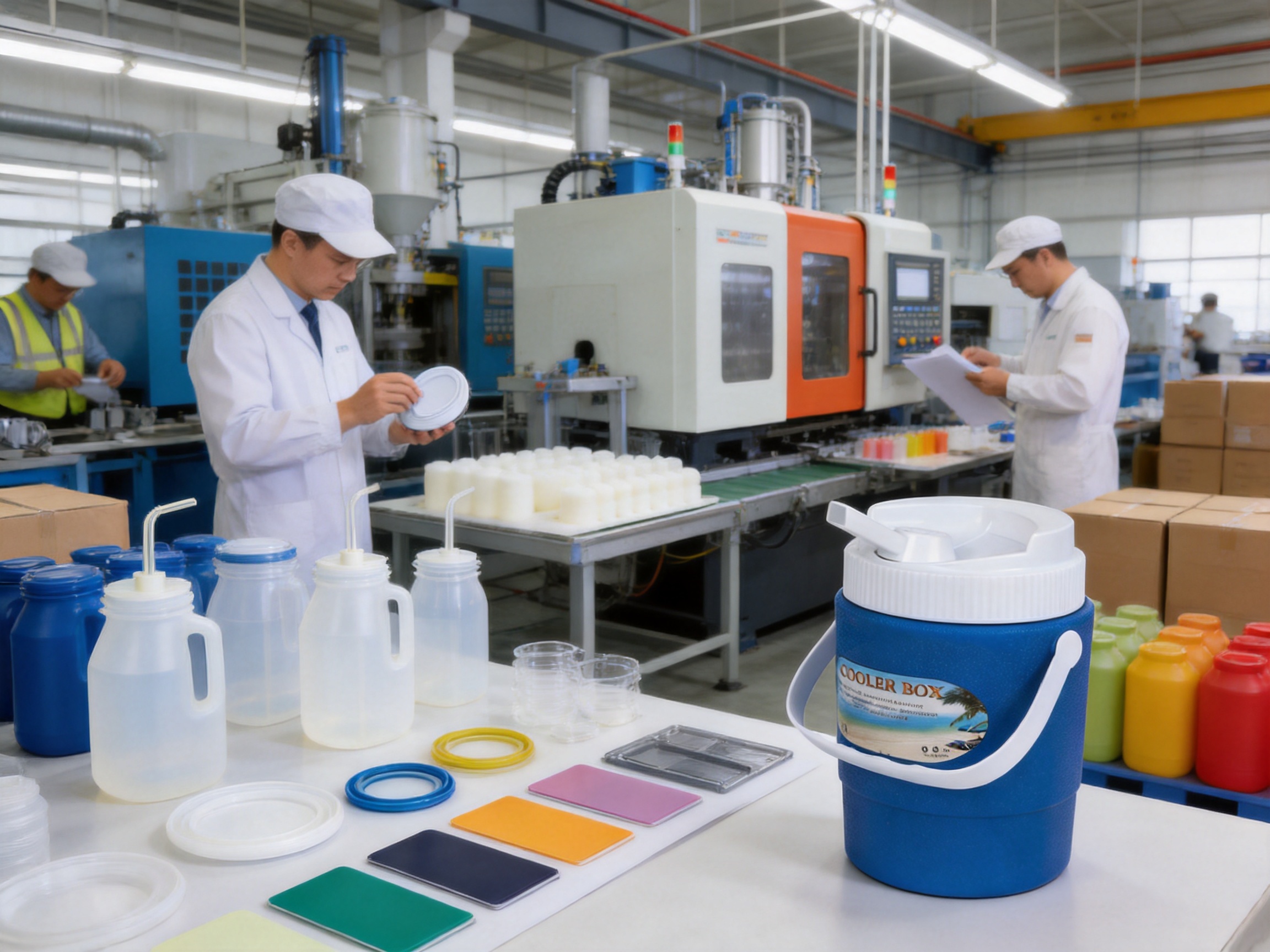
A reliable drink and food container can make everyday routines more convenient, especially when people need to carry refreshments away from home. The 1-Litre Plastic Thermal Insulated Cooler Jug is designed for practical temperature retention, easy portability, and flexible use across work, travel, sports, outdoor activities, and daily meals. Its compact structure combines a durable plastic exterior, thermal insulation, a convenient straw-style water outlet, and a sealing ring in the lid.
With a capacity of one litre, the cooler jug offers a useful balance between carrying volume and portability. It can hold enough water or a prepared beverage for an individual user while remaining compact enough for many backpacks, work bags, bicycle panniers, and outdoor gear arrangements. Its 220-gram weight also makes it suitable for users who want insulation without carrying a heavy metal flask or large cooler.
This article examines the product’s construction, performance, practical advantages, applications, manufacturing background, customization possibilities, and purchasing value. It also explains why an experienced manufacturer with injection molding, blow molding, foaming, product development, and quality management capabilities can provide a stronger supply solution for wholesale customers and private-label buyers.
Product Overview
The cooler jug is a portable thermal container created for cold or warm food and beverages. It uses a multilayer material structure consisting of PP, PE, and PU. Each material contributes to the overall function of the product. Polypropylene supports the durable outer or structural components, polyethylene can contribute to internal container construction and practical molding performance, and polyurethane provides the insulation layer that helps slow temperature change.
The jug has a stated volume of one litre and approximate dimensions of 120 millimetres in diameter by 190 millimetres in height. This relatively compact footprint makes it suitable for personal use and convenient storage. The proportions allow users to carry a useful amount of water, juice, tea, soup, or another suitable food or beverage without the bulk associated with a larger cooler container.
The listed product weight is approximately 220 grams, also described as 0.2 kilograms in the product specifications. This low weight is a significant practical benefit. When a person is already carrying sports equipment, clothing, lunch, documents, or outdoor tools, a lightweight insulated container can reduce the total load while still providing temperature protection.
| Item | Specification | Practical significance |
|---|---|---|
| Product type | Thermal insulated cooler jug | Suitable for personal beverages and food storage |
| Capacity | 1 litre | Provides a practical individual serving volume |
| Approximate dimensions | 120 mm diameter × 190 mm height | Designed for convenient carrying and storage |
| Main materials | PP + PE + PU | Combines plastic structure with thermal insulation |
| Product weight | Approximately 220 g | Lightweight for travel, work, and sports use |
| Outlet design | Straw-style water outlet | Supports convenient drinking while reducing the need to remove the entire lid |
| Lid feature | Sealing ring | Helps improve closure performance and reduce leakage risk |
| Insulation description | Designed to retain warm or cold temperatures | Useful for drinks and prepared food during daily activities |
Thermal Insulation for Everyday Use
The main function of an insulated jug is to slow the transfer of heat between the contents and the surrounding environment. Unlike a standard single-wall plastic bottle, an insulated cooler jug uses a dedicated insulation layer to help preserve the original temperature for longer. The product information identifies PU insulation as an important part of the body construction.
The cooler jug is described as maintaining the temperature of food, whether warm or cold, for more than three hours under suitable conditions. The specifications also refer to a body insulation time of up to 24 hours. Actual performance can vary according to the initial temperature of the contents, ambient temperature, filling level, frequency of opening, placement, and the type of beverage or food being stored. For responsible purchasing and product communication, the exact test method and performance conditions should be confirmed for a specific order.
In practical use, the insulation is valuable because it provides a longer period of temperature stability than an ordinary non-insulated container. A user can prepare a drink or meal at home and carry it to work, school, a sports venue, a picnic, or an outdoor activity. The container is not intended to replace a refrigerator, microwave, or commercial food warmer, but it can help reduce rapid temperature change during transport and short-term use.
The insulated design is also helpful for reducing dependence on disposable drink packaging. Users can refill the jug with water, cold drinks, or suitable warm beverages according to their needs. Reusable use can support more organized daily hydration and may help reduce the number of single-use bottles consumed during work, travel, or exercise.
Advantages of the Multilayer Material Structure
Polypropylene for Structural Durability
Polypropylene is widely used in reusable household and outdoor products because it offers a practical combination of light weight, moldability, and durability. In a cooler jug, PP can be used for structural components that need to maintain their shape during regular handling. Its relatively low density also helps the finished product remain lightweight.
A PP-based structure is appropriate for products that may be placed in bags, carried between locations, or used repeatedly. The material can support clean, smooth product surfaces and allows manufacturers to create useful details such as handles, lid connections, drinking openings, and shaped body sections through controlled molding processes.
Polyethylene for Practical Container Construction
Polyethylene is another widely used plastic in storage and container applications. It can contribute to the inner or outer parts of the jug, depending on the selected production design. Its practical processing characteristics support efficient manufacturing of consistent container components and can help create a functional interior surface for suitable food and beverage applications.
The combination of PP and PE allows the product to be engineered around different functional requirements. The outer body can be shaped for carrying comfort and visual appeal, while the inner structure can be formed to support capacity, cleaning convenience, and integration with the insulation system.
PU for Thermal Protection
Polyurethane foam is used as the insulation material in the body of the cooler jug. Its purpose is to create a layer that slows the movement of heat through the container wall. This is the principal difference between the cooler jug and a basic plastic bottle with no thermal barrier.
The quality of the final insulation depends on more than simply selecting PU. The thickness and consistency of the foam, the condition of the mold, the foaming process, the fit between components, and the sealing performance of the lid all influence practical results. A manufacturer with dedicated foaming equipment can control these stages more effectively than a supplier that only purchases pre-made components and performs simple assembly.
Portable One-Litre Capacity
A one-litre capacity is suitable for users who need more than a small personal cup but do not want to carry a large water container. It can provide drinking water for a portion of a workday, support a training session, or hold a personal serving of a cold or warm beverage. For meal use, the one-litre size can accommodate a prepared portion while helping the user avoid carrying excessive food.
The product information specifically presents the size as suitable for a single meal and useful for portion control. This makes the cooler jug relevant to office workers, students, drivers, field staff, campers, cyclists, hikers, and sports participants. A defined capacity can also help food-service or promotional-product buyers create a clear product position in the market.
At approximately 120 millimetres in diameter and 190 millimetres in height, the jug has a compact cylindrical format. Users can place it upright in a backpack, work bag, vehicle storage area, or bicycle pannier, provided the available space and bag design are suitable. The modest dimensions may also make it easier to store several units in retail packaging or shipping cartons.
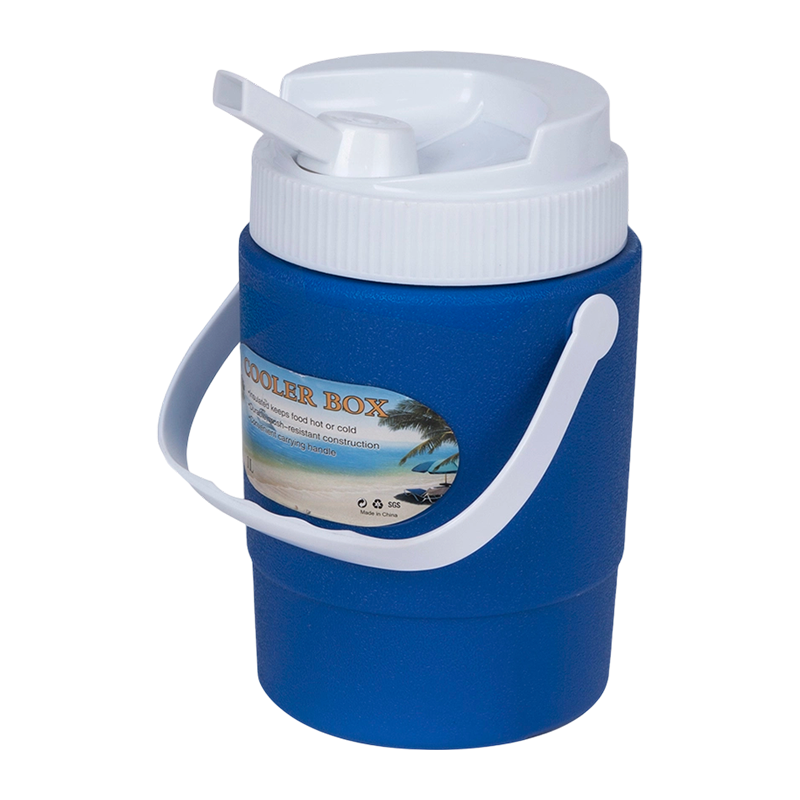
1 Litre PLASTIC Thermal Insulated Cooler Jug for Food, Beverage, and Sports Use
Convenient Drinking and Sealing Features
Straw-Style Water Outlet
The straw-style water outlet is designed to make drinking more convenient. Instead of removing the entire lid every time the user wants a drink, the outlet provides a more direct way to access the contents. This can be helpful during walking, cycling, exercise, commuting, or outdoor work when the user wants to drink quickly and keep both hands available as much as possible.
The outlet also supports a more controlled drinking experience. It can help reduce the need to tilt the entire container, which is useful when the jug is being used while seated at a desk, inside a vehicle, or during a sporting activity. Buyers should confirm the specific outlet configuration, cleaning method, and replacement-part availability when developing a long-term product program.
Lid Sealing Ring
The lid includes a sealing ring intended to improve closure performance. A well-fitted sealing ring can help reduce the risk of liquid escaping when the jug is carried or moved. It also supports the user’s confidence when placing the container in a bag, although any portable container should be kept upright when possible and should be tested under the customer’s intended conditions.
The sealing ring is especially important when the jug contains warm drinks or liquid food. Temperature retention and leakage control are connected: if the lid does not close properly, heat can escape more quickly and the product becomes less convenient to transport. A secure lid design therefore improves both the user experience and the functional value of the insulation system.
Comparison with Common Alternative Containers
The cooler jug occupies a useful position between a basic plastic bottle, a metal vacuum flask, and a large outdoor cooler. Each alternative has its own advantages, but the one-litre insulated plastic format offers a particular combination of weight, capacity, construction flexibility, and ease of customization.
| Comparison point | Basic plastic bottle | Metal vacuum flask | Large cooler | 1-litre insulated cooler jug |
|---|---|---|---|---|
| Insulation | Usually limited | Often strong | Designed for larger loads | Designed for practical personal temperature retention |
| Weight | Very light | Often heavier | Usually substantially heavier | Approximately 220 g |
| Capacity position | Small to medium | Small to medium | Medium to very large | One litre for individual use |
| Drinking convenience | Depends on cap design | Depends on cap design | Usually requires opening the cooler | Straw-style outlet supports direct drinking |
| Design flexibility | High | Moderate | Moderate | High through plastic molding and customization |
| Typical use | Short-term hydration | Personal hot or cold drinks | Group storage and transport | Daily work, sport, travel, and personal meal use |
Compared with a basic plastic bottle, the insulated cooler jug offers better protection against rapid temperature change. Compared with many metal vacuum flasks, its low weight and plastic construction may be more attractive for customers who prioritize portability and cost-effective volume. Compared with a large cooler, it is easier to carry and more appropriate for a single user.
Another advantage over some alternatives is the product’s suitability for customized manufacturing. Plastic injection molding, blow molding, and foaming allow a supplier to adjust colors, surface appearance, logos, packaging, and selected structural details. This can help distributors and retailers create a product range that is visually consistent with their own market positioning.
These advantages do not mean that one product is suitable for every situation. A large cooler remains preferable for storing many items, while a premium vacuum flask may be selected for specialized high-temperature applications. The value of this cooler jug lies in its balanced design: practical insulation, useful capacity, low weight, direct drinking access, and flexible commercial customization.
Applications Across Different Markets
Sports and Fitness
Sports users need convenient hydration before, during, and after training. The lightweight body reduces the burden of carrying equipment, while the one-litre capacity provides a useful personal supply. The straw-style outlet can be convenient during walking, cycling, gym sessions, field sports, and outdoor exercise.
Sports retailers may position the product as a personal hydration accessory, team item, training-camp product, or promotional gift. Custom color combinations and printed logos can help clubs, event organizers, and fitness businesses create a coordinated appearance. Packaging can also be adapted for retail shelves, online sales, or team distribution.
Office and Workplace Use
Office workers can use the jug for water, tea, juice, or a prepared meal. Its compact shape is suitable for desks, lockers, office kitchens, and commuting bags. The insulation helps the contents remain closer to their starting temperature during the working day, while the sealed lid supports cleaner transport than an open cup.
Employers and promotional-product distributors may use customized cooler jugs for employee gifts, company events, wellness campaigns, or customer marketing programs. A reusable product with practical daily value can provide repeated brand exposure while serving a functional purpose.
Travel and Commuting
Commuters often need a container that fits into limited storage space. The 120-millimetre diameter and 190-millimetre height provide a compact format for many travel situations. The jug can be carried on public transport, placed in a vehicle, or stored in a work bag, subject to the available space and the customer’s handling requirements.
For travel retailers, the product can be offered as a lightweight alternative to larger insulated containers. Its one-litre volume is enough for personal use without taking up the storage space required by a family-size cooler. The lid sealing ring and straw-style outlet further support on-the-go convenience.
Camping, Hiking, and Outdoor Activities
Outdoor users often value products that combine low weight with useful capacity. The jug can support day trips, picnics, short hikes, fishing outings, field work, and camping. It can carry cold water, a warm beverage, or suitable prepared food, helping users organize refreshments away from a kitchen.
When used outdoors, the product should be protected from excessive impact, extreme heat, and conditions outside the manufacturer’s recommended specifications. Buyers serving outdoor markets can request product testing, packaging evaluation, and usage guidance appropriate to their region and target customers.
Food Storage and Personal Meals
The product description identifies food use as one of its intended applications. Its insulated body can help keep prepared food warm or cold for a period after preparation. This is useful for office lunches, school meals, outdoor picnics, and individual portions.
Users should follow appropriate food-safety practices. Hot or cold food should be prepared, handled, and stored according to applicable local guidance. The container should be cleaned promptly after use, especially when it contains dairy products, soups, sauces, or other items that may leave residue. Customers requiring specific food-contact compliance documents should request the relevant test reports and declarations for the intended market.
Manufacturing Capabilities Behind the Product
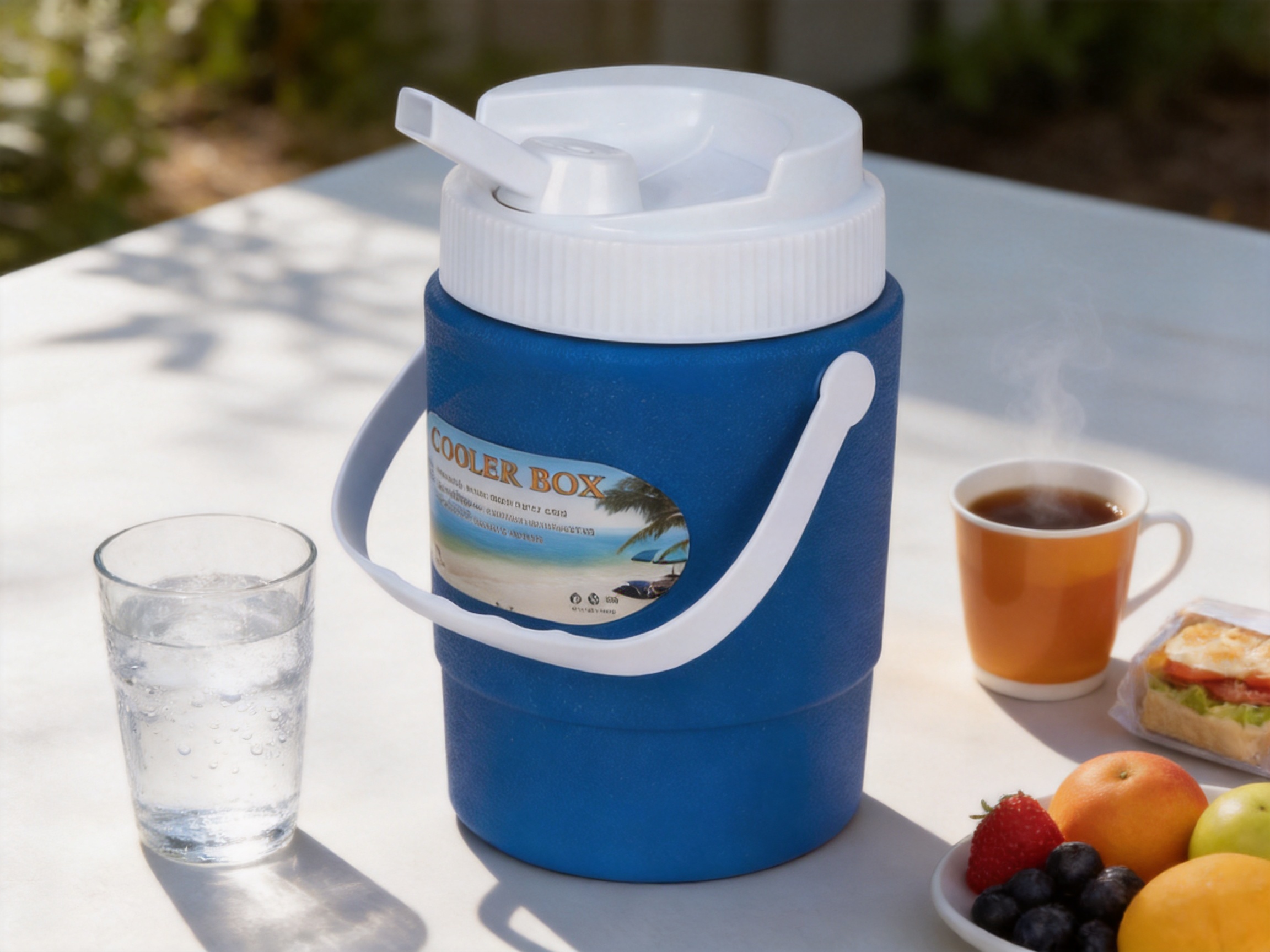
The performance of a plastic insulated cooler jug depends heavily on manufacturing consistency. The design must be translated into accurate molds, stable material processing, controlled insulation, reliable assembly, and repeatable inspection. Ningbo Junlong Outdoor Products Co., Ltd. integrates product development, production, and sales within its own manufacturing operation, providing a more coordinated supply structure for wholesale and custom orders.
The company was founded in 2000 and operates in Cixi, Ningbo, an important manufacturing area in the Yangtze River Delta. Its independent factory covers approximately 12,000 square metres and employs more than 100 people. This scale supports the coordination of engineering, molding, foaming, assembly, quality control, warehousing, and order management.
Automatic Injection Molding
Injection molding is important for producing accurate and repeatable plastic components. Molten plastic is injected into a prepared mold under controlled pressure, where it cools and forms the required shape. For cooler jugs, this process can be used for bodies, lids, handles, outlet parts, and other components that require consistent dimensions.
Automatic injection molding machines can improve production efficiency and reduce variation between batches when properly operated and maintained. Stable process parameters help support consistent wall thickness, connection points, opening dimensions, and surface appearance. These details are important because the lid, sealing ring, outlet, and body must work together as a complete system.
For custom orders, injection molding also enables the development of distinctive shapes and brand-specific visual details. A buyer can discuss the feasibility of new colors, surface textures, logo placement, handle arrangements, and packaging presentations. Mold investment, minimum order quantity, lead time, and testing requirements should be reviewed before production begins.
Blow Molding Equipment
Blow molding is another manufacturing capability available at the factory. This process is commonly used to form hollow plastic products by expanding heated plastic against the inside of a mold. Depending on the product structure, blow molding can support the production of container sections or related outdoor water-storage products.
The availability of both injection molding and blow molding gives the manufacturer greater flexibility when selecting a process for a particular product design. A suitable process can be chosen according to the required shape, wall structure, production volume, appearance, and performance objectives.
Foaming Equipment
Foaming equipment is particularly relevant to insulated products. The PU insulation layer must be formed in a controlled space between the appropriate body components. Consistent foaming helps reduce weak areas and supports more uniform thermal performance across the container body.
Insulation quality can be influenced by material preparation, mold design, foam density, curing conditions, temperature control, and operator procedures. A factory with dedicated foaming equipment can manage these variables as part of an integrated manufacturing process rather than relying entirely on outside suppliers.
Product Development and Engineering Support
The company’s product development capability supports the creation of outdoor cooling and water-storage products. An internal R&D team can work with customers who provide drawings, samples, functional requirements, or preliminary concepts. This is especially useful when the buyer wants to adapt the cooler jug for a specific market or sales channel.
Engineering discussions may include capacity, dimensions, lid structure, outlet style, insulation arrangement, color, logo location, packaging, and target cost. Early communication helps identify technical limitations before tooling or mass production begins. It can also reduce the risk of late changes that affect schedule and budget.
Quality Management and Production Control
A reliable manufacturing program requires more than modern machines. It also depends on documented procedures, trained personnel, inspection standards, material control, and communication between departments. The company describes its operation as supported by a rigorous quality management system, which is important for maintaining stable quality across different production batches.
Quality control for a cooler jug may include inspection of incoming raw materials, dimensional checks, visual inspection, weight verification, assembly checks, lid fit evaluation, sealing-ring placement, outlet function, and packaging review. Depending on the customer’s market and order requirements, additional tests may be arranged for leakage, temperature retention, drop resistance, pressure, odor, color, or food-contact suitability.
Thermal performance should be evaluated under defined test conditions. Important variables include the starting temperature, fill volume, ambient temperature, measurement intervals, container position, and frequency of opening. A clear test method allows the buyer and manufacturer to compare results fairly and communicate performance accurately to end users.
For wholesale customers, batch consistency is especially important. Retailers may receive several shipments over a season, and differences in color, fit, printing, or packaging can create customer complaints. A coordinated factory with internal molding and foaming capabilities can help reduce variation and respond more efficiently when corrective action is required.
OEM and ODM Customization Options
Color Customization
Color is one of the simplest ways to adapt a cooler jug to a specific market. Buyers may request standard colors for faster production or develop custom shades that match a corporate identity, sports team, retail collection, or seasonal campaign. Color selection should account for material compatibility, visual consistency, minimum order quantity, and production scheduling.
Logo and Surface Branding
Logo customization can turn a practical cooler jug into a promotional product or private-label item. Depending on the design, branding may be applied through printing, molding, labeling, or another suitable method. The logo location should be selected so that it remains visible during normal use without interfering with the lid, outlet, handle, or cleaning process.
Customers should provide artwork in an appropriate format and confirm the number of colors, print dimensions, surface requirements, and durability expectations. A pre-production sample or digital proof is recommended before mass production.
Packaging Development
Packaging can be adapted for wholesale cartons, retail shelves, e-commerce fulfillment, promotional distribution, or gift presentation. Packaging decisions may include individual boxes, color sleeves, instruction inserts, barcode labels, carton markings, protective materials, and shipping arrangements.
Good packaging should protect the jug from scratches, deformation, and contamination during transportation. It should also communicate essential product information clearly, including capacity, material description, use instructions, cleaning guidance, and any relevant warnings.
Development from Drawings or Samples
The company offers product development based on customer drawings or samples. This allows buyers to start with an existing concept, a competing product reference, an internal sketch, or a physical sample. The engineering team can review the requested features and determine how they can be adapted to available materials and manufacturing processes.
Development projects generally require confirmation of technical specifications, ownership of tooling, sample approval, testing responsibilities, order quantities, target pricing, and expected lead time. A clear development brief improves communication and helps ensure that the finished product meets the buyer’s commercial purpose.
Commercial Benefits for Wholesale Buyers
The cooler jug is suitable for distributors, outdoor-product wholesalers, sporting-goods importers, promotional-product companies, supermarkets, travel retailers, and private-label brands. Its practical use cases allow it to be introduced through several sales channels rather than being limited to one narrow market.
A one-litre product can also fit different price levels depending on material specifications, decoration, packaging, and order volume. Buyers may choose a simple version for large promotional programs or a more extensively customized version for retail distribution. The manufacturer can discuss the appropriate balance between design, performance, packaging, and target cost.
Working with a factory that combines product development, molding, foaming, and sales support can simplify supplier management. Instead of coordinating several separate companies for different components, the buyer can communicate with one integrated manufacturing partner. This may improve production planning and make it easier to handle revisions, quality questions, and repeat orders.
The company’s experience since 2000 is also relevant to long-term supply relationships. A mature manufacturer is more likely to have established production procedures, equipment-maintenance practices, supplier connections, and experience with different customer requirements. These capabilities can support stable order fulfillment while still allowing customization.

Recommended Use and Care
Before first use, the cooler jug should be washed according to the manufacturer’s care instructions. The lid, straw-style outlet, and sealing ring should be checked to ensure that they are correctly assembled. Users should avoid filling beyond the recommended level because overfilling may affect closure performance and increase the risk of leakage.
After use, the container should be emptied and cleaned promptly. The outlet and sealing ring deserve particular attention because residue may collect around small openings or joints. If the design includes removable parts, they should be disassembled and cleaned only as instructed to avoid damage or incorrect reassembly.
Users should avoid placing the product in conditions that exceed its specified temperature range. Very hot contents, carbonated beverages, acidic liquids, or thick food may require special guidance depending on the final product design. Customers should request a complete instruction sheet before commercial distribution if the product will be sold for a broad range of beverages or foods.
The cooler jug should be transported upright when possible. Although the lid includes a sealing ring, no portable container should be assumed to be completely spill-proof under every condition. Regular inspection of the lid, outlet, and sealing ring can help identify wear before it affects normal use.
Purchasing Checklist for Importers and Distributors
Buyers should confirm the basic product specifications before placing an order. These include capacity, dimensions, total weight, material structure, available colors, outlet design, lid construction, insulation expectations, and packaging method. The buyer should also clarify whether the listed dimensions refer to the finished body, the complete product, or the shipping package.
For private-label programs, artwork and branding requirements should be agreed in writing. The buyer should confirm logo size, printing position, color references, sample approval procedures, and the acceptable tolerance for visual variation. If the product will be sold in a regulated market, the buyer should identify all required documents and testing standards at the beginning of the project.
Order planning should include minimum order quantity, tooling cost if applicable, sample lead time, production lead time, shipping carton dimensions, loading quantity, payment terms, and inspection arrangements. It is also useful to define how changes to the design or packaging will be managed after sample approval.
Temperature-retention claims should be based on documented testing. A buyer should ask for the test conditions behind any stated duration and determine whether the results match the intended use. The product information indicates more than three hours for food temperature maintenance and also mentions a body insulation time of 24 hours; these figures should be interpreted according to the applicable test method and communicated carefully in marketing materials.
Q&A
What is the capacity of the cooler jug?
The cooler jug has a capacity of one litre. This makes it suitable for personal water, beverages, and individual food portions.
What materials are used?
The listed material structure is PP, PE, and PU. PP and PE support the plastic container construction, while PU provides the principal thermal insulation layer.
How much does the product weigh?
The product weighs approximately 220 grams, or about 0.2 kilograms. The exact shipping weight will be higher because it may include packaging and accessories.
What are the approximate dimensions?
The stated dimensions are approximately 120 millimetres in diameter and 190 millimetres in height. Buyers should confirm final production tolerances and packaging dimensions for logistics planning.
Can the jug hold both warm and cold contents?
It is designed for warm or cold food and beverages. Actual temperature-retention performance depends on the starting temperature, ambient conditions, filling level, opening frequency, and the contents being stored.
How long can it maintain temperature?
The product information describes temperature maintenance for more than three hours and also refers to a body insulation time of up to 24 hours. These figures should be verified under defined test conditions before being used in product advertising.
Does it have a drinking outlet?
Yes. The product includes a straw-style water outlet intended to make drinking more convenient during sports, commuting, work, and outdoor activities.
Does the lid include a sealing feature?
Yes. The lid has a sealing ring that helps improve closure performance and reduce the risk of leakage during normal carrying and use.
Is it suitable for food?
The product is described for food and beverage use, including individual meals. Buyers requiring food-contact compliance for a particular country or market should request the applicable documentation and testing before placing a commercial order.
Can the product be customized?
Yes. Available customization services include development from drawings or samples, color selection, logo application, and packaging options. The exact possibilities depend on the design, order quantity, tooling, and decoration method.
What manufacturing equipment supports production?
The factory includes automatic injection molding machines, blow molding machines, and foaming equipment. These capabilities support the production of plastic components, hollow container structures, and insulated product bodies.
Who can purchase this product?
The product can serve wholesalers, distributors, sporting-goods suppliers, outdoor retailers, promotional-product companies, supermarkets, travel retailers, and private-label buyers.
How should the product be cleaned?
The jug should be cleaned according to the manufacturer’s instructions, with special attention to the lid, straw-style outlet, and sealing ring. Residue should not be allowed to remain in small openings or around removable components.
Can the jug replace a refrigerator or microwave?
No. It is a portable insulated container designed to slow temperature change during transport and short-term use. It should not be treated as a refrigerator, freezer, microwave, or commercial food-heating device.
Why Choose an Integrated Manufacturing Partner?
An integrated factory can provide advantages throughout the product lifecycle. During development, engineering and sales teams can communicate directly with the buyer about capacity, appearance, insulation, and packaging. During production, molding and foaming processes can be coordinated more closely. During quality control, the factory can investigate whether a problem originates in materials, molding, insulation, assembly, or packaging.
This integrated approach is particularly useful for cooler products because thermal performance depends on the relationship between several parts. The plastic body, insulation layer, lid, sealing ring, drinking outlet, and assembly process must function together. A supplier with relevant equipment and product experience can evaluate the complete system rather than treating each component in isolation.
Ningbo Junlong Outdoor Products Co., Ltd. focuses on outdoor cooling and water-storage products, including insulated cooler jugs, ice buckets, outdoor water containers, and cooler boxes. Its product range provides a foundation for understanding related applications and customer requirements. The company’s manufacturing base, development resources, and customization services support both standard products and tailored projects.
Conclusion
The 1-Litre Plastic Thermal Insulated Cooler Jug offers a balanced solution for personal food and beverage transport. Its one-litre capacity provides useful volume without excessive bulk, while the approximate 220-gram weight supports convenient carrying. The PP, PE, and PU material structure combines plastic practicality with a dedicated insulation layer, and the straw-style outlet makes drinking easier during everyday activities.
The lid’s sealing ring contributes to secure closure, while the compact 120-millimetre by 190-millimetre format can fit many bags, storage areas, and outdoor gear arrangements. The product can serve sports, work, travel, commuting, camping, hiking, school, promotional, and personal meal applications.
For wholesale and private-label buyers, the product’s value extends beyond its basic function. Color, logo, packaging, and development options allow it to be adapted to different market positions. The manufacturer’s automatic injection molding, blow molding, and foaming equipment supports coordinated production, while its R&D resources and quality management system provide a foundation for repeatable manufacturing.
Customers selecting this cooler jug should confirm performance conditions, food-contact requirements, customization details, packaging, order quantities, and testing documentation before production. With clear specifications and appropriate quality control, the product can provide a practical, lightweight, and commercially flexible addition to an outdoor cooling and hydration range.
References
1. Product specification sheet for the 1-Litre Plastic Thermal Insulated Cooler Jug, including capacity, dimensions, materials, weight, outlet, lid, and insulation information.
2. Manufacturer information for Ningbo Junlong Outdoor Products Co., Ltd., including factory history, facilities, product categories, manufacturing equipment, and customization services.
3. General technical principles of plastic injection molding, blow molding, and polyurethane foaming used in insulated container production.
4. General guidance on reusable food and beverage container cleaning, handling, temperature control, and transport.
5. General packaging and quality-control principles for wholesale plastic outdoor products.
Product: 1 Litre PLASTIC Thermal Insulated Cooler Jug for Food, Beverage, and Sports Use

Product Recommendation
link
Office
- TEL: +86-574-63787606
- Phone: +86-13777994798
- E-mail: sales@nbjunlong.com
- WhatsApp: 13777967488
- Address: No. 1, Lane 3, Development Road, Longtouchang, Longshan Town, Cixi City, Zhejiang Province, China
Get In Touch
Copyright © Ningbo Junlong Outdoor Products Co., Ltd. All Rights Reserved.
China Plastic Insulated Cooler Box Manufacturer Custom Cooler Box Supplier
