- SMALL ORDERS FOR STANDARD ITEMS. Contact Now
- OUTDOOR COOLING SOLUTIONS, MADE IN‑HOUSE. Contact Now
- COOLER BOXES THAT FIT REAL OUTDOOR LIFE. Contact Now

 LANGUAGE
 日本語
 Español
 عربى

15L Leak-Proof Insulated Water Jug: A Practical Solution for Outdoor Hydration and Self-Service Beverage Dispensing
Content
- 1 1. Product Overview
- 2 2. Why a 15L Insulated Jug Is Useful
- 3 3. Leak-Resistant Design for Confident Transport
- 4 4. Integrated Faucet for Controlled Dispensing
- 5 5. Hidden Handle and Portable Form
- 6 6. Advantages Over Conventional Beverage Containers
- 7 7. Food-Grade PE Construction
- 8 8. Manufacturing Capabilities
- 9 9. OEM and ODM Customization
- 10 10. Applications in Outdoor and Everyday Settings
- 11 11. Practical Use and Maintenance Guidance
- 12 12. Purchasing Considerations for Importers and Distributors
- 13 13. Why Manufacturing Integration Matters
- 14 14. Balanced Evaluation of Product Performance
- 15 15. Frequently Asked Questions
- 15.1 Q1: What is the capacity of the water jug?
- 15.2 Q2: What are the product dimensions?
- 15.3 Q3: What material is used?
- 15.4 Q4: Does the jug have a faucet?
- 15.5 Q5: Is the lid designed to prevent leakage?
- 15.6 Q6: Is the handle external or integrated?
- 15.7 Q7: Can the jug keep beverages cold?
- 15.8 Q8: Can it be used for hot beverages?
- 15.9 Q9: Where can the jug be used?
- 15.10 Q10: How much does the empty jug weigh?
- 15.11 Q11: Can the product be customized?
- 15.12 Q12: What manufacturing equipment does the supplier have?
- 15.13 Q13: How should the jug be cleaned?
- 15.14 Q14: Is the jug suitable for export programs?
- 16 16. Conclusion
- 17 References
- 18 Product: 15L Leak-Proof Insulated Water Jug with Integrated Handle & Faucet
Reliable beverage storage is essential for outdoor activities, workplace refreshment stations, family gatherings, parties, events, and hospitality applications. A suitable water container must do more than hold liquid. It should be easy to transport, simple to operate, resistant to leakage, safe for beverages, and compact enough to fit into practical storage spaces. The 15L leak-proof insulated water jug described in this article is designed around these requirements, combining a useful capacity with an integrated carrying handle, a direct-dispensing faucet, a sealed lid, and food-grade polyethylene construction.
With a capacity of 15 liters, the jug offers a convenient middle ground between small personal drink containers and large commercial beverage dispensers. It can provide water, juice, sports drinks, iced tea, or other beverages for a group without requiring constant refilling. At the same time, its dimensions of 350 × 195 × 290 millimeters and net weight of approximately 720 grams make it relatively easy to transport and position on a table, counter, picnic surface, or outdoor service station.
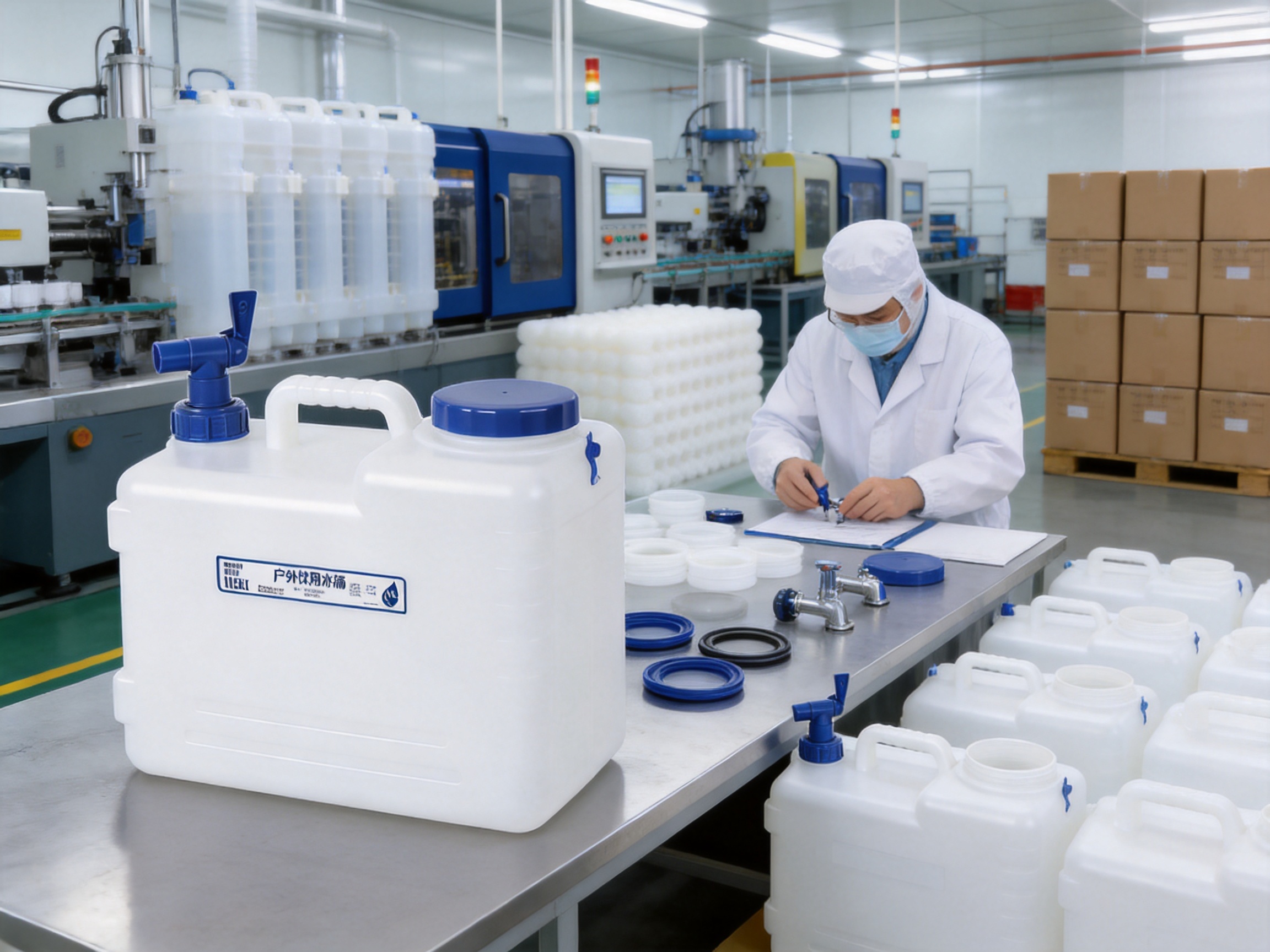
The product is manufactured by Ningbo Junlong Outdoor Products Co., Ltd., a Chinese outdoor product manufacturer with experience in product development, injection molding, blow molding, foaming, quality management, and OEM/ODM production. The company’s manufacturing capabilities support the production of cooler jugs, cooler boxes, ice buckets, and outdoor water containers for customers in domestic and international markets.
This article examines the product’s construction, functions, practical advantages, competitive value, manufacturing process, customization potential, and recommended applications. It also explains why a well-designed 15L dispenser can be more useful than a conventional bottle, bucket, or basic storage container in group beverage situations.
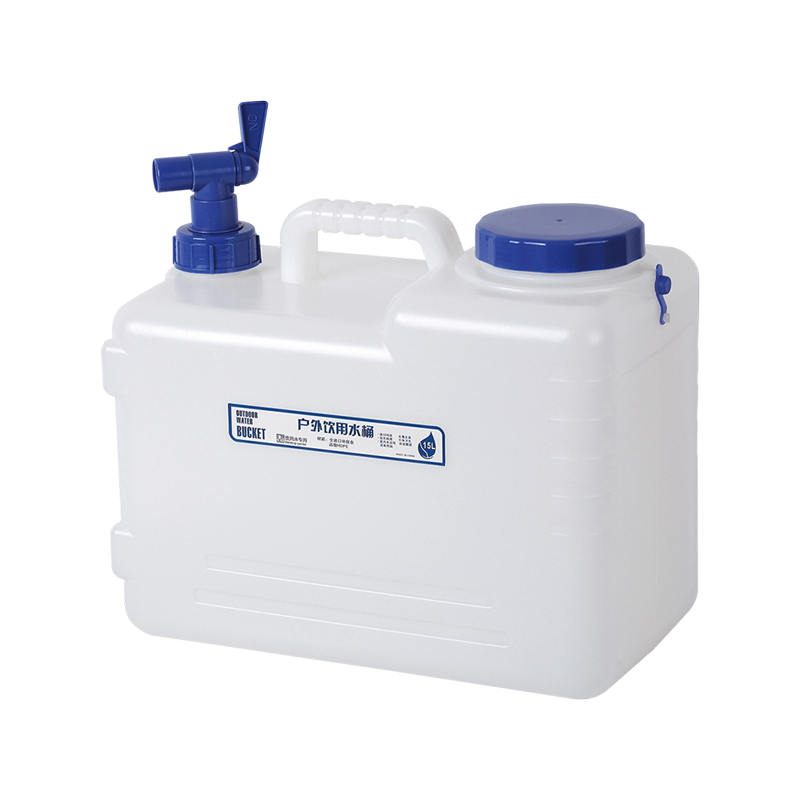
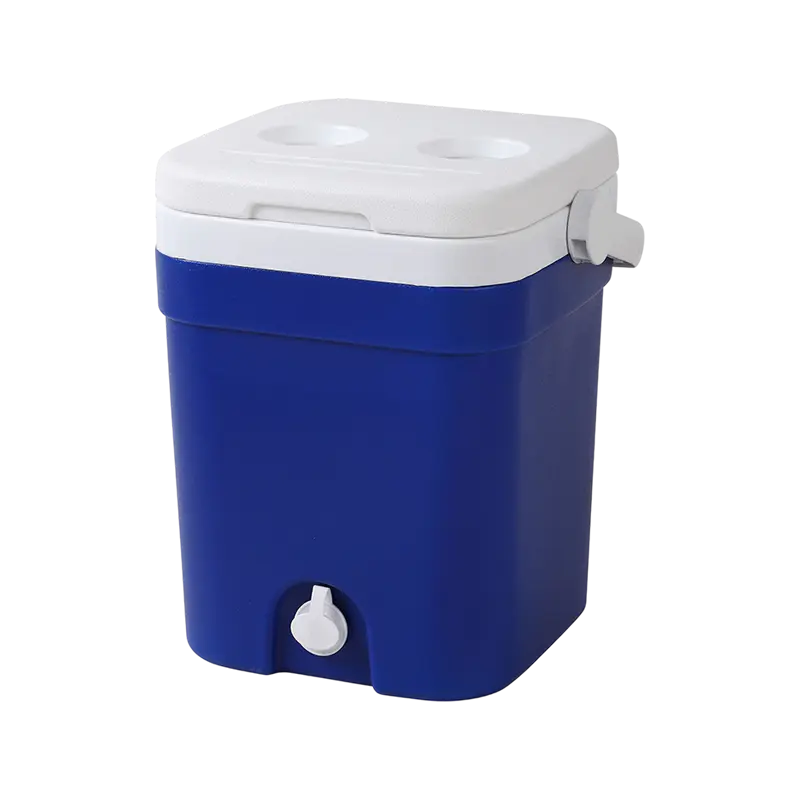
15L Leak-Proof Insulated Water Jug with Integrated Handle & Faucet
1. Product Overview
The 15L leak-proof insulated water jug is an outdoor water container intended for storage and controlled dispensing of beverages. Its design combines an insulated body, a sealed top cover, an integrated faucet, and a built-in handle. Each feature addresses a specific use requirement.
The 15-liter internal capacity is suitable for serving multiple people during a short event, outdoor activity, office break, picnic, or camping trip. Compared with individual bottles, a shared container reduces the need for numerous disposable packages. Compared with a very large dispenser, the 15L format is easier to carry, fill, clean, and reposition.
The product dimensions are 350 millimeters in length, 195 millimeters in width, and 290 millimeters in height. This relatively narrow footprint is valuable when table space is limited. The jug can be placed on a counter or serving table without occupying the area required by a wide barrel-style container. Its vertical shape also helps users access the faucet from the front while keeping the main body organized in a compact space.
The body is made from PE, or polyethylene. The supplied product information describes the material as food grade and BPA free, making it suitable for beverage-contact applications when used according to the manufacturer’s instructions. Polyethylene is widely used for containers because it can provide a practical balance of toughness, processability, low weight, and resistance to everyday handling.
The product weighs approximately 720 grams without the beverage. This is an important consideration because a filled 15-liter container will naturally become much heavier than the empty product. The lightweight structure makes the jug easier to transport before filling, while the handle supports carrying and positioning after filling. For safety, users should lift and move the filled jug with both hands when necessary and place it on a stable surface before dispensing.
Key Specifications
| Specification | Product Detail | Practical Significance |
|---|---|---|
| Product type | Insulated water jug and outdoor beverage container | Suitable for storage, transport, and self-service dispensing |
| Capacity | 15 liters | Appropriate for families, small groups, offices, parties, and outdoor activities |
| Material | PE, described as food grade and BPA free | Supports beverage-contact use and practical durability |
| Dimensions | 350 × 195 × 290 mm | Compact footprint for tables, counters, vehicles, and storage areas |
| Net weight | Approximately 720 grams | Easy to transport when empty and manageable with proper handling |
| Dispensing method | Integrated faucet | Allows controlled serving without lifting or tilting the entire jug |
| Closure system | Twist-lock cover with sealing ring | Helps reduce leakage during transport and positioning |
| Carrying system | Integrated or hidden handle | Improves portability while maintaining a clean appearance |
2. Why a 15L Insulated Jug Is Useful
Many beverage containers are designed either for personal use or for large-scale commercial service. Personal bottles are convenient but require frequent refilling when used by a group. Large dispensers can hold more liquid but may be difficult to move, clean, or store. A 15L jug serves as a practical intermediate option.
For a family picnic, the container can provide enough water or cold beverage for several people while avoiding a collection of individual bottles. For an office, it can serve as a self-service drink station during meetings, training sessions, or daily breaks. At a party, it can be filled in advance and placed on a table so guests can serve themselves. For camping, the jug can reduce the need to carry many smaller containers.
The insulated construction is intended to help beverages maintain a more suitable temperature than they would in a basic single-wall plastic container. The product information identifies it as an insulated water jug, but it does not specify a guaranteed temperature-retention period. Actual performance can depend on the starting temperature, ambient conditions, lid opening frequency, beverage volume, and whether ice is used. Buyers should therefore evaluate insulation according to their application and request test data when a specific holding time is required.
The jug’s usefulness is not limited to cold water. It can be used for chilled juice, iced tea, flavored water, sports beverages, and other suitable drinks. The direct faucet makes it possible to dispense small portions without repeatedly opening the main lid. This helps reduce handling and can make service more orderly in busy environments.
A shared container can also support waste-reduction goals. Instead of distributing numerous small plastic bottles, an organizer can prepare one larger beverage supply and provide reusable cups. The result may be a more organized serving area and a reduction in packaging waste, depending on the user’s overall event plan and cleaning practices.
3. Leak-Resistant Design for Confident Transport
Leakage is one of the most common problems associated with portable beverage containers. A poorly fitted lid can allow liquid to escape when the container is moved from a vehicle to a table, carried across a campsite, or stored temporarily on its side. Moisture can damage bags, furniture, vehicle interiors, packaging materials, and electronic equipment.
This jug uses a twist-lock cover combined with a sealing ring. The cover is designed to engage with the container body and create a closed interface. The sealing ring helps fill the contact gap between the cover and the opening, reducing the chance of liquid escaping when the lid is correctly installed.
The product description states that the twist-lock sealed lid is intended to prevent leaks at any angle. In practical use, leak resistance depends on correct closure, the condition of the sealing ring, proper cleaning, and the absence of damage or debris at the sealing surface. Users should ensure that the lid is fully locked before transport and should avoid overfilling the container.
The sealing system also provides a more reassuring user experience. When a water jug is being carried or placed in a vehicle, users should not have to worry constantly about whether the cover has shifted. A secure closure makes the product more suitable for outdoor logistics, event preparation, and mobile beverage service.
Important Sealing Practices
Before filling the jug, inspect the lid and sealing ring for dirt, deformation, or visible damage. Clean contact surfaces help the ring perform properly. After filling, position the lid evenly, rotate it into the locked position, and check that it is secure. If the container is transported, place it upright whenever possible, even though the sealed design is intended to resist leakage.
Regular maintenance is especially important when the jug is used for sweet drinks, flavored beverages, or liquids containing pulp. Residue can collect around the lid, faucet, and sealing components. Prompt rinsing after use helps maintain cleanliness and reduces the risk of unpleasant odors.
4. Integrated Faucet for Controlled Dispensing
The integrated faucet is one of the product’s most practical features. Instead of lifting and tilting a full 15-liter container, users can position the jug on a table and dispense liquid directly into a cup, bottle, or glass. This improves convenience and reduces the physical effort required during service.
A faucet is particularly useful when the container is full. Fifteen liters of water has substantial mass, and repeatedly lifting a filled container can be inconvenient or unsafe. With a front-facing tap, the container can remain stable while users control the flow. This makes the product more accessible for children under supervision, older users, office staff, event guests, and campers.
Self-service dispensing can also improve hygiene and organization. Users do not need to touch the inside of the lid or handle the container repeatedly. The beverage station can be arranged with cups, a waste receptacle, and a small tray beneath the faucet to manage drips. In an office or party setting, the faucet helps maintain a consistent serving process throughout the event.
Faucet performance depends on proper installation, cleaning, and handling. The tap should be checked before use, especially after transport or extended storage. The area around the faucet should be rinsed and dried as recommended by the manufacturer. When the jug is not in use, the faucet should be protected from contact with dirty surfaces.
The integrated faucet also differentiates the product from ordinary water storage boxes. A basic container may store liquid effectively, but users must often remove a lid and pour manually. The faucet turns the jug into a beverage service unit, combining storage and dispensing in one product.
5. Hidden Handle and Portable Form
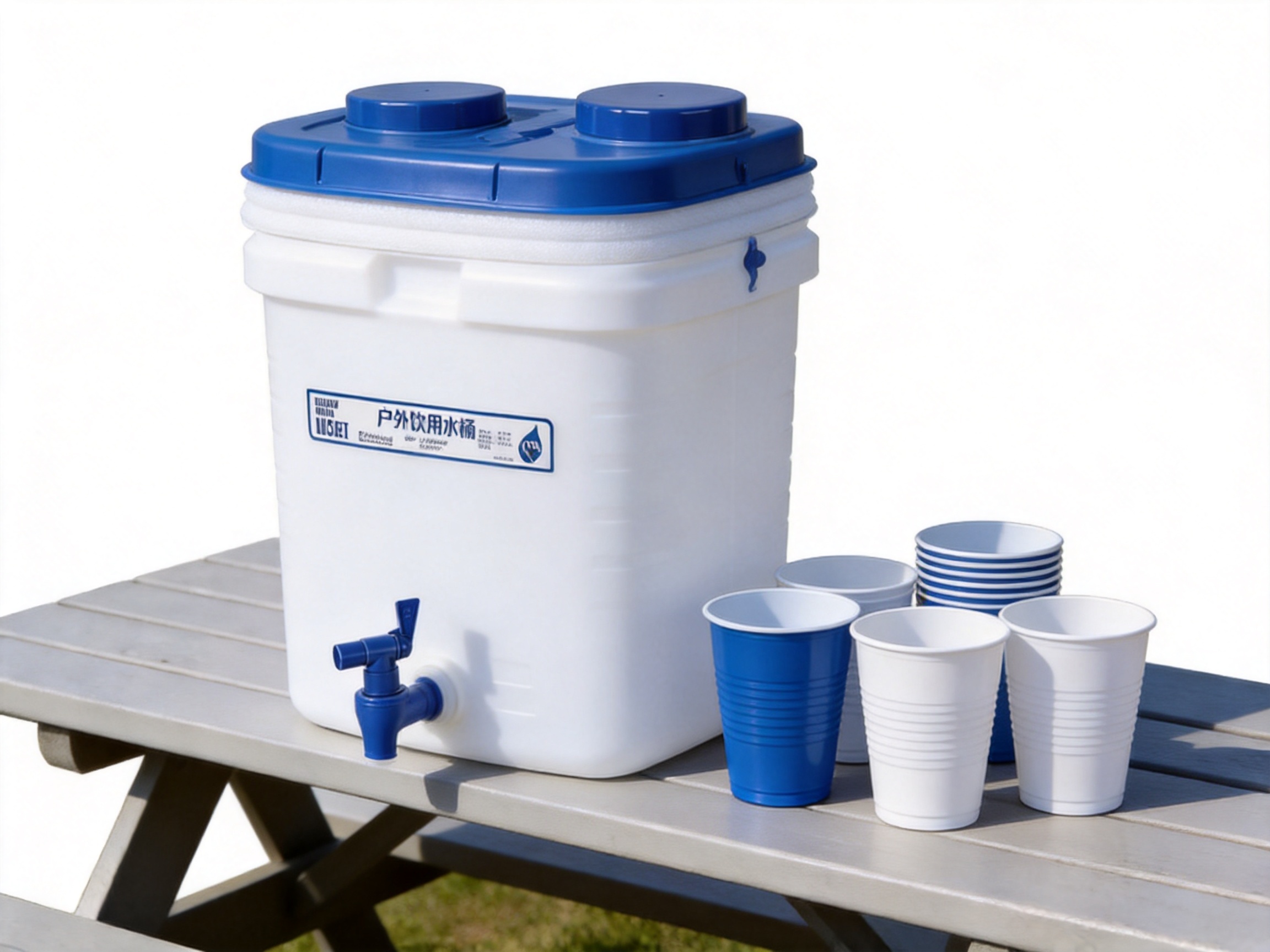
Traditional beverage containers often use external handles that add visual bulk or create points that can catch on bags and storage equipment. The hidden or integrated handle of this jug provides a cleaner appearance while preserving portability. Its design supports carrying without making the product look unnecessarily large.
The handle is useful when the empty product is being moved between a storage room, vehicle, kitchen, campsite, or event area. It also helps users position the filled jug before placing it on a stable surface. Since liquid weight increases substantially after filling, the handle should be used carefully and the container should be supported as needed.
The integrated form may also improve storage efficiency. A clean exterior can make it easier to place several containers together in a warehouse, vehicle, or equipment room. The narrow body dimensions further support space-efficient organization. For distributors and retailers, a compact design can help simplify packaging, pallet planning, and shelf presentation.
From a visual perspective, a hidden handle contributes to a modern and streamlined appearance. This can be important for products used in visible settings such as offices, hospitality venues, conference rooms, catered events, and organized outdoor activities. Functionality remains the primary consideration, but appearance can influence purchasing decisions when the container is placed in front of guests or customers.
6. Advantages Over Conventional Beverage Containers
The product’s competitive value comes from the combination of features rather than from capacity alone. A standard bottle may be easy to carry but is not suitable for serving a group. A basic bucket may hold liquid but may not provide a secure lid or controlled dispensing. A large commercial dispenser may offer high capacity but can be heavy and difficult to reposition. The 15L jug addresses several of these limitations at the same time.
Compared with Individual Bottles
Individual bottles offer personal convenience, but they require more packaging, more storage space, and more frequent handling when many people need a drink. A 15L jug creates a shared beverage point. It can reduce the number of containers needed for an event and make refilling easier for the organizer.
The faucet also allows users to take only the amount they need. This can be useful for reducing partially consumed bottles and maintaining a more organized serving area. Reusable cups or bottles can be used alongside the jug for an even more practical group hydration system.
Compared with Open-Top Buckets
An open-top bucket may be inexpensive, but it is not optimized for beverage hygiene, transport, or controlled serving. The sealed cover on this jug offers a more secure enclosure, while the faucet eliminates the need to dip a cup or ladle into the liquid. The narrow footprint also makes it more suitable for tabletops.
Compared with Basic Water Dispensers
Some water dispensers are designed mainly for indoor fixed installation. They may be difficult to carry outdoors or may require a dedicated support structure. This jug is designed as a portable outdoor water container, making it more suitable for picnics, camping, temporary events, and mobile service.
Compared with Oversized Coolers or Containers
Large containers can provide greater capacity, but they can also create handling challenges. A 15L format is more manageable for many small and medium-sized applications. It offers sufficient volume for a group while remaining easier to clean, transport, and store than a much larger unit.
| Container Type | Main Strength | Common Limitation | Value of the 15L Jug |
|---|---|---|---|
| Individual bottles | Personal portability | Many packages are required for groups | Provides one shared beverage station with controlled dispensing |
| Open bucket | Simple liquid storage | Limited sealing and hygiene control | Uses a sealed lid and integrated faucet |
| Basic storage box | General-purpose capacity | May require manual pouring | Combines storage with direct service |
| Large commercial dispenser | High capacity | Can be heavy and difficult to move | Offers a more manageable portable format |
| Single-wall plastic container | Low cost and light weight | Limited insulation capability | Provides an insulated design for beverage applications |
7. Food-Grade PE Construction
Material selection influences safety, durability, weight, appearance, and manufacturing efficiency. The jug uses PE and is described as food grade and BPA free. This makes it appropriate for beverage storage when used with suitable liquids and maintained according to the product instructions.
Polyethylene is widely used in outdoor and household products because it can withstand regular handling and is available in different grades and processing formats. It can be shaped into practical forms with integrated contours, reinforced areas, openings, and support structures. For a water jug, these characteristics are valuable because the product must combine structural stability with manageable weight.
The material also supports efficient production through molding processes. Molding allows the manufacturer to reproduce consistent shapes across production runs while incorporating the product’s body geometry, lid interface, handle structure, and other design elements. Consistency is important for the proper fit of the lid and sealing ring, as well as for reliable faucet installation.
Food-contact suitability should always be understood in the context of the complete product. The body material, lid, sealing ring, faucet components, colorants, and manufacturing cleanliness all contribute to the final product. Buyers who require specific regulatory documentation should request the applicable material declarations and test records for their target market.
Users should also follow practical care guidelines. The jug should be washed before first use, cleaned after use, and stored dry when possible. Abrasive tools and unsuitable chemicals may damage surfaces or components. Hot liquids should only be used if the manufacturer specifically confirms that the complete product is suitable for them.
8. Manufacturing Capabilities
The manufacturer behind this product was founded in 2000 and operates in Cixi, Ningbo, an important manufacturing area in the Yangtze River Delta. The company focuses on outdoor cooling and water storage products, including cooler jugs, cooler boxes, ice buckets, and outdoor water containers.
Its reported facility covers approximately 12,000 square meters and employs more than 100 people. The factory includes automatic injection molding machines, blow molding machines, and foaming equipment. These capabilities are relevant to the production of plastic outdoor products because different product structures require different forming methods.
Product Development
Product development begins with understanding the intended application. A water jug for camping may prioritize portability, compact storage, and impact resistance. A container for office or hospitality service may place greater emphasis on appearance, controlled dispensing, and easy cleaning. A distributor may require specific colors, branding, packaging, and market documentation.
The development process can include product concept planning, three-dimensional design, structural review, sample production, functional testing, and tooling preparation. The handle, lid, faucet opening, base, and sealing surfaces must be considered together. Small dimensional changes can affect stability, assembly, leakage resistance, and user comfort.
Injection Molding
Injection molding is commonly used to produce precise plastic components such as lids, faucet parts, handles, fittings, and structural elements. In this process, plastic material is heated and injected into a mold under controlled pressure. After cooling, the component is removed and inspected.
For a product with a twist-lock lid and integrated handle, injection molding can support repeatable geometry and detailed features. Mold design is important because locking tabs, threads, ribs, locating points, and support areas must be formed accurately. Proper process control helps reduce variation between production batches.
Automatic injection molding equipment can improve production efficiency and repeatability. It can also support stable cycle times and more consistent processing when operated with appropriate material and temperature settings. Quality checks remain necessary because equipment alone cannot replace inspection and process management.
Blow Molding
Blow molding is another important process for hollow plastic products. It forms a container by expanding heated plastic inside a mold. The process is commonly used for bottles, tanks, and other hollow bodies. Depending on the product structure, blow molding can help create a lightweight container with a continuous hollow form.
The body of an outdoor water container must have sufficient strength for filling, transport, and everyday use. Wall thickness distribution, corner geometry, base stability, opening accuracy, and surface quality all affect performance. Process settings and mold design must be managed carefully to help achieve a consistent result.
Foaming Equipment
Foaming equipment supports the manufacture of insulated products by creating a foam layer or foamed structure between relevant walls or within a designed section. Insulation can help reduce heat transfer and improve the suitability of a container for cold beverage applications.
Insulation performance depends on the type and distribution of the foamed material, wall structure, lid design, ambient temperature, initial beverage temperature, and how often the container is opened. The manufacturer’s foaming capability is therefore a relevant strength for producing cooler jugs and insulated containers, although specific thermal performance should be verified through product testing.
Assembly and Quality Management
After molded components are produced, they may require trimming, cleaning, fitting, faucet installation, sealing-ring placement, and final assembly. Each step can affect the finished product. A faucet must be installed correctly to avoid unwanted seepage. A sealing ring must be seated properly. A lid must rotate and lock as intended.
A rigorous quality management system can include incoming material checks, first-piece inspections, in-process monitoring, dimensional checks, appearance inspections, leak testing, assembly verification, and final packaging review. For a leak-resistant water jug, functional testing is especially important because visual inspection alone may not identify every sealing problem.
9. OEM and ODM Customization
Many importers, distributors, retailers, hospitality suppliers, and promotional product businesses require more than a standard catalog item. They may need a particular color, logo, package design, carton specification, or product modification. The manufacturer provides OEM and ODM services to support these requirements.
OEM production generally involves manufacturing according to a customer’s brand, specifications, artwork, or packaging instructions. ODM production may involve adapting an existing product or developing a new design based on a customer’s concept, drawings, samples, or performance objectives.
Color Customization
Color can support brand recognition, product differentiation, and retail presentation. A distributor may request a neutral color for office use, a bright color for outdoor retail, or a custom color matching an event or corporate identity. Color selection should be evaluated for consistency across production batches and for compatibility with the selected plastic material.
Logo Application
Branding may be incorporated through molded details, printing, labeling, or other suitable methods. The most appropriate method depends on the surface shape, expected handling, production quantity, and desired appearance. Logos should be reviewed at the design stage to ensure that they remain visible without interfering with handles, lid movement, faucet operation, or cleaning.
Packaging Development
Packaging protects the product during transportation and provides information at the point of sale. A customer may require a plain export carton, a full-color retail box, barcode labeling, instruction inserts, protective bags, or specific pallet arrangements. Packaging design should account for the jug’s dimensions, handle shape, faucet location, and potential compression during shipping.
Product Development from Drawings or Samples
Customers with a new concept may provide drawings, sketches, physical samples, or performance requirements. The manufacturer’s development team can review the concept for manufacturability, material selection, mold complexity, assembly needs, and expected production cost. Early technical communication helps identify problems before tooling investment.
For an insulated jug, development discussions may include capacity, external dimensions, opening size, lid structure, faucet height, handle position, base stability, insulation thickness, surface finish, and cleaning access. These factors should be balanced rather than considered separately.
10. Applications in Outdoor and Everyday Settings
Camping
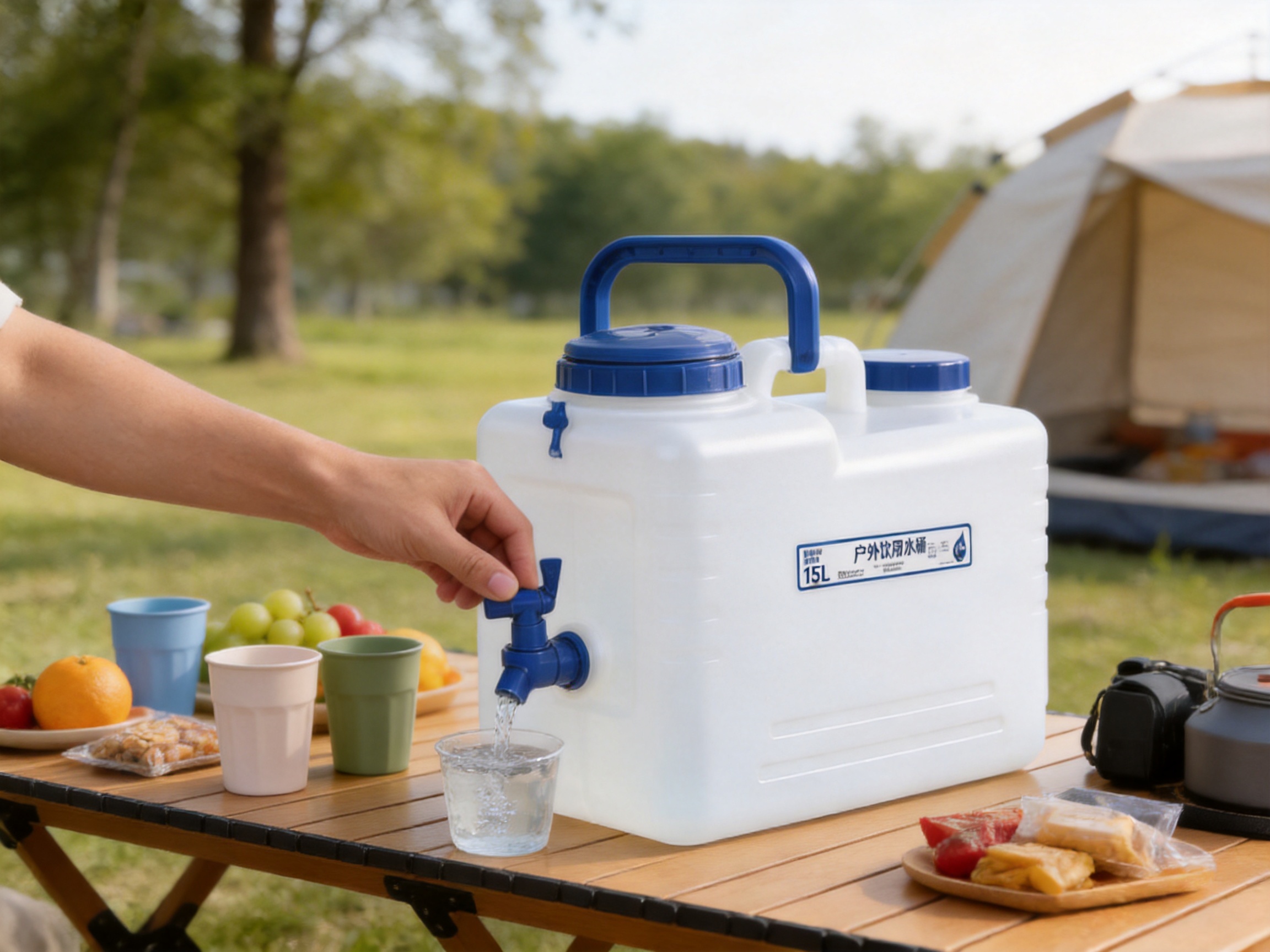
Camping groups need practical hydration equipment that can be transported and used without complicated installation. The jug can be filled before departure or at a safe water source, carried to the campsite, and placed on a stable table or support. Its faucet allows campers to dispense water without lifting the entire container.
The sealed lid is useful during vehicle transport and movement around the campsite. The compact footprint can help conserve limited table space. Users should protect the faucet from dust and keep the container elevated from the ground to support cleanliness.
Picnics
At a picnic, a shared beverage container can be easier to manage than numerous bottles. The 15L capacity is suitable for a family or small group, depending on beverage consumption and event duration. The jug can be placed near cups, ice, napkins, and food while allowing guests to serve themselves.
The insulated construction is useful when cold beverages are prepared in advance. However, the actual duration of cooling will depend on environmental conditions and usage. Adding suitable ice, limiting unnecessary lid opening, and keeping the container out of direct sunlight can help support better temperature maintenance.
Parties and Celebrations
For parties, a self-service drink station can reduce the workload on hosts. A prepared jug of water, fruit drink, iced tea, or another suitable beverage can remain on a table while guests use the faucet. This arrangement may also improve traffic flow by separating beverage service from food preparation.
The clean exterior and integrated handle make the container appropriate for visible event spaces. If multiple units are used, different colors or labels can identify different beverages. Custom branding may also be considered for corporate events, promotional activities, and hospitality programs.
Office and Workplace Use
In an office, the jug can be placed in a break room, meeting room, training area, or reception space. It can support daily hydration or temporary beverage service during seminars and meetings. The faucet reduces the need to lift the container and can make self-service easier for employees and visitors.
Workplace users should establish a cleaning schedule and avoid leaving beverages in the container for longer than recommended. Water and nonperishable drinks are generally easier to manage than beverages containing dairy, pulp, or other ingredients that may require more careful temperature control and sanitation.
Events and Hospitality
Event organizers can use the jug as part of a temporary beverage station. Its moderate capacity makes it easier to deploy several units for different drink options. A collection of 15L containers may offer more flexibility than one very large dispenser because each jug can be moved, refilled, or cleaned independently.
11. Practical Use and Maintenance Guidance
Proper care helps preserve the product’s sealing performance, appearance, and usability. Before first use, rinse the interior and wash removable components according to the manufacturer’s guidance. Inspect the faucet, lid, and sealing ring before filling.
Do not exceed the stated capacity. Leave enough space for the lid to close correctly and for liquid movement during transport. After filling, ensure that the cover is fully locked. If the jug is placed in a vehicle, keep it upright and secure it against movement whenever possible.
Clean the container after each use, especially when it has held sweetened, flavored, or colored beverages. Rinse the faucet and surrounding area thoroughly. If the design allows components to be removed, clean them carefully and reinstall them according to the instructions.
Allow the jug to dry before long-term storage. Store it in a clean, dry location away from sharp objects, excessive heat, and direct sunlight when not in use. Avoid using abrasive brushes that may scratch the interior or exterior surfaces. Scratches can make cleaning more difficult and may affect the appearance of the product.
Users should also avoid placing very hot liquids inside the container unless hot-liquid compatibility has been confirmed. The product is primarily presented as an outdoor water container and insulated beverage jug. Following the intended use helps protect the material, sealing parts, and faucet assembly.
12. Purchasing Considerations for Importers and Distributors
Buyers should evaluate both the product and the supplier when sourcing outdoor water containers. Important questions include minimum order quantity, available colors, logo options, packaging specifications, production lead time, sample approval procedures, quality inspection methods, and shipping arrangements.
For commercial programs, buyers may request technical drawings, product samples, material information, leakage test procedures, capacity verification, and packaging test results. If the product will be sold in a regulated market, the importer should confirm the documentation required for food-contact materials and consumer products in that market.
Consistency is particularly important when ordering repeated batches. The lid must fit the body consistently, the faucet must be installed at a reliable angle, and the handle must remain comfortable and secure. A supplier with in-house development and molding capabilities may be better positioned to manage changes and resolve technical issues than a company that only performs final trading operations.
The manufacturer’s integrated capabilities in product development, production, and sales can simplify communication. Customers can discuss product adjustments, tooling, packaging, and quality expectations within one supply relationship. This may reduce delays caused by coordination between unrelated design, molding, assembly, and trading companies.
13. Why Manufacturing Integration Matters
An outdoor water container is a relatively compact product, but its performance depends on the interaction of multiple components. The container body, lid, sealing ring, faucet, handle, and insulation structure must work together. Integrated manufacturing experience can help the supplier identify these relationships during development and production.
For example, changing the wall thickness may affect weight, strength, insulation space, and molding time. Moving the faucet may affect clearance, stability, liquid flow, and packaging. Enlarging the handle may improve grip but increase the packed dimensions. Adjusting the lid may improve sealing while requiring a different mold structure. These trade-offs require practical engineering review.
Automatic molding equipment can support repeatability, while injection molding, blow molding, and foaming capabilities allow the manufacturer to select a process appropriate to each component. A quality management system creates checkpoints throughout production. Together, these capabilities support a more controlled path from concept to finished product.
The company’s history since 2000 also indicates long-term involvement in outdoor product manufacturing. Experience does not eliminate the need for testing or customer communication, but it can provide valuable knowledge about molds, materials, assembly, packaging, and market expectations.
14. Balanced Evaluation of Product Performance
The 15L jug offers a strong combination of portability, capacity, sealing, insulation, and dispensing convenience. Its main advantage is that these features are integrated into one product. Users do not need to combine a storage box, separate tap, carrying frame, and additional lid to create a functional beverage station.
The product is especially suitable when a group needs shared access to drinks and when the container must be moved between locations. The compact shape and integrated handle support portability, while the faucet reduces the need for manual lifting during service.
At the same time, responsible evaluation requires attention to application limits. A filled 15L container is heavy, so it should be placed securely before use. Insulation performance should be assessed according to actual environmental conditions rather than assumed to provide a fixed cooling duration. Food-contact suitability depends on proper use and cleaning. Leak resistance depends on correct lid closure and component condition.
These considerations do not reduce the product’s value. Instead, they help buyers select the correct use case and establish appropriate operating procedures. When used as intended, the jug can provide a reliable and convenient solution for beverage storage and dispensing.
15. Frequently Asked Questions
Q1: What is the capacity of the water jug?
The jug has a stated capacity of 15 liters. This capacity is suitable for family gatherings, small parties, office beverage stations, picnics, camping, and other group hydration needs.
Q2: What are the product dimensions?
The stated dimensions are 350 × 195 × 290 millimeters. The relatively compact footprint helps the jug fit on tables, counters, vehicle storage areas, and outdoor serving stations.
Q3: What material is used?
The jug is made from PE, or polyethylene. The supplied product information describes the material as food grade and BPA free. Buyers requiring market-specific documentation should request the relevant material and compliance information.
Q4: Does the jug have a faucet?
Yes. It has an integrated faucet for direct dispensing. Users can place the container on a stable surface and fill cups or bottles without lifting and tilting the entire jug.
Q5: Is the lid designed to prevent leakage?
The jug uses a twist-lock cover with a sealing ring. This design is intended to reduce leakage when the cover is correctly installed and locked. For best results, keep the sealing surfaces clean, avoid overfilling, and inspect the ring regularly.
Q6: Is the handle external or integrated?
The product has an integrated or hidden handle. It provides carrying support while maintaining a clean, streamlined appearance and helping the jug remain practical for storage and transport.
Q7: Can the jug keep beverages cold?
The product is designed as an insulated water jug, so its construction is intended to support temperature retention. However, the actual cooling duration depends on the starting temperature, ambient conditions, beverage volume, lid opening frequency, and use of ice. A specific temperature-retention claim should be confirmed through testing.
Q8: Can it be used for hot beverages?
The product is primarily described for water and outdoor beverages. Hot-liquid use should only be considered after receiving confirmation from the manufacturer that the complete container, lid, faucet, sealing ring, and material system are suitable for the intended temperature.
Q9: Where can the jug be used?
Recommended applications include parties, offices, picnics, camping, outdoor activities, meetings, training events, hospitality settings, and temporary beverage service stations.
Q10: How much does the empty jug weigh?
The stated net weight is approximately 720 grams. The filled weight will be considerably higher because the beverage itself contributes most of the total load.
Q11: Can the product be customized?
The manufacturer provides OEM and ODM services, including development based on drawings or samples and options for colors, logos, and packaging. Custom requirements should be reviewed during the product development and quotation stages.
Q12: What manufacturing equipment does the supplier have?
The company reports automatic injection molding machines, blow molding machines, and foaming equipment, along with product development resources and a quality management system. These capabilities support the production of molded plastic, hollow, and insulated outdoor products.
Q13: How should the jug be cleaned?
Wash and rinse the interior, lid, sealing ring, faucet, and other accessible components after use. Sweetened or flavored beverages require especially careful cleaning. Follow the manufacturer’s instructions and avoid abrasive tools or unsuitable chemicals.
Q14: Is the jug suitable for export programs?
The product can be considered for export and distributor programs, particularly when buyers need OEM/ODM services, custom packaging, color options, or logo application. Importers should confirm market-specific documentation, labeling, packaging, and testing requirements before placing a commercial order.
16. Conclusion
The 15L leak-proof insulated water jug is designed to solve several common beverage service challenges in one compact product. Its 15-liter capacity supports group use, while the integrated faucet enables controlled dispensing without lifting the entire container. The twist-lock lid and sealing ring are intended to reduce leakage during transport, and the integrated handle improves portability without adding unnecessary exterior bulk.
Food-grade, BPA-free PE construction, a compact 350 × 195 × 290 millimeter format, and a net weight of approximately 720 grams make the jug suitable for practical outdoor and everyday applications. Its insulated structure adds value for users who want to prepare and serve chilled beverages, although actual thermal performance should always be verified according to the intended conditions.
Compared with individual bottles, open buckets, basic storage containers, and oversized dispensers, the jug offers a balanced combination of capacity, portability, sealing, insulation, and self-service functionality. It is appropriate for camping, picnics, parties, offices, meetings, hospitality activities, and other occasions where a shared beverage station is needed.
The supplier strengthens the product offering through more than two decades of manufacturing experience, a 12,000-square-meter factory, over 100 employees, automatic injection molding, blow molding, foaming equipment, product development resources, and quality management practices. OEM and ODM services further support buyers seeking custom colors, logos, packaging, or product development based on drawings and samples.
For distributors, retailers, event suppliers, and organizations seeking a practical beverage container, this 15L format offers a commercially useful balance. It is large enough to serve a group, compact enough to transport, and functional enough to operate as a self-service dispenser. With proper cleaning, handling, and application-specific evaluation, it can become a dependable part of an outdoor hydration and beverage service system.
References
1. Product specification materials supplied for the 15L insulated water jug, including capacity, dimensions, material, weight, faucet, sealing cover, and handle information.
2. Manufacturer-provided company information concerning outdoor cooling products, water storage containers, factory facilities, production equipment, product development, and OEM/ODM services.
3. General principles of polyethylene container design, food-contact material selection, and molded plastic product manufacturing.
4. General guidance on portable beverage container sanitation, sealing inspection, safe handling, and maintenance.
5. General manufacturing references concerning injection molding, blow molding, foaming processes, product assembly, and quality-control inspection.
Product: 15L Leak-Proof Insulated Water Jug with Integrated Handle & Faucet

Product Recommendation
link
Office
- TEL: +86-574-63787606
- Phone: +86-13777994798
- E-mail: sales@nbjunlong.com
- WhatsApp: 13777967488
- Address: No. 1, Lane 3, Development Road, Longtouchang, Longshan Town, Cixi City, Zhejiang Province, China
Get In Touch
Copyright © Ningbo Junlong Outdoor Products Co., Ltd. All Rights Reserved.
China Plastic Insulated Cooler Box Manufacturer Custom Cooler Box Supplier
