- SMALL ORDERS FOR STANDARD ITEMS. Contact Now
- OUTDOOR COOLING SOLUTIONS, MADE IN‑HOUSE. Contact Now
- COOLER BOXES THAT FIT REAL OUTDOOR LIFE. Contact Now

 LANGUAGE
 日本語
 Español
 عربى

Content
- 1 Why a 60L Cooler Box Is Suitable for Extended Outdoor Use
- 2 Double-Layer PU Insulation for Longer Cooling Performance
- 3 Rugged Construction for Demanding Environments
- 4 Practical Features That Improve Daily Use
- 5 Advantages Over Conventional Cooler Options
- 6 Applications Across Outdoor and Commercial Markets
- 7 Manufacturing Strengths Behind the Product
- 8 OEM and ODM Customization Opportunities
- 9 Quality, Handling, and Maintenance Recommendations
- 10 Logistics and Commercial Purchasing Considerations
- 11 Environmental and Reusability Considerations
- 12 Frequently Asked Questions
- 12.1 What is the capacity of the cooler box?
- 12.2 How long can it keep contents cold?
- 12.3 What type of insulation does it use?
- 12.4 Can reusable ice packs be used?
- 12.5 Is the cooler easy to carry?
- 12.6 Does it include a drain system?
- 12.7 What closure system does it use?
- 12.8 Are there cup holders on the lid?
- 12.9 What are the product and packing dimensions?
- 12.10 How much does the cooler weigh?
- 12.11 Can the product be customized?
- 12.12 What manufacturing capabilities does the supplier have?
- 12.13 Is the cooler suitable for commercial use?
- 12.14 How should the cooler be cleaned?
- 13 Conclusion
- 14 References
- 15 Product: 60L Rugged Cooler Box with Ice Pack Compartment for Outdoors
Outdoor activities often demand more from a cooler than simple short-term food storage. Camping trips, fishing expeditions, hunting journeys, road travel, sporting events, construction projects, and remote work locations may require a dependable container that can preserve chilled food and beverages for extended periods. A cooler used in these situations must offer more than a large internal volume. It must combine insulation performance, structural durability, portability, drainage convenience, secure closure, and practical organization in one reliable design.
The 60L rugged cooler box described in this article is designed to meet those needs. It provides a spacious 60-liter capacity, a reinforced exterior, thick polyurethane insulation, a dedicated ice-pack compartment in the lid, stainless steel locking buckles, a drain valve, and four integrated cup holders. With an insulation performance of approximately 48 to 60 hours under suitable conditions, it is intended for users who require dependable cooling over multiple days rather than only a few hours.
This cooler box is manufactured by Ningbo Junlong Outdoor Products Co., Ltd., a Chinese producer specializing in insulated cooler boxes, cooler jugs, ice buckets, and outdoor water containers. The company combines product development, injection molding, blow molding, polyurethane foaming, assembly, packaging, and sales support within its manufacturing operation. Its factory resources and OEM/ODM capabilities make the product suitable not only for individual outdoor use but also for distributors, wholesalers, retailers, hospitality suppliers, promotional product companies, and outdoor equipment brands.
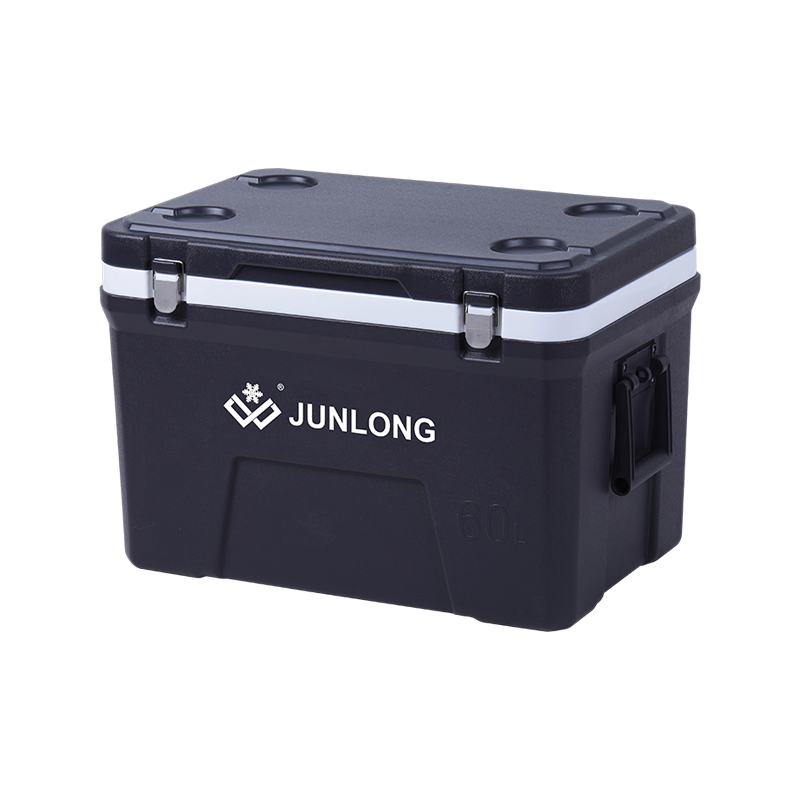
60L Rugged Cooler Box with Ice Pack Compartment for Outdoors
Why a 60L Cooler Box Is Suitable for Extended Outdoor Use
Capacity is one of the first factors buyers consider when selecting a cooler. Small personal coolers are convenient for day trips, but they may not provide enough space for meals, drinks, ice, and fresh ingredients during longer journeys. A 60-liter cooler offers a more useful balance between storage volume and portability. It is large enough to support group activities while remaining manageable for transport by two people.
The 60L format is particularly suitable for family camping, fishing groups, hunting parties, tailgate gatherings, extended road trips, beach events, and outdoor catering. It can accommodate a substantial quantity of beverages and food without requiring several separate small containers. Consolidating supplies into one insulated box can also simplify loading, inventory management, and cleaning.
Large capacity does not automatically mean efficient design. A cooler that is oversized without adequate insulation or structural support may become difficult to transport and may lose cooling performance quickly. This product addresses those concerns through a compact rectangular footprint, reinforced side handles, durable latches, and a molded body designed for repeated outdoor handling.
The product dimensions are approximately 600 × 410 × 415 millimeters, while the packing dimensions are approximately 610 × 425 × 430 millimeters. The net weight is about 5.9 kilograms, and the gross packed weight is approximately 6.9 kilograms. These specifications provide distributors and end users with useful information for transportation planning, warehousing, shipping calculations, and retail packaging.
| Specification | Details | Practical Benefit |
|---|---|---|
| Capacity | 60 liters | Suitable for group activities and multi-day trips |
| Product dimensions | 600 × 410 × 415 mm | Spacious storage with a manageable footprint |
| Packing dimensions | 610 × 425 × 430 mm | Useful for logistics, warehousing, and shipping planning |
| Net weight | Approximately 5.9 kg | Relatively manageable for a large-capacity cooler |
| Gross weight | Approximately 6.9 kg | Includes packaging for distribution and delivery |
| Insulation period | Approximately 48–60 hours | Supports extended outdoor activities |
| Insulation material | PU insulation in the lid and body | Helps slow heat transfer |
| Closure | Stainless steel lock buckles | Improves lid security and sealing consistency |
| Drainage | Built-in drain valve | Makes melted ice removal easier |
| Packing quantity | One piece per carton | Simplifies handling and inventory control |
Double-Layer PU Insulation for Longer Cooling Performance
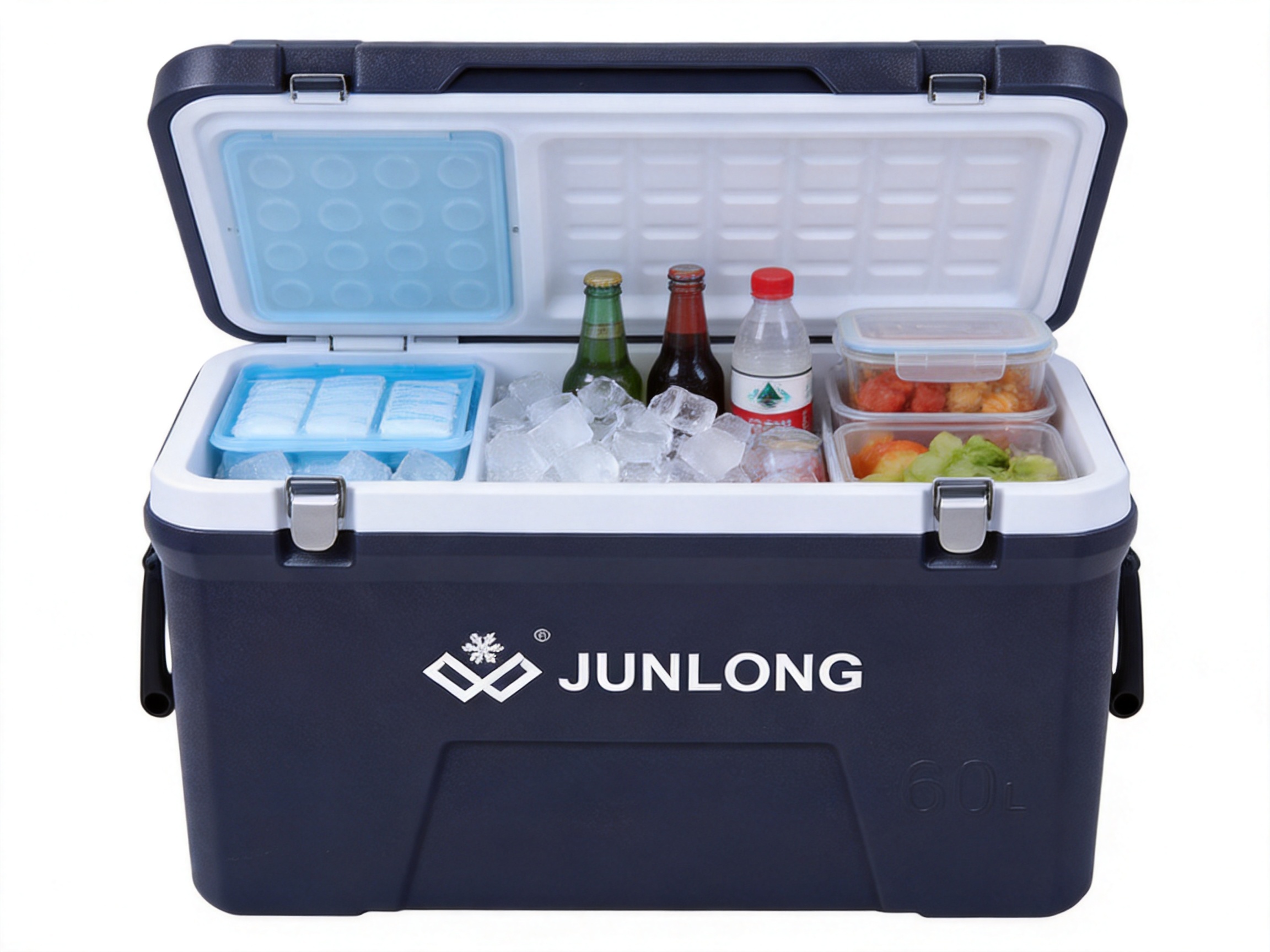
The central performance feature of this cooler box is its insulated construction. The lid and main body use polyurethane insulation to create a thermal barrier between the internal contents and the surrounding environment. When the cooler is properly pre-chilled, packed efficiently, and kept closed as much as possible, the insulation helps reduce the rate at which ice melts and internal temperatures rise.
Polyurethane, commonly referred to as PU foam in insulated products, is widely used because it offers a favorable combination of low thermal conductivity, structural support, and molded-product compatibility. In a cooler box, the foam fills the insulated cavity between the inner liner and outer shell. This construction helps reduce heat transfer through the sidewalls, base, and lid.
The lid is especially important in a cooler because warm air can enter through the upper surface whenever the box is opened. The double ice-box lid structure is designed to provide additional insulation at this critical point. The lid also includes a specially designed compartment for ice packs, allowing users to place reusable cooling elements above or within the lid area. This feature can support more even cooling and may help extend the useful cooling period when combined with conventional ice.
The stated insulation time is approximately 48 to 60 hours. Actual performance can vary according to ambient temperature, the amount and type of ice used, the temperature of the contents before loading, the frequency of opening, the ratio of ice to stored products, and whether the cooler is exposed to direct sunlight. This range should therefore be understood as a practical performance indication under suitable operating conditions rather than an absolute guarantee for every environment.
Compared with thin-wall plastic containers or basic soft-sided coolers, a molded PU-insulated cooler generally provides better protection against external heat and physical impact. Thin-wall containers may be lighter, but they often provide less thermal resistance and less protection for food and drinks. Soft coolers may be highly portable, but they may not offer the same rigidity, cleanability, or resistance to abrasion in demanding outdoor environments.
For best results, users should pre-cool the interior before loading it, use sufficient ice or frozen packs, keep the cooler in shade whenever possible, and minimize unnecessary lid opening. Food and beverages that are already cold will also preserve the internal temperature more effectively than warm items placed directly into the cooler.
Rugged Construction for Demanding Environments
A cooler used outdoors may be exposed to dirt, moisture, vibration, impacts, rough transport, and repeated loading. A durable outer shell is therefore essential. The product uses a robust black exterior designed to withstand the type of handling associated with camping, fishing, hunting, travel, and outdoor events.
The molded plastic structure provides a stable container that is less likely to collapse or lose its shape than flexible alternatives. This rigidity helps protect the stored contents and allows the cooler to be placed in vehicle trunks, truck beds, boats, campsites, and temporary outdoor kitchens. The hard exterior also supports easier stacking and arrangement during transportation.
Black is a practical color for a heavy-duty outdoor product because it provides a professional appearance and can help conceal minor marks from regular use. For commercial buyers, the neutral exterior can also serve as a suitable base for customized colors, labels, logos, or packaging programs, depending on project requirements and production arrangements.
The stainless steel lock buckles are another important structural feature. A secure latch helps maintain consistent contact between the lid and body, reducing accidental opening during transport. Metal buckles can also offer better resistance to repeated use than fragile plastic closures. They are particularly valuable when the cooler is carried over uneven ground or placed in moving vehicles.
The reinforced side-handle arrangement supports two-person lifting. A 60-liter cooler can become considerably heavier once filled with ice, drinks, and food, so a two-person carrying option is more practical than expecting one user to lift the fully loaded box alone. The handles also make it easier to move the empty or partially loaded cooler around a campsite, event area, boat, or vehicle.
Protection Against Common Outdoor Challenges
Outdoor cooling equipment must cope with more than temperature. It may be exposed to abrasive surfaces, accidental contact with tools, wet ground, spilled liquids, and frequent loading and unloading. The hard-shell construction helps maintain a protective barrier around the contents. The leak-resistant design helps reduce the risk of liquid escaping during normal use, while the drain valve provides a controlled way to remove melted ice and water.
Although no cooler should be treated as indestructible, a purpose-built rugged design can offer a longer usable life than a lightweight consumer container intended only for occasional picnics. This can be especially important for rental companies, professional guides, catering operators, outdoor retailers, and commercial users who place greater demands on equipment.
Practical Features That Improve Daily Use
A cooler’s value depends not only on insulation but also on how easily it can be used. Several design features make this 60L model more practical during everyday outdoor activities.
Dedicated Ice-Pack Compartment
The lid incorporates a compartment intended to accommodate ice packs. Reusable ice packs can be frozen in advance and inserted into the lid area before use. This gives users an additional cooling option beyond loose ice. Ice packs are also convenient because they can be refrozen and reused, helping reduce water accumulation inside the cooler.
The compartment may be especially useful for organizing smaller cooling elements separately from food and drinks. It can help keep frozen packs in a predictable position and may reduce the need to search through the contents when replacing or rearranging cooling materials.
Four Built-In Cup Holders
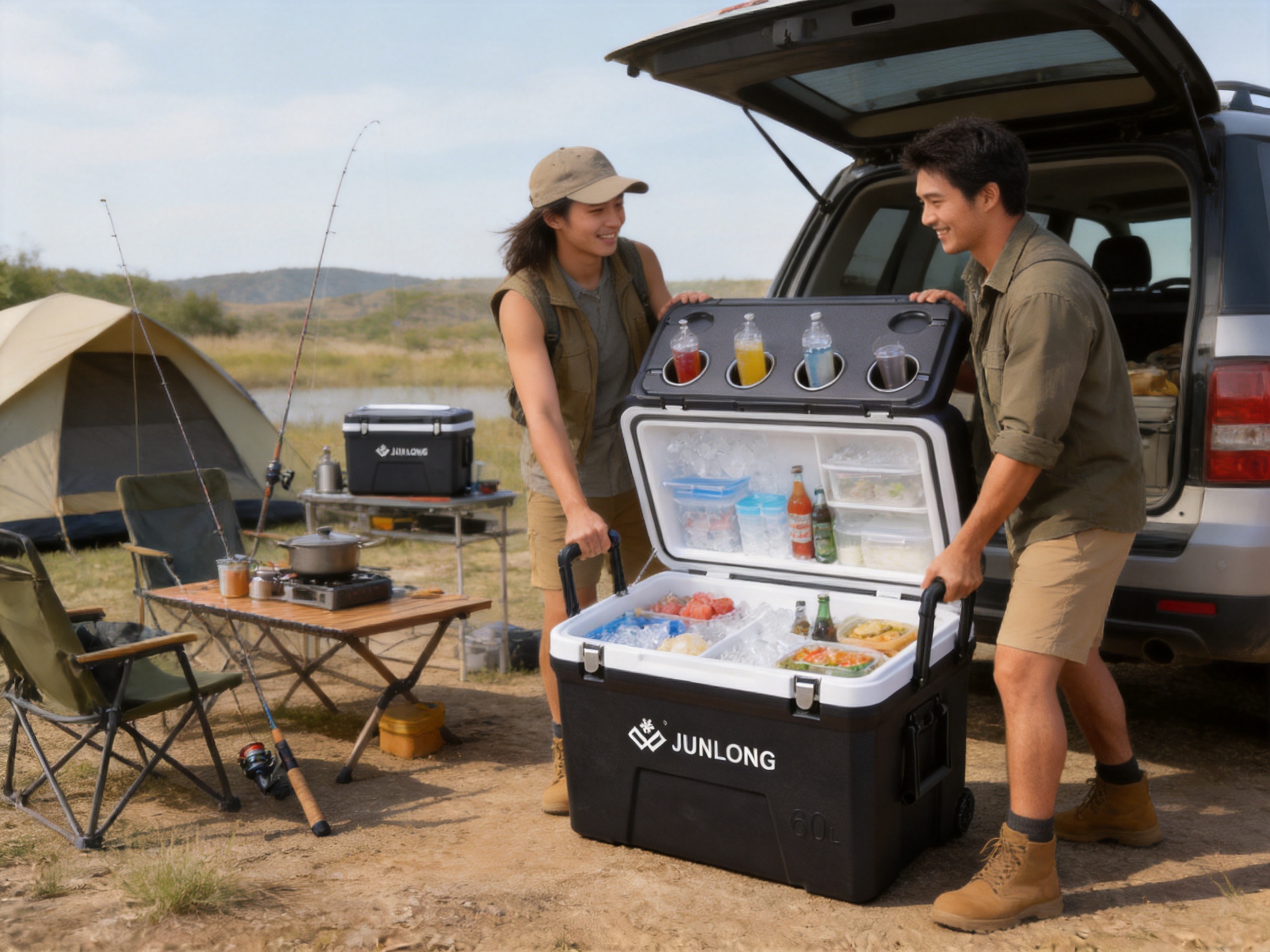
Four cup holders are molded into the lid. This feature turns the closed cooler into a small serving or convenience station during outdoor gatherings. Users can place cans, cups, or bottles on the lid while preparing food, relaxing at a campsite, watching a sporting event, or hosting a tailgate party.
Integrated cup holders also help keep beverages off the ground, where they may be exposed to dirt, insects, uneven surfaces, or accidental tipping. For event organizers and hospitality suppliers, small convenience features such as these can significantly improve the user experience without adding separate accessories.
Drain Valve
As ice melts, water can accumulate at the bottom of the cooler. Manually lifting a full cooler to pour out this water can be inconvenient and potentially unsafe. The built-in drain valve enables users to release melted water in a more controlled way. It can be opened over a suitable drainage area while the cooler remains in place.
Drainage also supports cleaning. After removing the contents, users can rinse the interior and release the wash water through the valve. Proper cleaning and drying after each trip can help maintain hygiene and reduce unwanted odors.
Stainless Steel Lock Buckle
The stainless steel lock buckles provide a firm closure and reinforce the rugged character of the product. A strong latch is useful when the cooler is moved through rough terrain, transported in a vehicle, or used in commercial settings where the lid may be opened and closed repeatedly.
Easy-to-Clean Interior
The smooth interior is designed for convenient cleaning after use. Food residue, melted ice, and beverage spills can be removed with mild soap, clean water, and a soft cloth or sponge. Regular cleaning is particularly important when the cooler is used for raw meat, fish, dairy products, or other perishable food.
Advantages Over Conventional Cooler Options
Different cooler formats serve different purposes. The 60L hard-shell model has several advantages over smaller basic boxes, soft coolers, ordinary plastic storage bins, and poorly insulated containers.
Compared with Basic Thin-Wall Coolers
Basic thin-wall coolers may have a lower purchase price and a lighter empty weight, but they often provide less thermal resistance. They may also be more vulnerable to deformation, cracking, or damage when exposed to heavy use. The PU-insulated body and lid of this product are designed for stronger temperature retention and better physical protection.
Compared with Soft-Sided Coolers
Soft coolers are convenient for short trips and individual carrying, but their flexible walls may offer less protection for delicate food, bottles, and containers. They may also be more difficult to clean after leaks or spills. A hard-shell cooler with a smooth interior is generally better suited to multi-day outdoor use, commercial transport, and situations where impact resistance is important.
Compared with Multiple Small Coolers
Using several small coolers can divide food and beverages into categories, but it can also increase the amount of equipment that must be transported, cleaned, and monitored. One 60L cooler can consolidate a large quantity of supplies while reducing clutter. The four cup holders and lid-based ice-pack compartment add functions that are not always available on simple small boxes.
Compared with Ordinary Storage Totes
Plastic storage totes are useful for organizing dry goods, but they are not designed to preserve low temperatures. They generally lack PU insulation, secure cold-sealing latches, drainage systems, and food-cooling features. A purpose-built cooler is more appropriate when temperature preservation is a central requirement.
Compared with Lightweight Disposable Containers
Disposable or low-cost foam containers can be suitable for brief transportation, but they are not intended for long-term repeated use. Their structural strength, environmental durability, and closure performance are usually limited. A reusable rugged cooler can provide better value over time for users who regularly participate in outdoor activities.
| Cooler Type | Main Strength | Common Limitation | Position of the 60L Rugged Model |
|---|---|---|---|
| Soft-sided cooler | Lightweight and flexible | Less structural protection and harder cleaning | Offers a stronger hard-shell alternative for longer trips |
| Thin-wall plastic cooler | Lower initial cost | Limited insulation and durability | Provides thicker PU insulation and stronger construction |
| Small personal cooler | Easy for one person to carry | Limited storage volume | Provides 60L capacity for groups and extended use |
| Storage tote | Useful for dry organization | Not designed for cooling | Includes insulation, drainage, and secure closure features |
| Disposable container | Convenient for one-time use | Low reusability and limited durability | Designed for repeated outdoor use |
| Large rugged cooler | High capacity and durability | Can be heavy when fully loaded | Balances 60L capacity with two-person carrying support |
Applications Across Outdoor and Commercial Markets
Camping and Family Travel
For camping, the cooler can store meat, vegetables, fruit, dairy products, bottled water, canned drinks, and prepared meals. Its 60-liter capacity is suitable for family groups or several-day trips. The drain valve is useful at the campsite, where melted ice can be released without moving the entire cooler. The lid cup holders can provide a convenient place for drinks around a picnic table or outdoor cooking area.
Fishing and Hunting
Fishing and hunting environments often demand strong equipment that can tolerate moisture, dirt, and rough transportation. The hard outer body and secure buckles help protect the contents during travel. The insulated interior can be used for food and drinks, while the easy-clean construction supports sanitation after use. Users should always follow applicable food-safety practices when storing raw products or game.
Boating and Beach Activities
On boats and beaches, containers may be exposed to movement, splashes, sand, and direct sunlight. The secure lid and rugged body make the cooler suitable for these environments when positioned safely. The cup holders can be useful on a boat deck, dock, or beach setup, while the drainage system helps remove melted ice after extended use.
Tailgate Parties and Sporting Events
The product can function as both a storage container and a serving station. Its large capacity supports beverages and snacks for a group, and the molded cup holders keep drinks accessible on the lid. The black exterior offers a clean appearance suitable for event use, sports gatherings, promotional campaigns, and branded hospitality programs.
Road Trips and Mobile Worksites
During long road journeys, a cooler reduces the need to stop frequently for food and drinks. The dimensions allow it to be placed in many vehicle storage areas, although users should confirm available space before loading. At construction sites, outdoor work areas, and mobile service locations, the insulated box can provide access to chilled beverages and meals throughout the workday or over extended assignments.
Hospitality, Catering, and Event Supply
Caterers and event organizers may use large coolers for temporary cold storage, beverage service, ingredient transport, or outdoor food preparation. The robust construction is suitable for repeated movement between storage facilities and event locations. OEM branding and customized packaging can also help businesses present the cooler as part of a professional service package.
Manufacturing Strengths Behind the Product
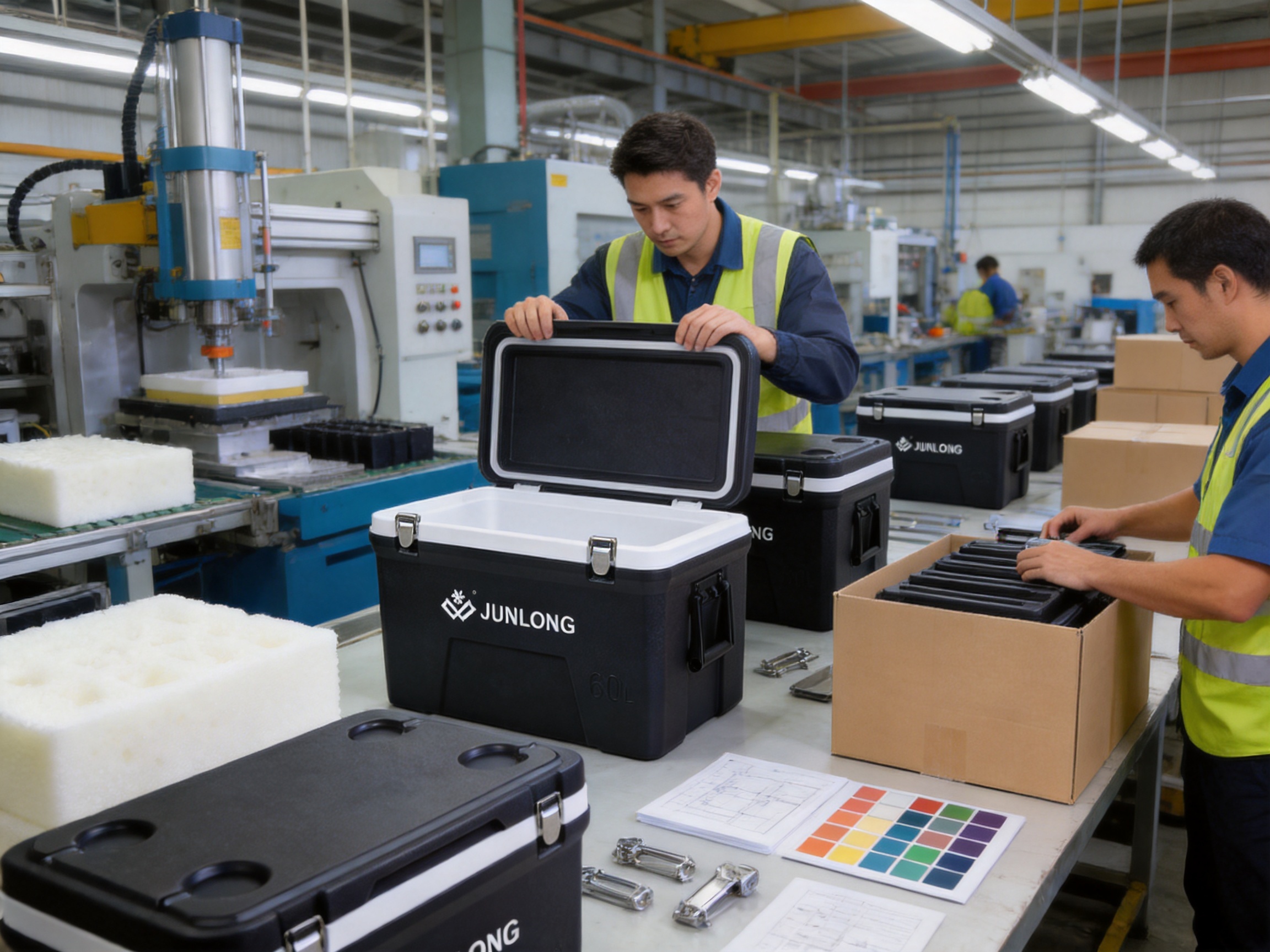
The performance of a cooler depends heavily on the consistency of its manufacturing process. A product may have a strong concept, but inconsistent molding, incomplete foaming, weak assembly, or poor packaging can reduce its real-world value. Ningbo Junlong Outdoor Products Co., Ltd. has developed its operations around outdoor cooling and water-storage products, giving it relevant experience in this product category.
The company was established in 2000 and operates in Cixi, Ningbo, Zhejiang Province, an important manufacturing area in the Yangtze River Delta. Its independent factory covers approximately 12,000 square meters and employs more than 100 people. This scale supports coordinated management of product development, production, quality control, packaging, and order fulfillment.
Automatic Injection Molding
Injection molding is an important process for producing accurate plastic components such as cooler bodies, lids, handles, cup holders, and structural fittings. Automatic injection molding equipment can support repeatable production by controlling material temperature, injection pressure, mold filling, cooling time, and ejection conditions.
Consistent molding is important for cooler performance. The body and lid must maintain correct dimensions so that the closure can operate properly and the contact area can provide an effective seal. Consistent wall geometry also helps the foaming and assembly stages produce a stable insulated structure.
Blow Molding Capability
The factory also includes blow molding machines. Blow molding is used for producing certain hollow plastic products and can be valuable for developing complementary outdoor containers, jugs, and related product formats. Having both injection molding and blow molding resources gives the manufacturer broader flexibility when designing product families.
This capability is particularly useful for buyers seeking coordinated sourcing. A distributor may require cooler boxes, cooler jugs, and outdoor water containers with matching colors, packaging styles, or branding. A manufacturer with multiple molding processes can help simplify project coordination and reduce the need to manage unrelated suppliers.
Foaming Equipment
Foaming equipment is essential for producing insulated cooler bodies and lids. During the foaming process, insulation material is introduced into the cavity between the inner and outer components. Process control influences density, distribution, adhesion, and the completeness of the insulation layer.
Properly managed foaming helps reduce voids and irregular areas that could create weak points in thermal protection. It also contributes to the structural rigidity of the finished product. For a large cooler, uniform insulation across the lid, sides, and base is important because any weakly insulated region can contribute to faster heat transfer.
R&D and Product Development
The company maintains a creative research and development team to support new product development and customer-specific projects. Outdoor products must balance many competing requirements, including capacity, insulation, weight, durability, appearance, mold complexity, cost, packaging, and user convenience.
Product development based on drawings or samples enables OEM and ODM customers to move from an idea to a manufacturable product. Depending on the project, customers may request adjustments to dimensions, colors, logos, packaging, accessories, handles, closures, or interior arrangements. Early technical communication is important because changes can affect mold design, tooling costs, production schedules, and minimum order quantities.
Quality Management
A rigorous quality management approach helps ensure that products conform to specifications across production batches. Relevant checks for a cooler box may include visual inspection, dimensional verification, lid alignment, latch operation, handle attachment, drain-valve fit, surface quality, packaging integrity, and insulation-related process controls.
For business buyers, stable quality is as important as the product design itself. Retailers and distributors need predictable products to reduce returns, protect customer satisfaction, and maintain consistent market positioning. A manufacturer with integrated production resources can respond more efficiently when quality issues or improvement opportunities are identified.
OEM and ODM Customization Opportunities
The cooler box can serve as a standard product for buyers seeking a ready-made 60-liter outdoor cooling solution, but it can also support customization programs. Ningbo Junlong Outdoor Products Co., Ltd. provides OEM and ODM services for customers who need products developed around specific commercial requirements.
Color Customization
Color is one of the simplest ways to create a product identity. Buyers may request colors that match a retail brand, outdoor equipment collection, corporate identity, sports team, or seasonal campaign. Color selection should be confirmed with reference samples or approved color standards before mass production.
Logo and Surface Branding
Logo application can transform a cooler into a branded promotional or retail product. Depending on the required appearance and production method, branding may be integrated into the mold, applied through printing, added as a label, or incorporated through another approved decoration process. Buyers should consider logo size, placement, contrast, durability, and resistance to outdoor handling.
Packaging Customization
Customized packaging can improve shelf presentation and support distribution requirements. Packaging may include product images, specifications, instructions, barcode information, safety notices, brand messaging, and multilingual content. The standard packing size of approximately 610 × 425 × 430 millimeters provides a reference point for logistics planning, but customized packaging should be reviewed carefully to protect the cooler during shipment without unnecessary material use.
Development from Drawings or Samples
Some buyers may have an existing concept, sketch, technical drawing, or physical sample. The manufacturer can evaluate the design for production feasibility and assist with adjustments related to wall thickness, insulation space, mold release, assembly, handles, drainage, latches, and packaging. This engineering review is valuable because a design that looks suitable in concept may require modification before reliable mass production.
Private-Label Product Programs
Retailers, importers, and outdoor brands can use private-label programs to offer a cooler under their own brand identity. The 60L format may be positioned as a premium family cooler, fishing cooler, camping accessory, event cooler, or commercial outdoor storage product. A private-label program can include coordinated color, logo, packaging, product photography, instruction materials, and carton markings.
Quality, Handling, and Maintenance Recommendations
To achieve the best cooling performance, users should place the cooler in a shaded and ventilated location whenever possible. Direct sunlight can heat the exterior and increase the cooling load. During vehicle transport, the cooler should be secured so that it does not slide, tip, or collide with other equipment.
Before use, pre-chilling the interior can reduce the initial thermal load. Food and beverages should be cooled before placement whenever possible. Ice packs and ice should be distributed so that cold air and chilled surfaces surround the contents. Frequently opened items can be placed near the top, while items intended for later use can be stored deeper inside.
The lid should remain closed except when loading, unloading, or checking contents. Every opening allows warm air to enter and cold air to escape. Organizing the contents in advance can reduce the duration and frequency of lid opening.
After use, melted water should be drained through the drain valve. The interior should be washed with mild detergent and clean water, then dried thoroughly with the lid open. Abrasive cleaners, sharp tools, and harsh chemicals should be avoided because they may damage the inner surface or seals.
Users should inspect the latches, handles, drain valve, and lid contact area regularly. If any component becomes loose or damaged, it should be repaired or replaced before the cooler is used for a demanding trip. The cooler should not be overloaded beyond its practical capacity, and heavy objects should not be placed on the lid unless the product is specifically designed to support them.
Logistics and Commercial Purchasing Considerations
For importers and wholesale buyers, product dimensions and packing information are important from the beginning of the purchasing process. The approximate product size is 600 × 410 × 415 millimeters, while the packed size is approximately 610 × 425 × 430 millimeters. Each carton contains one piece, which simplifies unit counting but should be considered when calculating container utilization and warehouse space.
The net weight of approximately 5.9 kilograms and gross weight of approximately 6.9 kilograms provide a basis for freight estimates. Actual shipping weight may vary slightly according to packaging materials, customization, labeling, and production tolerances. Buyers should confirm final carton specifications before placing a large order or booking transportation.
Packaging should protect the corners, lid, latches, handles, and drain-valve area. Since the product is a rigid molded item, appropriate internal protection can help reduce scratches and impact damage during loading and unloading. Carton markings should clearly identify product name, quantity, gross weight, net weight, dimensions, handling instructions, and buyer-specific information when required.
Commercial buyers should also confirm order quantities, lead times, sample approval procedures, payment arrangements, inspection standards, customization charges, mold ownership, and after-sales support. Clear specifications reduce misunderstandings and make it easier to evaluate production consistency.
Environmental and Reusability Considerations
A reusable cooler can support a more durable product-use cycle than disposable food and beverage containers. The hard-shell construction is intended for repeated outdoor use, which may help reduce the need to purchase replacement containers for every trip or event. Reusable ice packs can also reduce reliance on single-use bagged ice in some applications.
Responsible use includes maintaining the cooler properly, avoiding unnecessary replacement, and following local recycling or disposal requirements at the end of its service life. Buyers interested in sustainability may also discuss packaging reduction, recyclable packaging materials, product longevity, and responsible production practices with the manufacturer during the sourcing process.
Environmental performance is influenced by the full product lifecycle, including raw materials, manufacturing energy, transportation, usage frequency, maintenance, and end-of-life handling. A durable cooler that serves for many years may provide practical resource advantages compared with products that fail after limited use, although users should evaluate environmental claims according to verified information and applicable standards.
Frequently Asked Questions
What is the capacity of the cooler box?
The cooler box has a capacity of 60 liters. This size is suitable for family camping, group travel, fishing, hunting, tailgate events, outdoor catering, and other activities that require more storage than a personal cooler can provide.
How long can it keep contents cold?
The stated insulation performance is approximately 48 to 60 hours under suitable conditions. Actual results depend on ambient temperature, ice quantity, pre-cooling, lid-opening frequency, sunlight exposure, and the temperature of the items loaded into the cooler.
What type of insulation does it use?
The lid and body use PU insulation. The double ice-box lid structure adds insulation in the lid area and includes a compartment designed to accommodate ice packs.
Can reusable ice packs be used?
Yes. The dedicated lid compartment is designed for ice packs, allowing users to combine reusable packs with other cooling materials according to their needs.
Is the cooler easy to carry?
The cooler includes a dual side-handle design intended to allow two people to lift and carry it. A fully loaded 60-liter cooler can be heavy, so two-person handling is recommended for safety and convenience.
Does it include a drain system?
Yes. A built-in drain valve allows melted ice and cleaning water to be released without lifting and tipping the entire cooler.
What closure system does it use?
The cooler uses stainless steel lock buckles. These buckles help secure the lid and are suited to repeated outdoor use.
Are there cup holders on the lid?
Yes. The lid includes four built-in cup holders for placing cans, cups, or bottles during outdoor activities.
What are the product and packing dimensions?
The product dimensions are approximately 600 × 410 × 415 millimeters. The packing dimensions are approximately 610 × 425 × 430 millimeters.
How much does the cooler weigh?
The net weight is approximately 5.9 kilograms, and the gross packed weight is approximately 6.9 kilograms. Final weights may vary slightly depending on packaging and customization.
Can the product be customized?
OEM and ODM options are available. Customization may include product development from drawings or samples, colors, logos, packaging, and other project-specific requirements subject to technical review and order conditions.
What manufacturing capabilities does the supplier have?
The factory includes automatic injection molding machines, blow molding machines, and foaming equipment. The company also has product development resources and a quality management system for outdoor cooling and water-storage products.
Is the cooler suitable for commercial use?
Yes. Its capacity, rugged construction, drainage system, secure buckles, and customization options make it suitable for distributors, retailers, event suppliers, caterers, outdoor brands, hospitality businesses, and promotional programs.
How should the cooler be cleaned?
Drain melted water, wash the interior with mild detergent and clean water, wipe the surfaces with a soft cloth or sponge, and dry the cooler thoroughly with the lid open. Harsh chemicals and abrasive tools should be avoided.
Conclusion
The 60L rugged insulated cooler box is designed for users who need dependable cooling, substantial storage space, and durable outdoor performance. Its main strengths include PU insulation in the lid and body, an estimated 48- to 60-hour cooling period under suitable conditions, a dedicated ice-pack compartment, four lid cup holders, stainless steel locking buckles, a drain valve, and a hard-shell structure built for repeated use.
Compared with basic thin-wall coolers, soft-sided containers, ordinary storage totes, and disposable boxes, it offers a more comprehensive solution for extended outdoor activities. The 60-liter capacity supports groups and multi-day trips, while the two-person carrying design helps make transportation more manageable. The drain valve and easy-to-clean interior improve daily practicality, and the secure closure system supports reliable transport.
Behind the product is a manufacturer with experience dating back to 2000, a 12,000-square-meter independent factory, more than 100 employees, automatic injection molding equipment, blow molding capability, foaming equipment, R&D resources, and OEM/ODM support. These manufacturing strengths allow the company to serve both standard-product buyers and customers seeking customized cooler boxes, cooler jugs, outdoor water containers, colors, logos, and packaging.
For outdoor users, the cooler provides a strong combination of capacity, insulation, organization, and durability. For commercial buyers, it offers a scalable product platform supported by integrated manufacturing and customization services. When used, packed, transported, and maintained correctly, it can become a reliable part of camping equipment, fishing gear, mobile catering supplies, event equipment, or outdoor retail collections.
References
1. Product specification sheet for the 60-liter rugged insulated cooler box, including dimensions, capacity, weight, drainage, closure, and insulation features.
2. Manufacturer-provided company profile for Ningbo Junlong Outdoor Products Co., Ltd., including factory scale, production equipment, product categories, and OEM/ODM services.
3. General principles of polyurethane foam insulation used in molded thermal containers.
4. General guidance on outdoor food storage, ice management, cooler loading, and temperature preservation.
5. General injection molding and blow molding process references for durable plastic product manufacturing.
6. General product-care practices for reusable hard-shell coolers and outdoor storage containers.
Product: 60L Rugged Cooler Box with Ice Pack Compartment for Outdoors

Product Recommendation
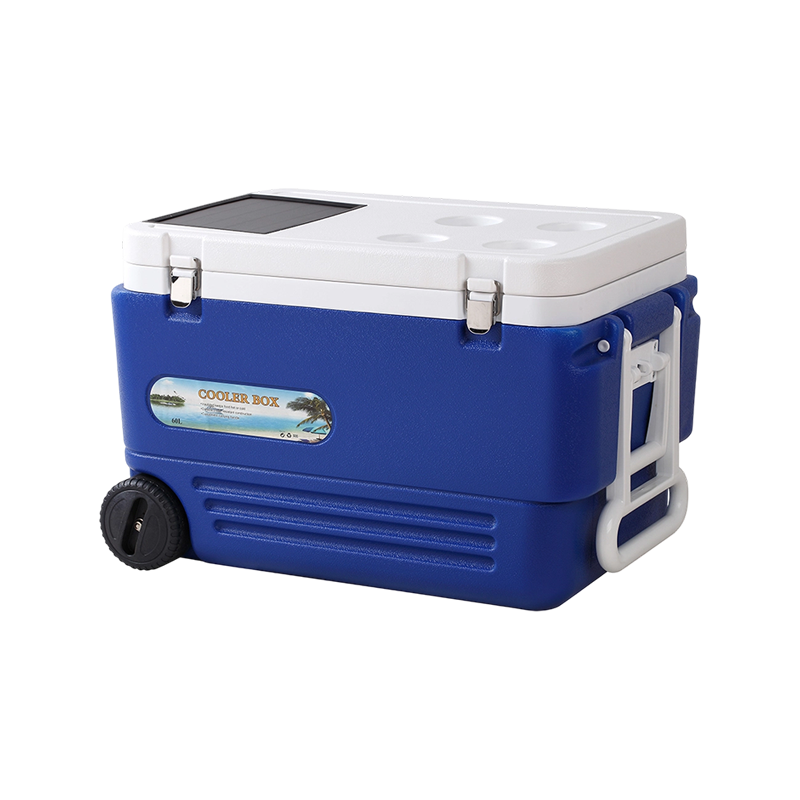
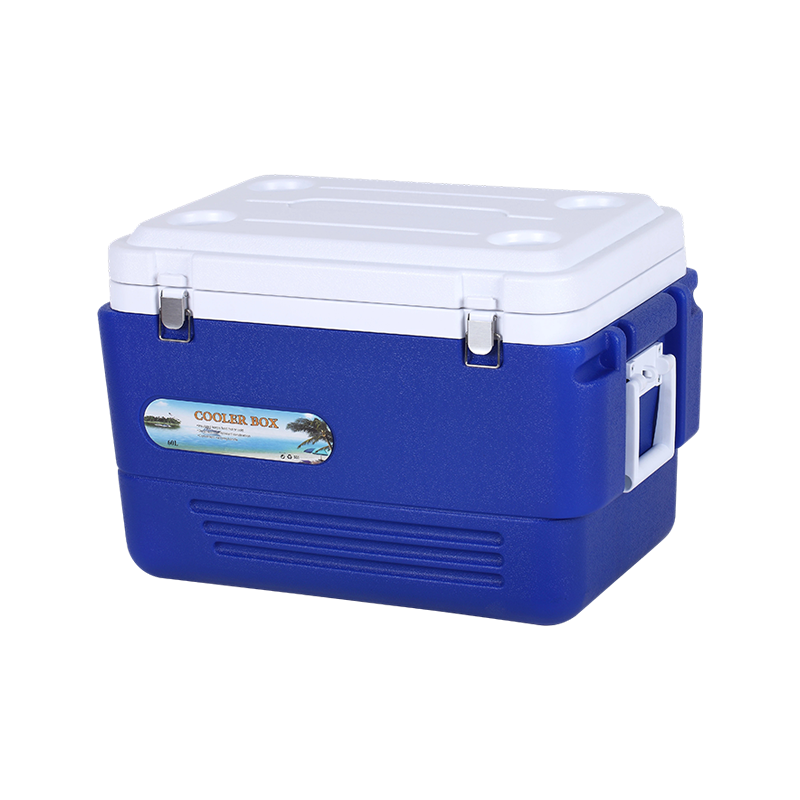
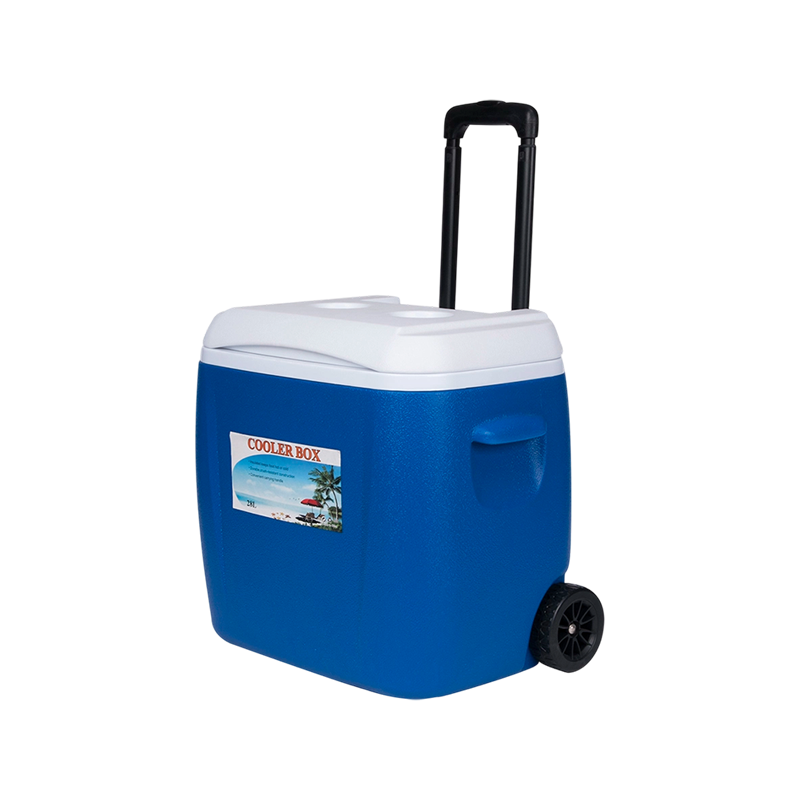
link
Office
- TEL: +86-574-63787606
- Phone: +86-13777994798
- E-mail: sales@nbjunlong.com
- WhatsApp: 13777967488
- Address: No. 1, Lane 3, Development Road, Longtouchang, Longshan Town, Cixi City, Zhejiang Province, China
Get In Touch
Copyright © Ningbo Junlong Outdoor Products Co., Ltd. All Rights Reserved.
China Plastic Insulated Cooler Box Manufacturer Custom Cooler Box Supplier
