- SMALL ORDERS FOR STANDARD ITEMS. Contact Now
- OUTDOOR COOLING SOLUTIONS, MADE IN‑HOUSE. Contact Now
- COOLER BOXES THAT FIT REAL OUTDOOR LIFE. Contact Now

 LANGUAGE
 日本語
 Español
 عربى

Content
- 1 A Practical Medium-Capacity Cooler for Multiple Uses
- 2 Key Product Specifications
- 3 Twist-Lock Cover for Safer Transport
- 4 Foam Insulation for Extended Cooling
- 5 Durable PP and PE Molded Construction
- 6 Smooth Food-Grade PP Interior
- 7 Ergonomic Handle for Easier Carrying
- 8 Non-Slip Base for Stability
- 9 Capacity for Drinks, Meals, and Groceries
- 10 Applications Across Outdoor and Household Settings
- 11 Advantages Compared with Common Cooler Alternatives
- 12 Custom Printing and Private-Label Potential
- 13 Manufacturing Capabilities and Process Strengths
- 14 Design Considerations for Buyers and Distributors
- 15 Recommended Use and Care
- 16 Why This Cooler Is a Strong OEM and ODM Option
- 17 Frequently Asked Questions
- 17.1 What is the capacity of the cooler?
- 17.2 What are the external dimensions?
- 17.3 What are the internal dimensions?
- 17.4 How long can it keep contents cold?
- 17.5 How many beverage cans can it hold?
- 17.6 What materials are used?
- 17.7 Is the inside suitable for food and drinks?
- 17.8 Does the cooler have a locking lid?
- 17.9 Is the cooler easy to carry?
- 17.10 Can the cooler be customized?
- 17.11 What outdoor activities are suitable for this cooler?
- 17.12 Where is the product manufactured?
- 17.13 How should the cooler be cleaned?
- 17.14 Is it suitable for long-distance refrigerated transport?
- 18 Conclusion
- 19 References
- 20 Product: 20 Litres Twist-Lock Foam Insulated Cooler for Outdoor Activities
Outdoor cooling equipment must do more than simply provide a large compartment. A dependable cooler should preserve low temperatures, protect food and drinks during transport, remain comfortable to carry, and withstand the practical demands of camping, travel, grocery shopping, tailgating, fishing, picnics, and everyday household use. The 20-litre twist-lock foam-insulated cooler is designed around these requirements, combining a generous storage capacity with a secure rotating cover, durable molded construction, food-contact-friendly interior surfaces, and a stable non-slip base.
With external dimensions of 420 × 290 × 405 millimeters, internal dimensions of 360 × 240 × 250 millimeters, and a weight of approximately 2.5 kilograms, this medium-size cooler box occupies a useful position between compact personal coolers and large group-oriented storage chests. It is sufficiently spacious for drinks, produce, prepared meals, frozen groceries, and picnic food, while remaining manageable for one person to transport. Its stated insulation performance is 24 to 36 hours, depending on factors such as the starting temperature of the contents, the amount of ice used, ambient temperature, and how frequently the cover is opened.
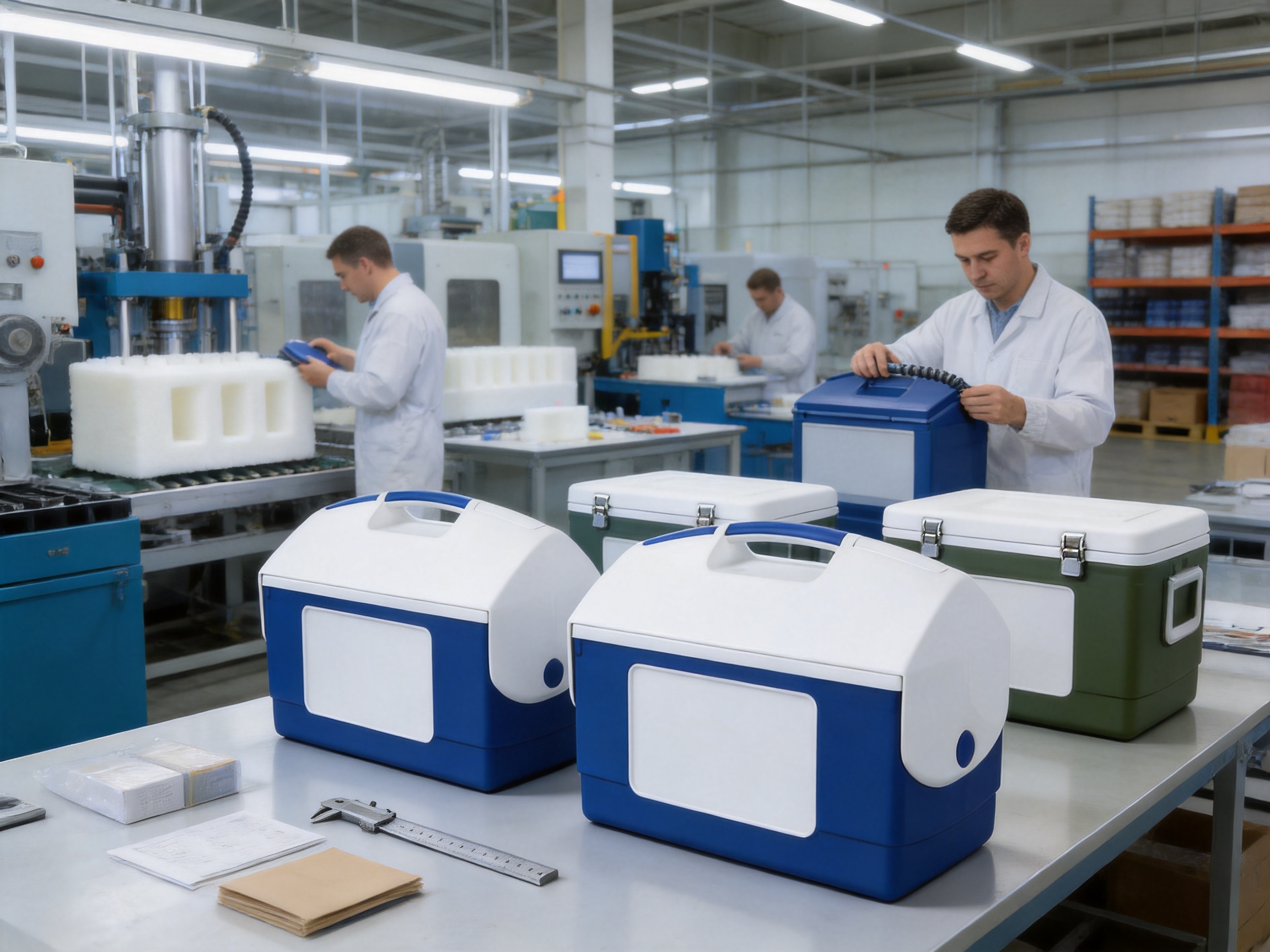
The product is manufactured by Ningbo Junlong Outdoor Products Co., Ltd., a Chinese manufacturer specializing in cooler boxes, insulated cooler jugs, ice buckets, and outdoor water containers. The company integrates product development, production, and sales within its own manufacturing operation. Its factory covers approximately 12,000 square meters and includes automatic injection molding machines, blow molding machines, and foaming equipment. This combination of design capability, molding technology, insulation production, and customization support enables the cooler to serve both retail users and buyers seeking OEM or ODM supply.
A Practical Medium-Capacity Cooler for Multiple Uses
The cooler belongs to the medium cooler box category, generally defined in this product range as 15 to 38 liters. This size is particularly versatile because it offers more capacity than a small lunch cooler without becoming as bulky as a large family chest. The 20-litre volume is suitable for day trips, short outdoor activities, household shopping, and mobile food storage.
A cooler of this size can be used by an individual, a couple, a small family, or a work team. It can hold chilled beverages for a day outdoors, fresh ingredients for a picnic, frozen items during the journey home, or meal containers for a worksite. The supplied product information states that the cooler can accommodate up to 30 cans of 330 milliliters, depending on the arrangement and the space required for ice or cold packs. The same information also identifies an internal holding capability of 10 liters for a particular use configuration. These capacity references should be understood in relation to loading method, packaging shape, and the amount of insulation material placed around the contents.
Unlike a soft-sided bag, the molded body provides a defined protective shell. Unlike many very large hard coolers, this model can be lifted and moved without requiring two people. The result is a balanced design for customers who need useful storage and reliable insulation but do not want the weight, footprint, or handling difficulty associated with an oversized chest.
Key Product Specifications
| Specification | Details |
|---|---|
| Product type | Twist-lock foam-insulated cooler box |
| Nominal volume | 20 liters |
| Category | Medium cooler box, 15 to 38 liters |
| External dimensions | 420 × 290 × 405 millimeters |
| Internal dimensions | 360 × 240 × 250 millimeters |
| Approximate weight | 2,500 grams |
| Construction materials | PP, PE, and EPS |
| Insulation duration | Approximately 24 to 36 hours under suitable conditions |
| Stated beverage capacity | Up to 30 cans of 330 milliliters, depending on arrangement |
| Cover design | Rotating twist-lock cover |
| Interior | Smooth food-grade PP liner |
| Base | Non-slip molded base |
| Customization | Color, logo, printing, packaging, and OEM or ODM development options |
These specifications show how the cooler balances capacity and portability. The external dimensions provide enough volume for meaningful storage, while the internal dimensions identify the usable compartment available for food, beverages, ice, or cold packs. The approximately 2.5-kilogram product weight is also important for buyers comparing hard coolers, since a lighter empty unit leaves more practical carrying capacity for its contents.
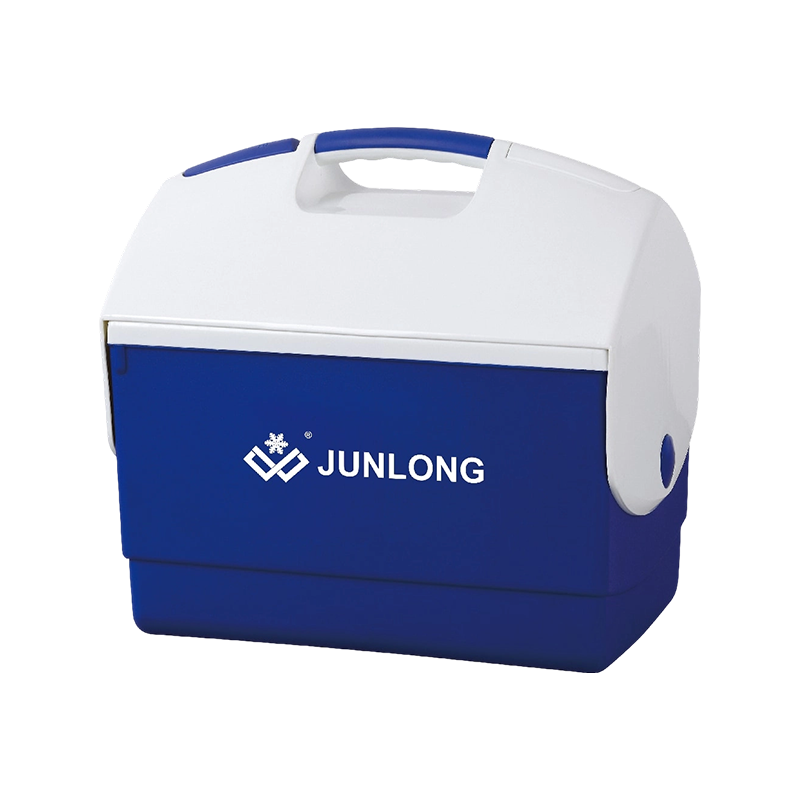
20 Litres Twist-Lock Foam Insulated Cooler for Outdoor Activities
Twist-Lock Cover for Safer Transport
One of the most distinctive features of this cooler is its twist-lock cover. Instead of relying only on a loose-fitting lid or a simple snap connection, the cover rotates into position and creates a tighter closure. This design helps keep the cover secure when the cooler is being moved, carried, placed in a vehicle, or stored on an uneven surface.
A secure closure serves several purposes. First, it helps reduce the exchange of warm outside air with the colder air inside the cooler. Every unnecessary opening allows cold air to escape and introduces warmer air, which can reduce cooling efficiency. A cover that remains properly closed helps the insulation system perform more consistently throughout the day.
Second, the twist-lock design helps prevent accidental opening. This is useful when the cooler is transported in a car trunk, carried from a parking area to a campsite, or positioned beside a picnic table. It can also reduce the possibility of the lid being lifted by contact with other items during loading and unloading.
Third, the closure supports cleaner transport. When melting ice or chilled liquids are present, a securely closed cover can help reduce unwanted movement and the risk of spillage caused by an unsecured lid. The cooler is not intended to replace a pressure-rated liquid container, but its locking cover offers an additional level of practical containment compared with an unfastened top.
Many competing cooler designs focus primarily on exterior size, decorative styling, or basic snap-on covers. The twist-lock arrangement gives this model a functional point of difference. It emphasizes secure everyday use rather than treating the cover as a simple removable accessory. For distributors and private-label buyers, this feature can also serve as a clear selling point in product descriptions and retail packaging.
Foam Insulation for Extended Cooling
The cooler uses a material combination of PP, PE, and EPS. Polypropylene and polyethylene are widely used in molded products because they can provide a durable outer structure and a practical interior or component material. Expanded polystyrene, commonly abbreviated as EPS, serves as the foam insulation layer in the construction.
Insulation works by slowing the movement of heat from the surrounding environment into the chilled compartment. It does not create cold by itself, so the best results are achieved when the cooler is pre-chilled and loaded with cold contents, ice, or suitable cold packs. A full cooler generally retains temperature more effectively than a nearly empty one because the contents themselves provide thermal mass. Placing the cooler in shade, limiting the number of openings, and closing the lid promptly can further support performance.
The stated insulation time is 24 to 36 hours. Actual results may vary according to weather, direct sunlight, starting temperature, ice quantity, loading density, and opening frequency. Nevertheless, the stated range makes the product suitable for many one-day outdoor activities and certain overnight applications. It is also useful for bringing frozen groceries home from the store when the journey or schedule requires additional temperature protection.
Compared with thin soft coolers, a molded foam-insulated box can offer a more consistent structural barrier around the contents. Soft bags may be convenient for folding and storage, but their flexible walls can compress, lose shape, or provide less physical protection. Compared with basic uninsulated plastic containers, this product is specifically engineered to slow heat transfer. Its value therefore comes from the interaction of insulation, closure, body construction, and correct user handling.
Durable PP and PE Molded Construction
The external structure is made using PP and PE components supported by EPS insulation. These materials are suitable for a cooler that must be carried, placed in vehicles, used outdoors, and cleaned repeatedly. The rigid molded construction helps the box retain its shape during normal handling and protects food and beverages from direct contact with external pressure.
A hard shell also makes it easier to stack or position the cooler in a vehicle. The defined rectangular form can be placed in a trunk, on a floor, or beside other travel equipment. The 420-millimeter length and 290-millimeter width provide a reasonably compact footprint, while the 405-millimeter height creates useful internal volume for cans, bottles, containers, and packaged food.
The molded body is also suitable for consistent production. Molding allows the manufacturer to reproduce the principal shape with controlled dimensions across production runs. This is important for wholesale buyers, retailers, and brand owners who require product uniformity. Consistent exterior form supports reliable lid fit, stable stacking, repeatable packaging, and predictable visual presentation.
The product is not positioned as a disposable container. Its rigid structure and cleanable inner surface support repeated use, helping customers reduce dependence on single-use bags or temporary packaging for short-distance chilled transport. Proper care remains important: users should avoid sharp impacts, excessive loading, open flames, and unsuitable cleaning chemicals.
Smooth Food-Grade PP Interior
The interior uses a smooth food-grade PP liner designed for direct contact with food and drinks. A smooth surface is beneficial because it has fewer areas where crumbs, liquid residue, or food particles can collect. After use, the interior can be wiped or washed according to normal care instructions, helping the cooler remain clean between trips.
This feature is especially valuable for customers who use one cooler for different purposes. The same unit may carry bottled water on one outing, fresh vegetables on another, and frozen groceries on a later shopping trip. A surface that is easy to clean helps prevent odors and residue from building up when the cooler is used frequently.
Food-contact suitability is also a meaningful consideration for distributors and commercial buyers. Product users expect the inside of a cooler to be appropriate for packaged and unpackaged food when handled correctly. The food-grade PP liner addresses this expectation while maintaining a practical, smooth appearance.
Cleaning should generally be performed with mild detergent and water, followed by thorough drying. Leaving the cover open after washing can help moisture evaporate and reduce the possibility of unpleasant odors. Users should avoid storing the cooler while wet and should inspect the interior after carrying liquids or melting ice.
Ergonomic Handle for Easier Carrying
The integrated ergonomic handle is shaped to provide a more comfortable grip during transport. A handle becomes increasingly important as the cooler is filled with drinks, food, ice, or cold packs. Carrying comfort can affect whether customers consider a cooler genuinely practical, particularly when it must be moved between a vehicle, campsite, beach, picnic area, or workplace.
An integrated handle also creates a cleaner product structure than a loosely attached carrying strap. It is incorporated into the cooler design and positioned for the intended lifting motion. This helps the product remain compact and easy to store when not in use.
The handle is designed to reduce strain, but users should still lift the cooler with appropriate care. A fully loaded 20-litre cooler can be substantially heavier than its empty weight. For longer distances, users should avoid sudden swinging movements and should keep the load close to the body. Buyers may also consider the anticipated contents when deciding whether the cooler will be carried by one person or transported with a cart.
Non-Slip Base for Stability
The non-slip base helps the cooler remain stable on floors, vehicle trunks, picnic surfaces, and uneven outdoor terrain. Stability is often overlooked when comparing cooler boxes, yet it can have a direct effect on everyday convenience. A cooler that slides during vehicle movement may tip, shift into other luggage, or place unnecessary stress on its cover and contents.
On outdoor surfaces, a non-slip base can help reduce movement caused by light contact or uneven placement. It does not eliminate the need to position the cooler safely, but it adds a practical layer of support. The feature is particularly useful at campsites, on boat decks, beside sports fields, and at outdoor events where the ground may not be perfectly level.
The base also helps protect the bottom of the cooler from direct contact with dirty or damp surfaces. Users should still clean and dry the underside when necessary, especially after placing the product on wet ground or muddy surfaces.
Capacity for Drinks, Meals, and Groceries
The 20-litre volume provides flexibility for a wide range of loading plans. For a beverage-focused trip, users can arrange cans, bottles, ice, and cold packs in layers. For a picnic, the cooler can hold prepared meals, fruit, condiments, desserts, and drinks. For grocery shopping, it can provide temporary chilled storage for dairy products, seafood, meat, frozen food, and other temperature-sensitive items during the journey home.
The stated capacity of up to 30 cans of 330 milliliters demonstrates the cooler’s suitability for group refreshments. Actual packing capacity will depend on whether the cans are loaded alone or together with ice, separators, cold packs, bottles, food containers, and protective wrapping. A user who prioritizes longer cooling performance may choose to sacrifice some beverage space for additional ice or cold packs.
The internal dimensions of 360 × 240 × 250 millimeters are important when planning storage. They allow buyers to compare the cooler with their preferred meal containers, beverage formats, grocery packages, and reusable cold packs. Because the cooler has a rectangular interior, users can make efficient use of the space by placing flat items at the bottom and taller items toward the center, while avoiding excessive pressure against the cover.
For frozen groceries, the cooler is most effective when the products are already frozen and packed closely together. A short transfer from the store to the home can be supported by the insulated body and closed cover. For longer transport, additional cold packs and reduced opening frequency are recommended.
Applications Across Outdoor and Household Settings
Camping and Hiking Base Camps
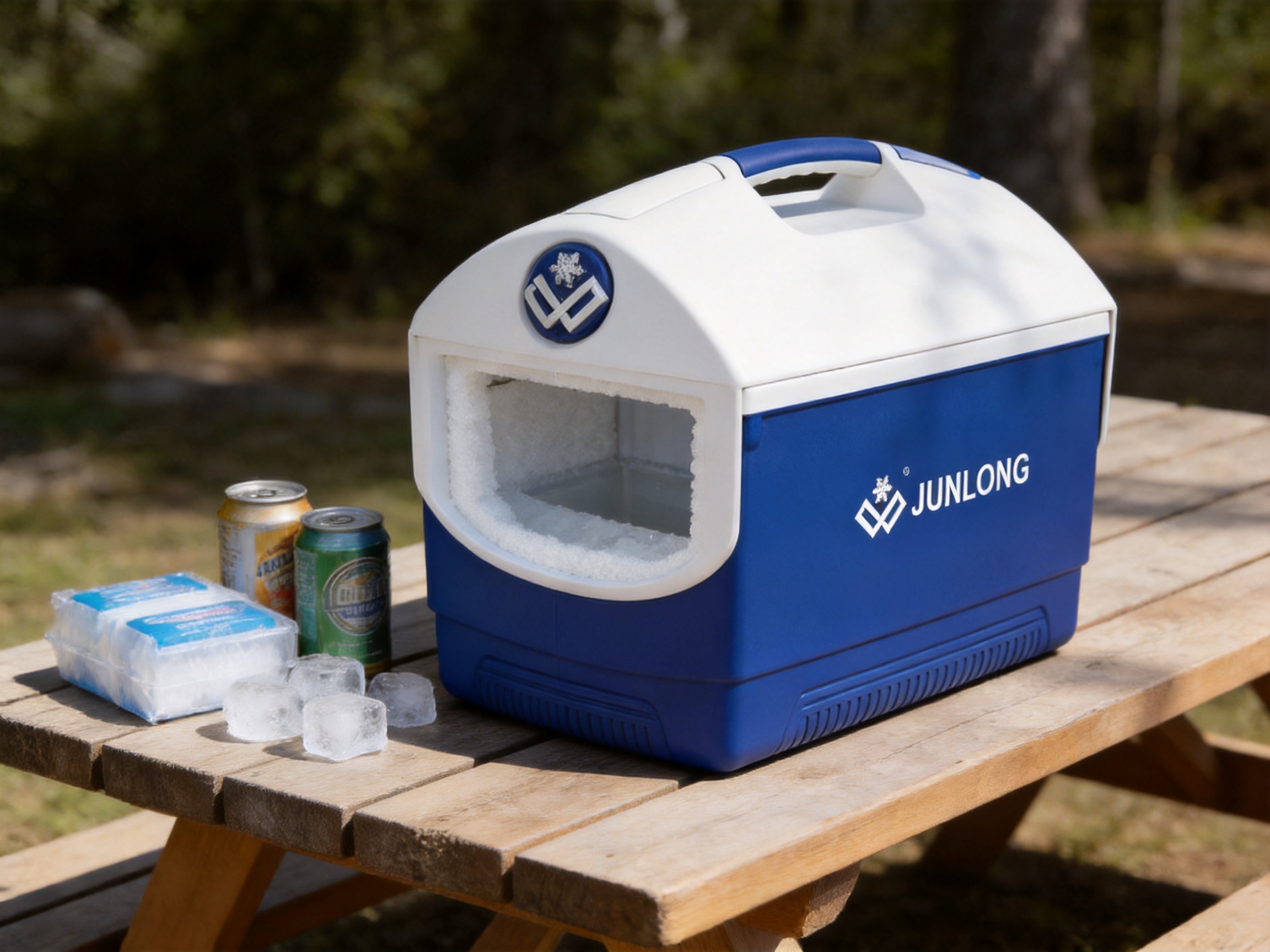
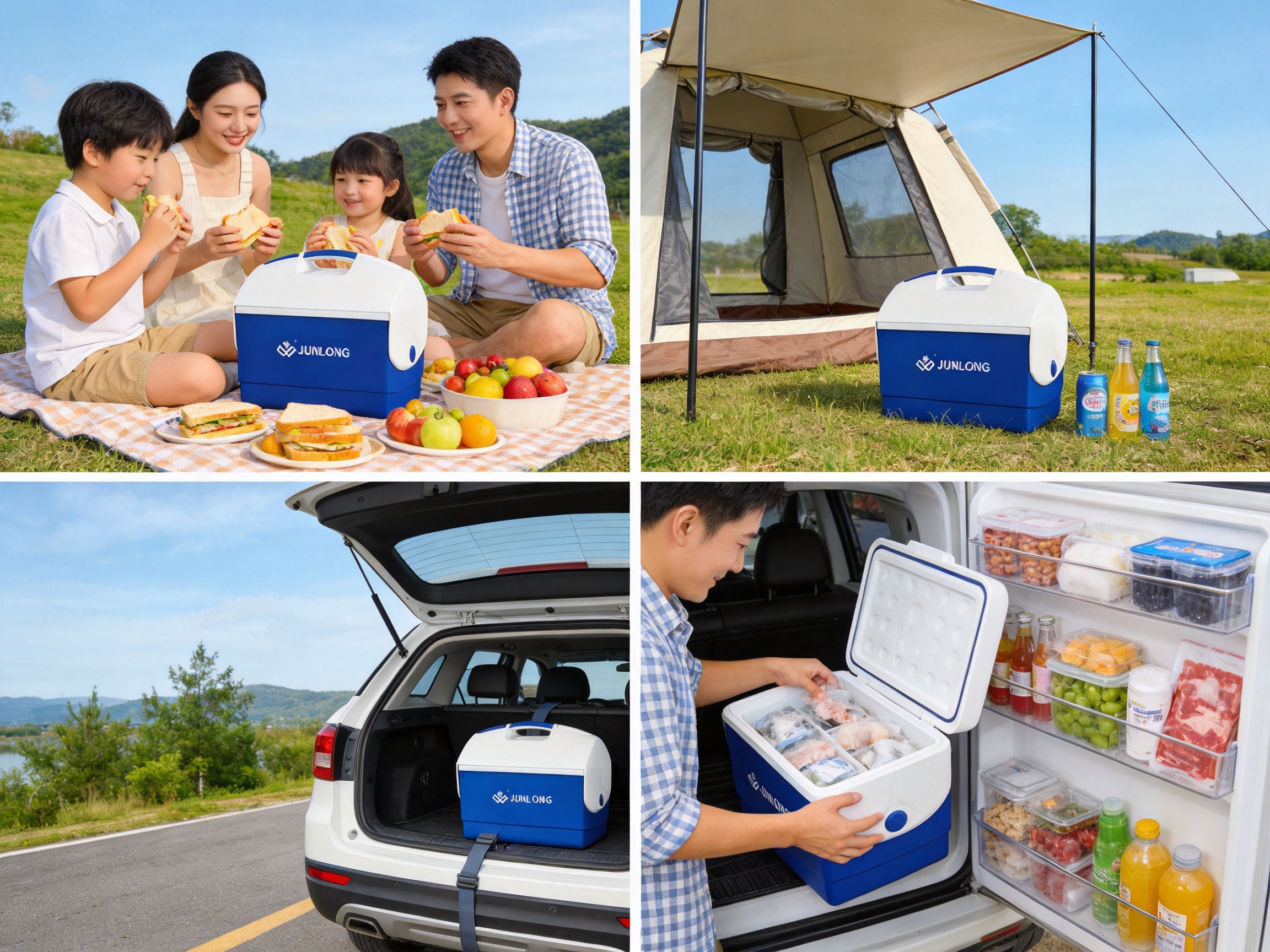
At a campsite, the cooler can store drinks, breakfast ingredients, meat, vegetables, snacks, and prepared meals. Its rigid body provides protection from normal campsite handling, while the twist-lock cover helps keep the storage compartment closed. The integrated handle supports movement between the vehicle and the campsite, and the non-slip base helps position the unit on outdoor ground.
Because the cooler weighs approximately 2.5 kilograms before loading, it is more suitable for vehicle-assisted camping, short carrying distances, and base-camp use than for extended backpacking. Its role is to provide accessible chilled storage where portability and capacity must be balanced.
Picnics and Family Days Out
A 20-litre cooler is well suited to day trips where several people need shared food and beverages. The capacity can accommodate a combination of cans, fruit, sandwiches, containers, and ice. The smooth interior makes cleanup more convenient after the outing, especially if food or drinks have been stored without secondary bags.
The secure cover is useful when the cooler is transported in a vehicle or placed beside a picnic area. The body also creates a firm container that can be positioned without collapsing like a soft bag.
Tailgating and Outdoor Events
For tailgating, sporting events, and outdoor gatherings, the cooler can function as a central beverage and snack station. The 30-can capacity reference makes it appropriate for shared refreshments, while the medium footprint helps it fit into a vehicle alongside chairs, tables, and other event supplies.
The easy-to-print smooth exterior also creates opportunities for event branding, team graphics, promotional messages, or custom logos. This makes the product relevant not only to individual consumers but also to event organizers, beverage distributors, hospitality businesses, and promotional-product buyers.
Fishing and Recreational Activities
The insulated compartment can be used for drinks, packed meals, bait, or other temperature-sensitive supplies during recreational activities. The hard exterior helps protect the contents from ordinary contact with surrounding equipment. After use, the smooth liner can be cleaned to prepare the cooler for its next application.
Grocery Shopping
Many shoppers need a way to protect chilled and frozen groceries between the store and home. This cooler provides a rigid, insulated space for dairy products, frozen foods, meat, seafood, and other items. The twist-lock cover helps keep the container closed during driving, while the manageable footprint allows it to be placed in a car trunk or passenger-area floor when appropriate.
The cooler should not be regarded as a substitute for commercial refrigerated transport. Its role is short-term temperature protection, and the best results come from minimizing travel time, pre-cooling the box, grouping frozen items together, and keeping the cover closed.
Household and Workplace Use
At home, the cooler can be used during parties, renovations, garden activities, or temporary refrigeration interruptions. At workplaces, it can hold shared refreshments, packed lunches, or drinks for outdoor work teams. The neutral, practical structure makes it suitable for repeated daily use rather than only occasional recreation.
Advantages Compared with Common Cooler Alternatives
Compared with Soft-Sided Coolers
Soft-sided coolers are often lightweight and foldable, but they may provide less physical protection and can lose their shape when heavily loaded. The 20-litre hard cooler offers a defined shell, a rigid base, and a more secure twist-lock cover. Its smooth molded interior is also easier to wipe after spills than many fabric-lined bags.
The trade-off is that the hard cooler occupies a fixed amount of storage space when empty. Buyers who prioritize durability, protection, stable placement, and a secure closure may find this trade-off worthwhile.
Compared with Basic Plastic Storage Boxes
A standard plastic storage box may provide a container but usually does not include dedicated EPS insulation, a designed cold-retention structure, or a cover intended to preserve chilled conditions. The product described here combines molded storage with thermal insulation and a rotating lock. It is therefore more appropriate for temperature-sensitive contents than an ordinary household box.
Compared with Very Large Cooler Chests
Large cooler chests can serve bigger groups, but they may be heavier, harder to carry, and more difficult to fit into smaller vehicles. The 20-litre model offers a middle-ground solution. It provides enough volume for many day trips while retaining a relatively manageable size and weight. For buyers who do not need multi-day storage for a large group, the medium format can be more efficient.
Compared with Low-Cost Thin-Wall Coolers
Lower-cost coolers may reduce material use and simplify the closure, but such choices can affect rigidity, sealing, stability, and long-term user experience. This model emphasizes a combination of PP, PE, EPS, a twist-lock cover, a non-slip base, and an ergonomic handle. These features work together to create a more complete product proposition than insulation alone.
Custom Printing and Private-Label Potential
The cooler has a smooth exterior that is easy to print and suitable for various logo formats. This provides a strong advantage for wholesale customers, promotional campaigns, corporate gifts, outdoor brands, beverage companies, retailers, and event organizers. A cooler is a visible product that can display a company identity during travel, camping, shopping, and outdoor gatherings.
Customization may include product color, logo application, exterior printing, packaging, and other presentation requirements. OEM and ODM support can also include product development based on customer drawings or samples. Depending on the project, buyers may discuss shape adjustments, branding positions, packaging structure, color matching, and target-market requirements with the manufacturer.
For a private-label buyer, the product can be positioned as an outdoor cooler, a grocery transport box, a family picnic accessory, a promotional beverage cooler, or a practical household storage solution. The same core structure can support different sales messages without changing its fundamental function.
Customization should be planned with attention to minimum order quantities, artwork specifications, color availability, packaging standards, sampling, production scheduling, and inspection requirements. Clear communication at the beginning of a project helps ensure that the final product meets both functional and visual expectations.
Manufacturing Capabilities and Process Strengths
Ningbo Junlong Outdoor Products Co., Ltd. was founded in 2000 and is located in Cixi, Ningbo, within the Yangtze River Delta manufacturing region. The company operates as an integrated manufacturing enterprise covering product development, production, and sales. Its specialization in outdoor cooling and water storage products gives it relevant experience for cooler boxes, cooler jugs, ice buckets, and outdoor water containers.
The company operates an independent factory of approximately 12,000 square meters and employs more than 100 people. The facility includes automatic injection molding machines, blow molding machines, and foaming equipment. These capabilities are relevant to the production of molded cooler bodies, structural components, insulating layers, and associated outdoor products.
Injection Molding Capability
Automatic injection molding supports the controlled production of plastic components with repeatable shapes and dimensions. For a cooler box, this may include body components, covers, handles, base structures, and other molded parts. Consistent molding is important because the cover must align with the body, the handle must integrate with the structure, and the overall product must maintain a uniform appearance across batches.
Automated equipment can also support production efficiency and repeatability. The exact process settings depend on the chosen material, mold design, component geometry, and order requirements. A manufacturer with in-house molding capability can coordinate product development and production more directly than a company that relies entirely on external suppliers.
Foaming Equipment
Foaming equipment is particularly relevant to insulated cooler production. EPS or other insulating structures must be formed and positioned as part of the cooler’s thermal design. The quality of the insulation layer, its consistency, and its fit within the outer shell all influence the finished product’s performance.
In-house foaming capability allows the manufacturer to manage an important part of the product process within its own facility. It can also support the development of different cooler sizes and configurations, helping customers select products according to volume, shape, and intended application.
Product Development and R&D
The company maintains a creative research and development team and supports product development based on drawings or samples. This is valuable for OEM and ODM customers who may have their own brand concepts but require a manufacturing partner to convert those concepts into a practical molded product.
Development work may involve reviewing the intended capacity, exterior dimensions, handle position, cover mechanism, material combination, insulation structure, printing area, and packaging requirements. Early technical review can identify potential issues before tooling and mass production begin.
Quality Management Approach
The company states that it operates a rigorous quality management system and focuses on stable quality for diverse customer needs. For a cooler box, quality management should consider dimensional consistency, cover fit, locking function, handle integrity, surface appearance, insulation assembly, liner cleanliness, printing quality, and packaging protection.
Wholesale buyers can strengthen quality results by defining inspection criteria in advance. Useful checkpoints may include measurements, appearance standards, closure operation, logo placement, weight tolerance, packaging condition, and sample approval. A clearly documented specification helps connect the buyer’s expectations with the manufacturer’s production process.
Design Considerations for Buyers and Distributors
Retailers should present the cooler as a medium-capacity insulated box intended for outdoor activities, shopping, household use, and short-term chilled transport. Product descriptions should explain the 20-litre volume, twist-lock cover, insulation range, carrying handle, smooth liner, and non-slip base in clear language.
Distributors should also communicate that cooling duration depends on usage conditions. Stating a performance range of 24 to 36 hours is more responsible than presenting insulation as an unlimited guarantee. Product education can explain the importance of pre-cooling, cold packs, shade, limited opening, and correct loading.
For promotional buyers, the smooth printable exterior may be the primary advantage. For outdoor retailers, the secure cover and molded construction may be more important. For grocery and household channels, the food-grade PP liner, cleanable surface, and manageable capacity may be the strongest selling points.
Packaging can emphasize the product’s intended applications without overcomplicating the message. Clear icons or concise descriptions may highlight the 20-litre capacity, 24-to-36-hour insulation claim, twist-lock closure, carrying handle, and customizable exterior. Buyers should confirm final artwork, claims, and regulatory requirements for their destination market before printing packaging.
Recommended Use and Care
For best performance, pre-cool the interior before loading whenever practical. Use chilled or frozen contents rather than placing warm products inside and expecting the cooler to lower their temperature quickly. Arrange contents efficiently, using ice or cold packs to fill unnecessary air gaps when extended cooling is required.
Keep the cover closed as much as possible. Organize frequently used drinks or snacks so that they can be accessed quickly, reducing the time the lid remains open. Place the cooler in shade and avoid prolonged direct sunlight. In a vehicle, secure it so that it cannot slide or tip during travel.
After use, empty all contents and remove melted ice or liquid. Wash the interior with mild detergent and clean water, then dry it completely. Wipe the exterior and base if the cooler has been used outdoors. Store it in a dry, ventilated location with the cover slightly open if appropriate, allowing any remaining moisture to evaporate.
Do not use sharp tools inside the cooler, place it near open flames, overload the handle, or use harsh chemicals that may damage plastic surfaces. The cooler is intended for storage and transport of chilled items, not for pressurized contents or direct cooking. Following these practices can help maintain the appearance and usability of the product over repeated use.
Why This Cooler Is a Strong OEM and ODM Option
The product combines several features that are useful for a branded outdoor product line: a recognizable twist-lock cover, medium 20-litre capacity, durable molded construction, printable exterior, ergonomic handle, non-slip base, and food-grade PP liner. These features give buyers multiple ways to position the product in different markets.
The manufacturer’s own molding and foaming equipment is another important advantage. Product development, tooling coordination, plastic molding, insulation production, and sales support can be connected within one organization. This may simplify communication compared with a supply chain divided among unrelated design, molding, insulation, assembly, and trading companies.
OEM customers can request branding, colors, packaging, and logo printing. ODM customers can work from drawings, samples, or a functional concept. The company’s existing product focus means that customer projects can be developed within a product category it already understands: outdoor cooling and water storage.
For international buyers, long-term cooperation depends on more than a single product. It requires stable communication, consistent quality, transparent specifications, practical delivery planning, and responsive after-sales support. The manufacturer’s integrated structure and experience since 2000 provide a foundation for those commercial relationships.
Frequently Asked Questions
What is the capacity of the cooler?
The nominal capacity is 20 liters. The cooler is categorized as a medium cooler box in the 15-to-38-liter range. Actual usable space depends on the shapes of the items loaded and the amount of ice or cold packs used.
What are the external dimensions?
The external dimensions are 420 × 290 × 405 millimeters, or approximately 42 × 29 × 40.5 centimeters.
What are the internal dimensions?
The internal dimensions are 360 × 240 × 250 millimeters. These measurements help buyers determine whether their preferred cans, bottles, food containers, or cold packs will fit.
How long can it keep contents cold?
The stated insulation time is approximately 24 to 36 hours. Performance varies with ambient temperature, starting temperature, ice quantity, loading density, sunlight exposure, and how often the cover is opened.
How many beverage cans can it hold?
The product information states that it can hold up to 30 cans of 330 milliliters. If ice, cold packs, bottles, or food containers are added, the number of cans will be reduced according to the loading arrangement.
What materials are used?
The cooler uses PP, PE, and EPS. PP and PE contribute to the molded structure and components, while EPS provides foam insulation.
Is the inside suitable for food and drinks?
The smooth inner liner is made from food-grade PP and is designed for direct contact with food and drinks when the product is used and cleaned properly.
Does the cooler have a locking lid?
Yes. It has a rotating twist-lock cover that turns into a secure closed position. The design helps retain cold air, reduce accidental opening, and support cleaner transport.
Is the cooler easy to carry?
The cooler has an integrated ergonomic handle designed for a comfortable grip. Its empty weight is approximately 2,500 grams, although the total weight increases when it is filled.
Can the cooler be customized?
Yes. The smooth exterior is easy to print and can support various logo formats. OEM and ODM options may include colors, logos, packaging, and product development based on drawings or samples.
What outdoor activities are suitable for this cooler?
It is suitable for camping, picnics, tailgating, fishing, outdoor events, travel, grocery shopping, and general household use. It is especially appropriate for day trips and short-term chilled transport.
Where is the product manufactured?
The product is manufactured by Ningbo Junlong Outdoor Products Co., Ltd. in Cixi, Ningbo, Zhejiang Province, China. The company operates an independent factory with injection molding, blow molding, and foaming equipment.
How should the cooler be cleaned?
Empty the cooler, wash the interior with mild detergent and clean water, and dry it thoroughly before storage. Avoid abrasive tools and harsh chemicals that could damage the liner or exterior.
Is it suitable for long-distance refrigerated transport?
It is designed for insulated short-term cooling, outdoor activities, shopping, and household use. It is not a substitute for commercial refrigerated transport. For longer journeys, use sufficient cold packs, minimize opening, and follow applicable food-safety practices.
Conclusion
The 20-litre twist-lock foam-insulated cooler is a balanced solution for users who need more than a basic container but less bulk than a large cooler chest. Its PP, PE, and EPS construction creates a durable insulated body, while the smooth food-grade PP liner supports clean food and beverage storage. The rotating twist-lock cover improves security and helps protect cooling performance, and the ergonomic handle makes transport more manageable.
The product’s 24-to-36-hour insulation range, capacity for up to 30 cans of 330 milliliters, non-slip base, and printable smooth exterior make it suitable for both consumer and commercial applications. It can serve campers, families, grocery shoppers, event organizers, outdoor workers, retailers, and promotional buyers.
Its strongest competitive advantage is the way several practical features work together. The product is not defined by capacity alone. It combines medium-volume storage, thermal insulation, secure closure, stable placement, easy cleaning, carrying comfort, and customization potential in one molded design.
For OEM and ODM customers, the manufacturer adds further value through an established outdoor-product specialization, a 12,000-square-meter factory, automatic injection molding machines, blow molding machines, foaming equipment, product development support, and an integrated sales and production structure. These capabilities provide a practical foundation for buyers seeking branded cooler boxes with reliable construction and flexible customization.
As outdoor recreation, mobile food storage, promotional merchandise, and convenient grocery transport continue to require versatile cooling products, this 20-litre cooler offers a commercially useful combination of performance, portability, appearance, and manufacturing adaptability.
References
1. Product specification sheet for the 20-litre twist-lock foam-insulated cooler, including dimensions, materials, capacity, weight, and insulation information.
2. Manufacturer-provided company profile for Ningbo Junlong Outdoor Products Co., Ltd., including factory capabilities, product categories, and OEM or ODM services.
3. General principles of insulated container performance, including the effects of pre-cooling, thermal mass, ambient temperature, sunlight, and opening frequency.
4. General handling and cleaning practices for reusable plastic food and beverage storage containers.
Product: 20 Litres Twist-Lock Foam Insulated Cooler for Outdoor Activities

Product Recommendation
link
Office
- TEL: +86-574-63787606
- Phone: +86-13777994798
- E-mail: sales@nbjunlong.com
- WhatsApp: 13777967488
- Address: No. 1, Lane 3, Development Road, Longtouchang, Longshan Town, Cixi City, Zhejiang Province, China
Get In Touch
Copyright © Ningbo Junlong Outdoor Products Co., Ltd. All Rights Reserved.
China Plastic Insulated Cooler Box Manufacturer Custom Cooler Box Supplier
