- SMALL ORDERS FOR STANDARD ITEMS. Contact Now
- OUTDOOR COOLING SOLUTIONS, MADE IN‑HOUSE. Contact Now
- COOLER BOXES THAT FIT REAL OUTDOOR LIFE. Contact Now

 LANGUAGE
 日本語
 Español
 عربى

Content
- 1 Designed for Long Outdoor Days
- 2 PU Foam Insulation for Extended Temperature Retention
- 3 Food-Grade PP, PE, and PU Materials
- 4 Secure Closure and Stainless Steel Lock Buckles
- 5 Integrated Cup Holder for Everyday Convenience
- 6 Drain Valve for Easier Cleaning and Water Management
- 7 Portability Through a Dual-Handle Design
- 8 Comparison with Basic and Competing Cooler Designs
- 9 Manufacturing Capabilities Behind the Product
- 10 Product Development and Molded Component Precision
- 11 Foaming Process and Insulation Consistency
- 12 Quality Management from Raw Material to Finished Product
- 13 OEM and ODM Customization Opportunities
- 14 Applications for Retail and Commercial Buyers
- 15 Recommended Use Practices
- 16 Why Manufacturing Strength Matters to Buyers
- 17 Specifications at a Glance
- 18 Questions and Answers
- 18.1 What is the capacity of the cooler?
- 18.2 How long can the cooler retain ice?
- 18.3 What materials are used?
- 18.4 Is the lid insulated?
- 18.5 Does the cooler have a drain?
- 18.6 Can one person carry the cooler?
- 18.7 What is the purpose of the stainless steel buckles?
- 18.8 What is the purpose of the cup holder?
- 18.9 What activities is the cooler suitable for?
- 18.10 Can the product be customized?
- 18.11 What production equipment does the manufacturer have?
- 18.12 Why is the manufacturer suitable for wholesale buyers?
- 18.13 How should the cooler be cleaned?
- 19 Conclusion
- 20 References
- 21 Product: 45L Outdoor Foam Insulated Cooler with Cup Holder
Outdoor cooling equipment must do more than hold ice. For camping trips, fishing expeditions, sporting events, road travel, worksite use, and large grocery runs, a reliable cooler must preserve temperature, withstand demanding handling, remain convenient to transport, and provide enough internal space for food and beverages. The 45L Outdoor Foam Insulated Cooler with Cup Holder is designed around these practical requirements. It combines a large-capacity storage body, PU insulation, food-grade plastic materials, a secure stainless steel locking system, a drainage valve, and a convenient cup holder in one heavy-duty cooler box.
With a volume of 45 liters, the cooler offers a useful balance between generous storage and manageable portability. Its external dimensions are 530 × 380 × 370 mm, while its product weight is approximately 4,900 g. The size is substantial enough for multi-person outdoor activities, yet the dual-handle design allows two people to lift and carry it more comfortably when the cooler is fully loaded. This makes it suitable for both individual users who need serious cold storage and commercial buyers seeking a practical cooler box for retail, hospitality, promotional, or outdoor equipment programs.
The product is manufactured from food-grade PP, PE, and PU materials. Its double-wall construction incorporates PU foam insulation in both the lid and the cooler body, supporting an insulation time of approximately 48 to 60 hours under suitable conditions. Actual performance can vary according to ambient temperature, ice quantity, opening frequency, pre-cooling, and the type of contents stored. Even so, the construction is intended for extended use rather than short-duration transport alone.
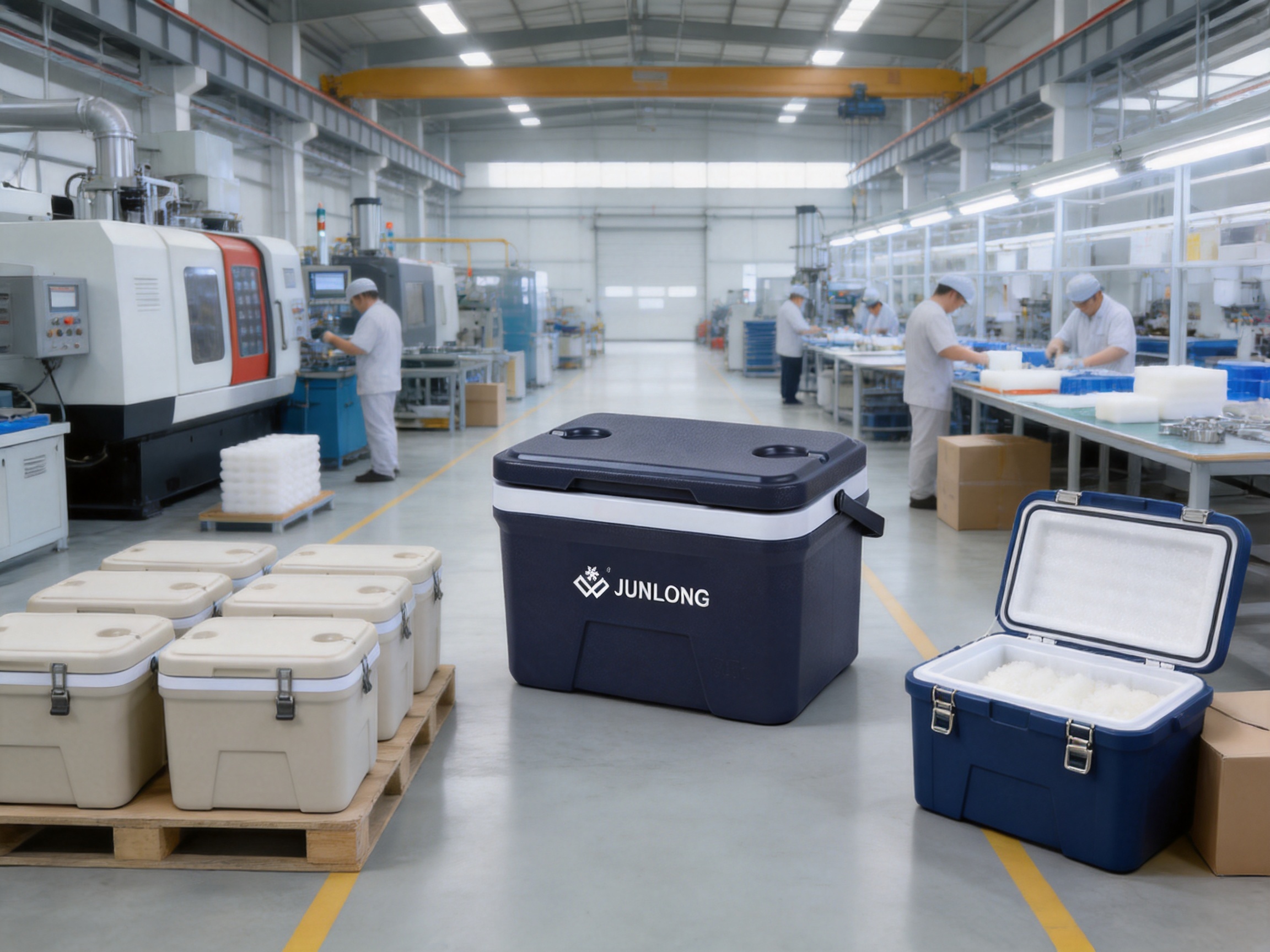
Behind the product is an experienced outdoor product manufacturer with integrated product development, production, and sales capabilities. The company operates an independent 12,000-square-meter factory, employs more than 100 people, and maintains injection molding, blow molding, and foaming equipment. These capabilities are important because a high-performance cooler depends not only on its visible shape but also on material selection, mold quality, insulation consistency, hardware assembly, and quality control throughout production.
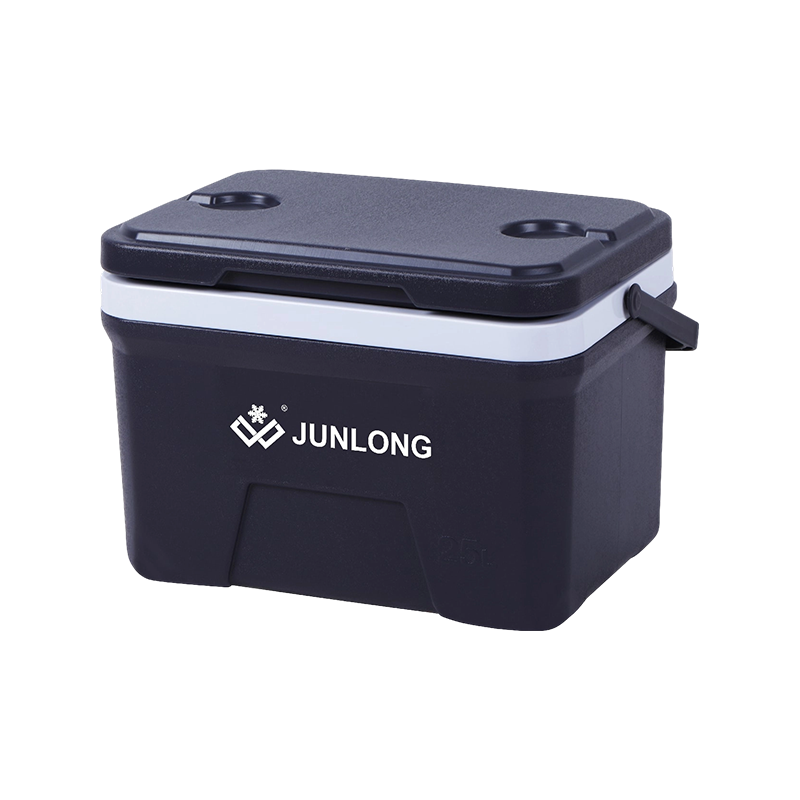
45L Outdoor Foam Insulated Cooler with Cup Holder
Designed for Long Outdoor Days
A small lunch cooler may be sufficient for a short commute, but outdoor activities often require more capacity and longer temperature retention. A weekend camping trip may involve food for several people, drinks, fresh ingredients, ice packs, and personal supplies. A fishing outing may require space for bait, beverages, snacks, and a separate area for the day’s catch. A large cooler also becomes useful during outdoor events, family gatherings, beach trips, road travel, and emergency food storage.
The 45-liter format addresses these requirements with a spacious interior while keeping the external footprint practical. Rather than relying on a narrow or highly specialized shape, the cooler provides a broad storage compartment that can accommodate different types of goods. Users can arrange bottles, cans, meal containers, packaged food, fresh produce, and ice according to their needs. This flexibility is especially valuable when the cooler is shared by several people or used for different activities throughout the year.
The cooler’s 530 × 380 × 370 mm dimensions also make it suitable for transport in many common outdoor environments. It can be placed in the rear cargo area of a vehicle, on a boat, beside camping equipment, or near a picnic setup. Buyers should always confirm the available vehicle or storage space before ordering, but the rectangular configuration is generally easier to organize than irregularly shaped containers.
Capacity is only useful when the product remains easy to handle. The dual-handle design allows lifting from both sides and supports two-person carrying. This is particularly helpful when the cooler is filled with ice, water, food, or other heavy items. The empty unit weighs approximately 4.9 kg, while the loaded weight will naturally increase depending on the contents. Dividing the lifting task between two people reduces strain and makes it easier to move the cooler over short distances.
PU Foam Insulation for Extended Temperature Retention
The primary performance feature of the cooler is its double-wall PU insulation. Polyurethane foam is widely used in insulated containers because it can provide a continuous insulating layer between the inner and outer walls. When properly formed, the foam helps reduce heat transfer from the surrounding environment into the storage compartment. The result is a cooler that can maintain a cold interior for considerably longer than a basic single-wall plastic container.
This model uses PU insulation in both the lid and the main body. That detail is important because the lid is one of the most vulnerable areas of a cooler. If the top is thin or poorly insulated, warm air can enter quickly and cold air can escape. By insulating both major sections, the design supports more consistent temperature retention throughout the container.
The listed insulation time is approximately 48 to 60 hours. This time range is intended to communicate the cooler’s suitability for multi-day outdoor use rather than a few hours of casual beverage storage. Users can improve results by pre-chilling the cooler, using an adequate quantity of ice, minimizing unnecessary lid opening, keeping the unit in the shade, and ensuring the lid is fully closed after every use.
Insulation performance is influenced by several conditions. A cooler placed in direct sunlight in a hot climate will experience greater heat exposure than one kept inside a shaded tent or vehicle. A cooler that is packed tightly with already chilled goods will generally perform differently from one filled with warm products. Ice type also matters: large blocks often melt more slowly than small cubes, while a combination of block ice and cubed ice can support both longevity and flexible packing.
These practical factors apply to all insulated cooler boxes, including premium competing models. The advantage of this product is that its construction is intended to give users a strong foundation for extended cooling. The combination of insulated walls, an insulated lid, a secure closure, and a drain valve creates a complete cooling system rather than a container that relies on insulation alone.
Food-Grade PP, PE, and PU Materials
Material selection has a direct effect on the safety, durability, appearance, and service life of a cooler. This product uses food-grade PP and PE for its molded components together with PU for insulation. Polypropylene and polyethylene are established materials for outdoor containers because they can provide a practical combination of toughness, chemical resistance, cleanability, and manufacturing flexibility. The food-grade specification is especially relevant when the cooler is used for beverages, packaged food, fresh produce, or other consumable goods.
The material system is designed for repeated outdoor use. A cooler may be exposed to dirt, water, condensation, changing temperatures, accidental impacts, and frequent loading and unloading. The molded plastic body is intended to handle these everyday challenges while remaining relatively easy to clean. After use, the interior can be emptied, drained, wiped, and allowed to dry before storage.
Using BPA-free materials also gives buyers additional confidence when the product is used around food and drinks. BPA-free construction is an important purchasing consideration for households, distributors, outdoor retailers, and institutional buyers. It supports a product positioning centered on responsible food-contact use rather than temporary or disposable storage.
Durability is not determined by material type alone. It also depends on wall thickness, molding precision, corner geometry, hardware attachment, lid alignment, and quality control. The manufacturing process therefore plays a central role. Stable injection molding can help create consistent components, while appropriate assembly procedures ensure that the lid, buckles, handles, and drainage system function together as intended.
Secure Closure and Stainless Steel Lock Buckles
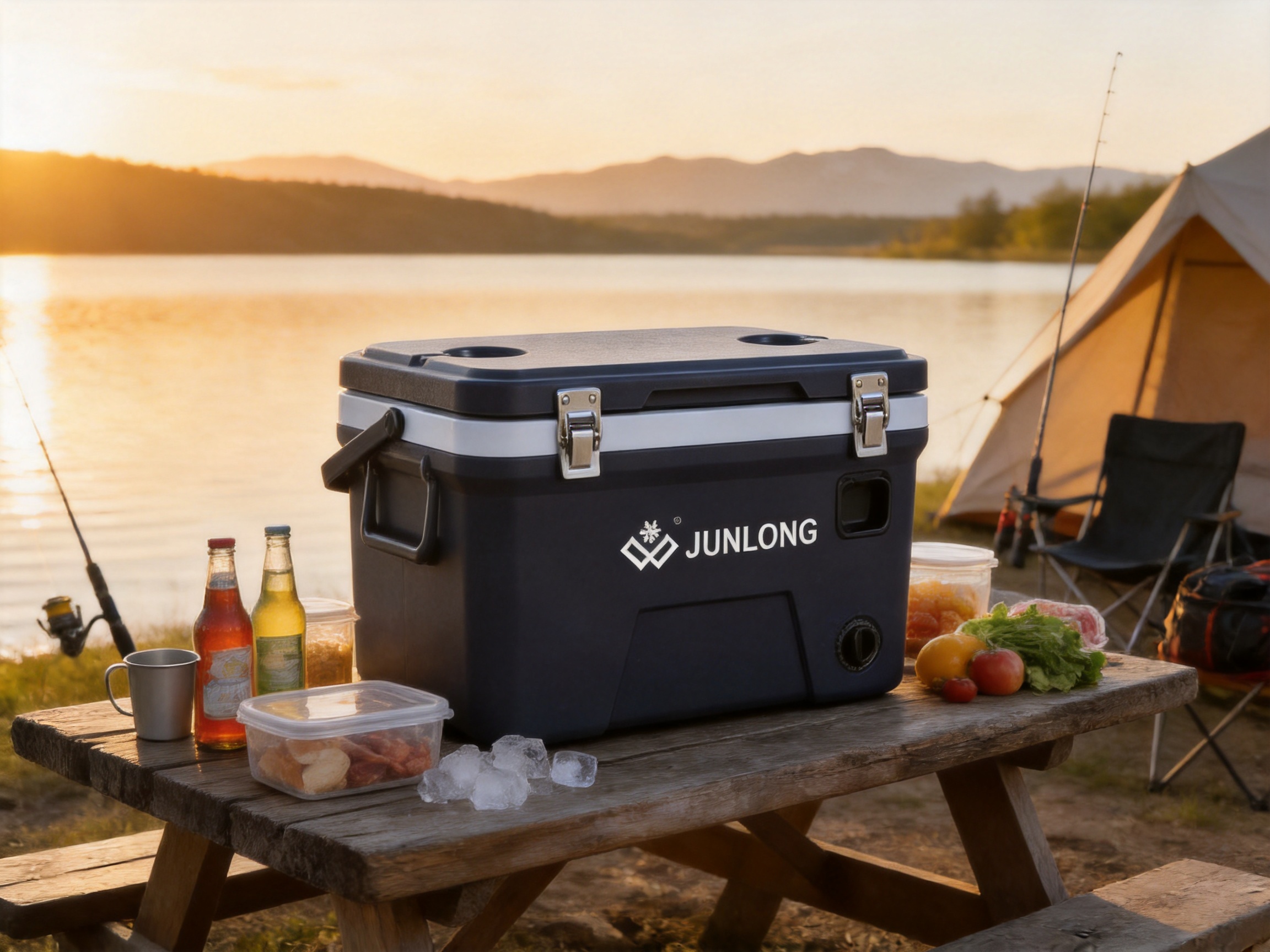
A cooler cannot retain cold effectively if its lid is difficult to close or can open unexpectedly during transport. This model uses external metal buckles to hold the lid securely against the body. The stainless steel lock buckle provides a durable fastening point and contributes to a tighter closure than a simple loose-fitting lid.
A secure lid offers several practical benefits. It helps limit the exchange of warm and cold air, protects the contents from dust and splashes, and reduces the possibility of accidental opening when the cooler is moved. During vehicle travel or boat use, a firmly closed lid is especially useful because the product may be exposed to vibration and uneven movement.
Stainless steel is selected for the locking hardware because outdoor products can encounter moisture, condensation, and humid environments. Compared with ordinary untreated metal, stainless steel can provide improved resistance to corrosion and surface deterioration. The buckles also add a solid, functional appearance that suits the product’s heavy-duty positioning.
External buckles can be advantageous compared with flexible plastic latches that may become less reliable after repeated use. A metal buckle provides a clear closing action and allows the user to see whether the lid has been fastened. For distributors comparing cooler box designs, the hardware specification is a meaningful distinction because closure performance affects both insulation and user satisfaction.
Integrated Cup Holder for Everyday Convenience
The integrated cup holder adds convenience without requiring a separate accessory. When the cooler is used as a seat-side storage unit, picnic station, fishing companion, or outdoor beverage center, users can place a cup, bottle, or can in the designated holder instead of setting it on uneven ground or a wet surface.
This feature is simple, but small convenience details often influence how frequently a product is used. A cooler that supports both cold storage and beverage placement can reduce the number of items users need to carry. It also helps keep drinks within reach during camping, tailgating, fishing, beach visits, and outdoor gatherings.
For commercial buyers, the cup holder can provide an additional selling point when the product is displayed alongside standard cooler boxes. It demonstrates that the design has considered the user’s complete outdoor experience rather than focusing solely on internal volume. It may also create opportunities for customized programs in which the cooler is marketed as a practical lifestyle product, event gift, or branded outdoor accessory.
Drain Valve for Easier Cleaning and Water Management
As ice melts, water accumulates inside every cooler. Without a drainage solution, users must lift and tip a heavy container to empty it. The built-in drain valve helps simplify this process. Users can release meltwater in a controlled manner, reducing the need to lift the loaded cooler and making post-use cleaning more convenient.
The drain valve is useful during long outdoor activities. Instead of removing all contents to pour out water, users can drain the cooler while keeping solid items inside, provided the arrangement and conditions allow it. This can be valuable on boats, at campsites, in outdoor kitchens, and at event locations where moving a full cooler is inconvenient.
Drainage also supports hygiene. After the contents have been removed, the valve can help clear residual water from the interior. The cooler should still be washed and dried according to appropriate care practices. Users should inspect the valve periodically, keep the surrounding area clean, and ensure it is fully closed before adding ice or chilled goods.
Portability Through a Dual-Handle Design
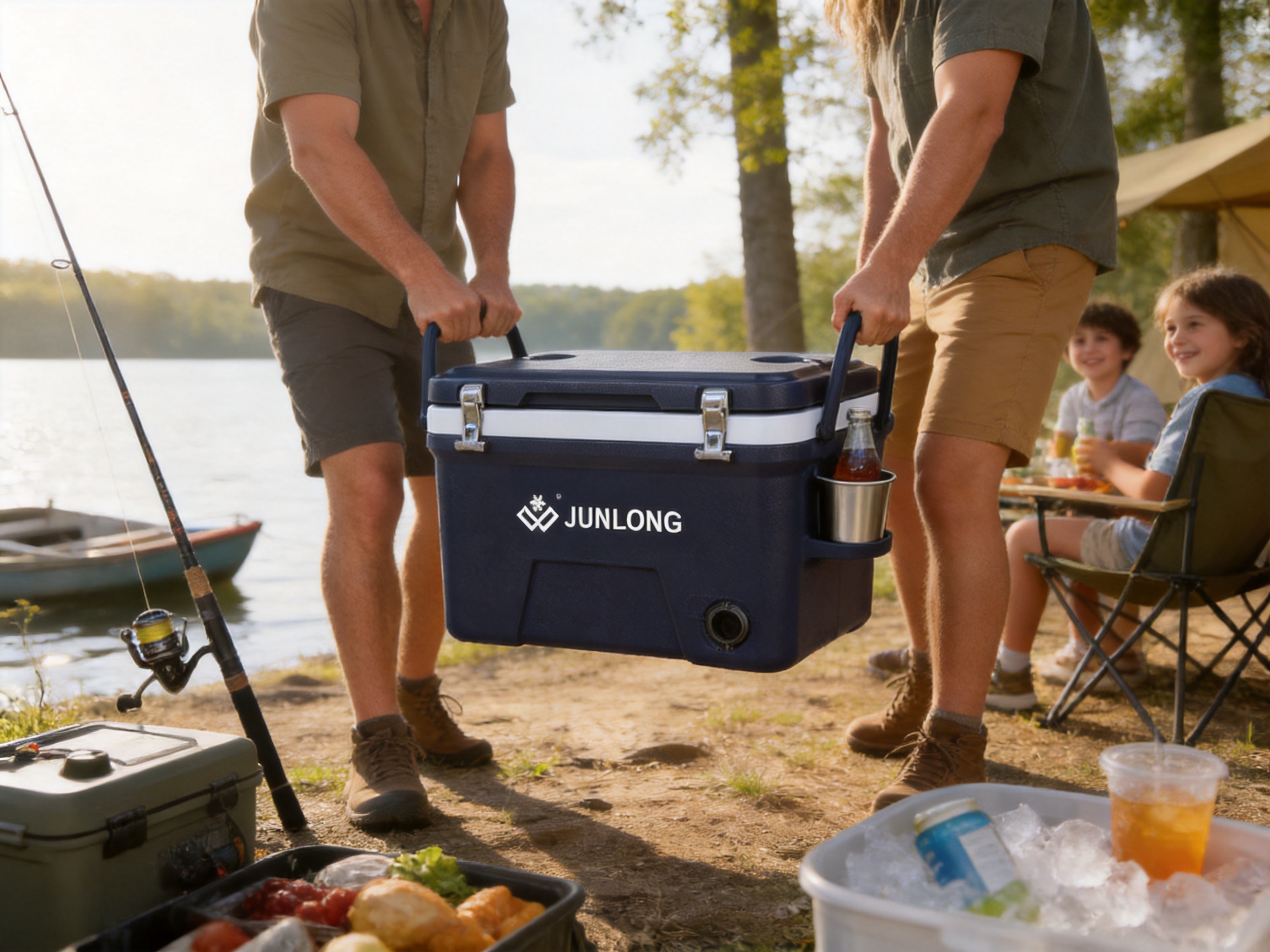
A 45-liter cooler can become heavy when loaded. Ice, beverages, meat, fresh food, and water all add weight quickly. The product therefore uses a dual-handle configuration that allows two people to lift the cooler from opposite sides. This design is more practical for large-capacity use than a single small handle intended for one-handed carrying.
Two-person lifting can improve control when the cooler needs to be moved across grass, sand, gravel, docks, or uneven ground. It also reduces the risk of sudden tilting, which can cause contents to shift or meltwater to spill. When carrying the cooler, users should coordinate their movement, keep the lid closed, and avoid lifting beyond their comfortable capacity.
The handles also support loading and unloading from vehicles. A pair of people can position the cooler more accurately in a trunk or cargo area, particularly when it is filled. For distributors and commercial users, the carrying design makes the product suitable for group activities and work environments in which coolers are frequently relocated.
Comparison with Basic and Competing Cooler Designs
Cooler boxes vary widely in structure and intended use. Basic models may offer a lightweight plastic shell and limited insulation for short trips. Soft-sided coolers may be convenient for personal transport but generally provide less rigid protection and less internal support for heavy loads. Large premium coolers may include thick insulation and rugged hardware but can be expensive, bulky, or difficult to customize.
The 45-liter insulated cooler occupies a practical middle-to-heavy-duty position. It provides a rigid molded body, extended insulation, metal closure hardware, drainage, and a cup holder without moving into an unnecessarily specialized format. This balance can appeal to buyers who want stronger performance than a basic cooler but still need a versatile product for different applications.
| Feature | 45-Liter Insulated Cooler | Basic Short-Trip Cooler | Soft-Sided Cooler |
|---|---|---|---|
| Storage capacity | 45 liters for group and multi-day use | Usually intended for smaller personal loads | Often optimized for light, flexible packing |
| Insulation construction | PU insulation in the body and lid | May use thinner foam or limited insulation | Flexible insulation layer with less rigid protection |
| Closure system | External stainless steel lock buckles | Commonly uses simple plastic latches | Usually uses zippers or hook-and-loop closures |
| Water management | Integrated drain valve | May require lifting and tipping | Often requires manual emptying |
| Portability | Dual handles for two-person lifting | Often designed for one-person carrying | Usually easy to carry when lightly loaded |
| Food-contact positioning | Food-grade PP and PE; BPA-free materials | Depends on product specification | Depends on lining and manufacturer |
| Outdoor durability | Rigid molded structure for demanding use | Generally suited to moderate use | Flexible construction with less impact resistance |
| Convenience features | Cup holder, drain valve, secure buckles | May offer few additional features | May offer pockets or straps instead |
This comparison is not intended to suggest that one cooler format is ideal for every situation. A soft-sided cooler may be preferable for short walks, while a compact hard cooler may be easier for a single person to carry. The advantage of the 45-liter model is its combination of capacity, insulation, closure security, drainage, and structural strength. For buyers seeking a cooler for extended outdoor activity, these combined features can be more valuable than a low purchase price alone.
Compared with some larger premium competitors, this product may also appeal to buyers who need a balance between performance and cost control. The company’s integrated manufacturing resources and OEM/ODM capabilities can support customized procurement programs, making the cooler suitable for distributors, retailers, hospitality groups, event organizers, and private-label brands.
Manufacturing Capabilities Behind the Product
The performance of a molded cooler depends heavily on the factory that produces it. A product may have an attractive design, but inconsistent molding, insufficient foam filling, weak hardware installation, or poor dimensional control can reduce its reliability. An experienced manufacturer with dedicated production equipment can better coordinate these factors from development through final assembly.
The manufacturer behind this cooler was founded in 2000 and operates in Cixi, Ningbo, an important manufacturing area in the Yangtze River Delta. The company has developed its business around outdoor cooling and water storage products, including cooler boxes, ice buckets, insulated cooler jugs, and outdoor water containers. This specialization gives the production team experience with the specific requirements of molded outdoor products.
The company operates an independent factory covering approximately 12,000 square meters and employs more than 100 people. An independent facility can provide closer coordination between product development, mold management, production scheduling, assembly, inspection, and shipment preparation. It also allows the manufacturer to maintain greater control over the manufacturing process than a business that relies entirely on disconnected subcontractors.
The factory includes automatic injection molding machines, blow molding machines, and foaming equipment. These capabilities cover several important production technologies used in outdoor containers. Injection molding can be used to create accurate, repeatable plastic components. Blow molding is suitable for certain hollow container structures. Foaming equipment supports the production of insulated sections in which controlled foam density and distribution are important to thermal performance.
Manufacturing equipment alone does not guarantee quality. It must be supported by trained operators, appropriate process parameters, maintenance programs, accurate molds, and systematic inspection. The company’s production model combines equipment with a creative research and development team and a quality management system. This combination helps connect design intent with repeatable manufacturing results.
Product Development and Molded Component Precision
Cooler development begins with the relationship between user needs and manufacturable geometry. The product must provide enough interior volume while maintaining suitable wall strength, insulation space, lid alignment, handle attachment, and hardware placement. The exterior must also be practical to mold, assemble, transport, and clean.
Injection molding supports the production of repeatable parts with defined dimensions and consistent surface quality. For a cooler box, dimensional consistency is important because the lid and body must align correctly. The buckle positions must correspond to their mounting points, the drain valve must fit securely, and the handles must be attached at structurally appropriate locations.
Research and development work can also address ergonomic considerations. The size and placement of the handles influence lifting comfort. The cup holder must be positioned where it is useful without interfering with opening or carrying. The drain valve must be accessible while remaining protected during normal handling. These details may appear minor, but they determine whether a product feels convenient in actual use.
Design development can be based on new concepts, customer drawings, existing samples, or market requirements. The company provides OEM and ODM services, allowing customers to request product development based on drawings or samples. This can be valuable for buyers who need a particular color, logo treatment, package format, capacity, or visual style.
Foaming Process and Insulation Consistency
Insulation quality is one of the most important manufacturing considerations for a cooler. The foam must occupy the intended space between the inner and outer walls, and the resulting structure must support consistent thermal performance from one unit to another. Uneven insulation, voids, or poor bonding may reduce the effectiveness of the cooler even if the exterior appears acceptable.
Dedicated foaming equipment allows the manufacturer to incorporate insulation into the lid and body as part of a controlled production process. Process management can include preparation of the molded shells, correct material quantities, controlled foaming conditions, and inspection of finished assemblies. The goal is to create a stable insulating layer that supports the stated 48-to-60-hour insulation range under suitable use conditions.
Insulation design must also account for the closure system. Even a well-insulated body may lose cooling efficiency if warm air can enter around the lid. Therefore, foam construction, lid fit, buckle tension, and body geometry should be considered together. The product’s external stainless steel buckles support this integrated approach by helping hold the insulated lid firmly against the insulated body.
For OEM buyers, process capability is especially important. A custom color or logo is visible, but insulation consistency is what determines whether the finished product performs as expected. A manufacturer with established foaming equipment and experience in cooler production can provide a stronger foundation for reliable private-label programs.
Quality Management from Raw Material to Finished Product
Quality management begins with material selection. Food-grade PP and PE, BPA-free specifications, and suitable PU insulation must be controlled before production begins. Incoming materials should be identified and managed according to the manufacturer’s internal procedures. Consistent material preparation supports stable molding and reduces variation between production batches.
During molding, operators and quality personnel can monitor appearance, dimensions, surface condition, and obvious molding defects. Components should be checked for deformation, incomplete formation, flash, surface damage, and other issues that may affect assembly or use. Dimensional inspection is particularly important for lids, body sections, handles, buckles, and drainage components.
Assembly quality is equally important. Stainless steel buckles must be installed securely and aligned with the lid. The drain valve must be fitted correctly and checked for proper opening and closing. Handles must be firmly attached because they carry the load during lifting. The cup holder must be integrated without sharp edges or obstructive features.
Final inspection can include visual checks, functional checks, packaging review, and order-specific requirements. Depending on the customer program, buyers may also request sample approval, pre-production confirmation, production photographs, inspection records, or other quality documentation. Clear communication between the manufacturer and buyer helps ensure that custom requirements are understood before mass production.
OEM and ODM Customization Opportunities
The product is suitable for buyers who want more than an off-the-shelf cooler. OEM and ODM services allow customers to develop products according to their commercial positioning, target market, and distribution channels. Customization may include color selection, logo application, packaging design, product development from drawings or samples, and other agreed specifications.
Color customization can help a cooler fit a retailer’s brand identity, a sports organization’s visual system, a hospitality company’s equipment program, or an outdoor event theme. Logos can improve brand visibility during camping trips, fishing events, promotions, corporate activities, and customer giveaways. Packaging options can be adjusted for wholesale distribution, retail shelves, e-commerce fulfillment, or project-based shipments.
OEM and ODM capability also supports market segmentation. A distributor may order one version for general outdoor retail, another for fishing customers, and a third for promotional programs. The underlying cooler platform can provide a consistent manufacturing base while allowing different visual and packaging treatments.
Customization should be managed carefully because changes to color, decoration, hardware, packaging, or structure can affect production schedules and cost. Buyers should confirm minimum order quantities, sample procedures, color references, logo artwork, packaging dimensions, carton specifications, inspection standards, and delivery arrangements before placing a production order.
Applications for Retail and Commercial Buyers
Outdoor retailers can position the cooler as a large-capacity solution for customers who need multi-day cooling. Its 45-liter volume, secure closure, drainage, and two-person handling support a broad range of outdoor activities. Retail presentation can emphasize the combination of capacity and convenience rather than focusing on size alone.
Fishing suppliers may find the rigid body, durable materials, drain valve, and extended insulation particularly relevant. The cooler can be used for drinks, fresh food, bait, and other temperature-sensitive supplies. Users should follow local food-handling requirements when storing uncooked food or catch, and the interior should be cleaned thoroughly after use.
Camping and caravan distributors can offer the product to families and groups who require more space than a personal cooler provides. The cup holder adds usefulness around a campsite, while the dual handles help users load and unload the unit from vehicles. The cooler can also complement tents, folding tables, cooking equipment, and other outdoor products.
Event organizers, hospitality businesses, and promotional product companies may use the cooler as a practical branded item. A large cooler has visible utility and can provide repeated brand exposure during outdoor activities. With custom colors, logos, and packaging, it can be adapted to corporate gifts, sports sponsorships, festivals, recreational programs, and seasonal campaigns.
Grocery and food distribution users may also consider the cooler for short-distance transport of chilled goods. Its food-grade material positioning and drainage system can support practical handling, although commercial users should evaluate temperature requirements, sanitation procedures, loading limits, and applicable regulations for their specific application.
Recommended Use Practices
To obtain the best cooling performance, users should pre-cool the interior before loading it. A short pre-cooling period can reduce the amount of cooling energy needed to bring the cooler itself down to temperature. Chilled food and drinks should be loaded whenever possible, rather than placing large quantities of warm products inside the unit.
Ice should be distributed throughout the contents. Empty spaces allow warm air to circulate, so users can improve efficiency by packing the cooler appropriately. Large ice blocks may support longer retention, while smaller pieces can fill gaps around containers. The selected ice arrangement should reflect whether the priority is maximum duration, fast cooling, or easy access to individual items.
The lid should remain closed except when necessary. Every opening allows cold air to escape and warm air to enter. Users can organize frequently accessed drinks near the top and less frequently used items lower in the cooler. Keeping the product shaded and protected from unnecessary heat also supports better performance.
The drain valve should be closed before loading ice or liquids. After use, meltwater can be released carefully, and the cooler can be washed with a suitable mild cleaning solution. Abrasive tools and harsh chemicals should be avoided unless specifically approved for the product materials. The cooler should be dried before long-term storage, with the lid positioned according to the manufacturer’s care recommendations to reduce trapped moisture and odors.
Users should inspect the buckles, handles, lid, and drain valve periodically. Any loose hardware or damaged component should be addressed before the cooler is used for heavy loads. The cooler should not be overloaded beyond its practical carrying capacity, and two-person lifting should be used when the contents make the unit difficult to handle safely.
Why Manufacturing Strength Matters to Buyers
For a buyer comparing suppliers, the product specification is only one part of the decision. Long-term supply reliability, quality consistency, communication, and customization capability are equally important. A factory with its own production resources can offer more direct control over manufacturing than a trading operation that outsources every stage.
The manufacturer’s experience since 2000 indicates a long operating history in outdoor cooling and water storage products. Its product range includes related categories, allowing the company to develop knowledge across cooler boxes, cooler jugs, ice buckets, and outdoor water containers. This specialization can support better understanding of insulation, molded plastics, drainage, lids, handles, and outdoor-use requirements.
The 12,000-square-meter facility and more than 100 employees provide a substantial operational base for product development and production. Automatic injection molding, blow molding, and foaming equipment support multiple manufacturing processes. Together with the company’s research and development team and quality management system, these resources can help serve customers seeking stable supply and repeatable product standards.
Another advantage is the ability to support both standard products and customized programs. Some buyers need a ready-to-order cooler for immediate distribution, while others need a private-label product with unique colors, logos, and packaging. A manufacturer able to handle both needs can reduce the number of supplier relationships required for an outdoor product portfolio.
Specifications at a Glance
| Specification | Details |
|---|---|
| Product type | Outdoor foam-insulated cooler with cup holder |
| Capacity | 45 liters |
| Product category | Large cooler box, 45L–80L range |
| External dimensions | 530 × 380 × 370 mm |
| Approximate empty weight | 4,900 g |
| Main materials | Food-grade PP, PE, and PU |
| Insulation structure | PU insulation in the lid and cooler body |
| Stated insulation period | Approximately 48–60 hours under suitable conditions |
| Closure hardware | External stainless steel lock buckles |
| Water management | Integrated drain valve |
| Handling system | Dual handles for two-person lifting |
| Additional feature | Integrated cup holder |
| Customization | OEM and ODM support, including color, logo, and packaging options |
Questions and Answers
What is the capacity of the cooler?
The cooler has a 45-liter capacity. It is designed for larger loads of food, beverages, ice, and outdoor supplies, making it suitable for group activities and multi-day use.
How long can the cooler retain ice?
The stated insulation period is approximately 48 to 60 hours under suitable conditions. Performance depends on ambient temperature, ice type and quantity, pre-cooling, how often the lid is opened, and whether the cooler is kept in direct sunlight or shade.
What materials are used?
The cooler is made from food-grade PP and PE with PU foam insulation. The materials are specified as BPA-free, supporting use with food and beverages when the product is handled and cleaned appropriately.
Is the lid insulated?
Yes. The design includes PU insulation in both the lid and the main cooler body. Insulating the lid helps reduce heat transfer through the top and supports more consistent cold retention.
Does the cooler have a drain?
Yes. An integrated drain valve allows users to release melted ice water without lifting and tipping the entire cooler. The valve should be checked and closed before loading the cooler.
Can one person carry the cooler?
The empty product weighs approximately 4.9 kg, but the loaded weight can become substantially higher. The dual-handle design is intended to support two-person lifting, especially when the cooler contains ice, drinks, or food.
What is the purpose of the stainless steel buckles?
The external stainless steel lock buckles help secure the lid against the body. They support a tighter closure, help protect the contents during transport, and contribute to maintaining the cooler’s insulation performance.
What is the purpose of the cup holder?
The integrated cup holder provides a convenient place for a cup, bottle, or can during outdoor activities. It helps keep a drink accessible and reduces the need to place beverages on wet or uneven ground.
What activities is the cooler suitable for?
It is suitable for camping, fishing, road trips, beach visits, sporting events, outdoor gatherings, grocery transport, and other activities requiring large-capacity cold storage. Commercial users may also adapt it for hospitality, promotional, or event programs.
Can the product be customized?
OEM and ODM services are available. Customization may include product development based on drawings or samples, color options, logo application, and packaging. Specific requirements should be confirmed with the manufacturer before production.
What production equipment does the manufacturer have?
The factory includes automatic injection molding machines, blow molding machines, and foaming equipment. These capabilities support the production of molded plastic parts, hollow containers, and insulated cooler components.
Why is the manufacturer suitable for wholesale buyers?
The company has operated since 2000, maintains an independent 12,000-square-meter factory, employs more than 100 people, and specializes in outdoor cooling and water storage products. Its integrated development, production, sales, OEM, and ODM capabilities can support both standard and customized orders.
How should the cooler be cleaned?
After emptying the cooler, users should drain remaining water, wash the interior with a suitable mild cleaning solution, rinse as appropriate, and dry the unit before storage. The drain valve, lid area, buckles, and interior corners should receive particular attention.
Conclusion
The 45L Outdoor Foam Insulated Cooler with Cup Holder is designed for users who need more than basic short-term cooling. Its 45-liter capacity provides generous space for group outings, while the rigid food-grade PP and PE construction supports repeated outdoor use. PU insulation in both the body and lid is intended to provide approximately 48 to 60 hours of insulation under suitable conditions.
The product’s advantages come from the way its features work together. Stainless steel lock buckles help secure the lid, the drain valve simplifies water management, the cup holder adds everyday convenience, and the dual handles make two-person carrying more practical. These details distinguish the cooler from simpler models that may offer capacity but lack convenient handling, drainage, or secure closure.
For wholesale and private-label buyers, manufacturing capability adds another layer of value. An established factory, specialized outdoor product experience, injection molding, blow molding, foaming equipment, research and development resources, and quality management provide a foundation for consistent production. OEM and ODM services further support color, logo, packaging, and product development requirements.
As a result, this cooler can serve both end users seeking reliable multi-day outdoor storage and businesses looking for a customizable large-capacity cooler box. It offers a balanced combination of insulation, durability, portability, convenience, and manufacturing support for a wide range of outdoor and commercial applications.
References
1. Product specification sheet for the 45L Outdoor Foam Insulated Cooler with Cup Holder, including dimensions, capacity, materials, weight, insulation features, hardware, and accessories.
2. Manufacturer-provided company information concerning factory size, workforce, product development, production equipment, OEM services, and ODM services.
3. General principles of insulated container design, including the relationship between wall insulation, lid construction, closure quality, ice quantity, ambient temperature, and opening frequency.
4. General handling and sanitation guidance for reusable food and beverage storage containers made from food-grade plastic materials.
5. General outdoor equipment considerations covering cooler portability, drainage, secure fastening systems, loading practices, and long-duration temperature management.
Product: 45L Outdoor Foam Insulated Cooler with Cup Holder

Product Recommendation
link
Office
- TEL: +86-574-63787606
- Phone: +86-13777994798
- E-mail: sales@nbjunlong.com
- WhatsApp: 13777967488
- Address: No. 1, Lane 3, Development Road, Longtouchang, Longshan Town, Cixi City, Zhejiang Province, China
Get In Touch
Copyright © Ningbo Junlong Outdoor Products Co., Ltd. All Rights Reserved.
China Plastic Insulated Cooler Box Manufacturer Custom Cooler Box Supplier
