- SMALL ORDERS FOR STANDARD ITEMS. Contact Now
- OUTDOOR COOLING SOLUTIONS, MADE IN‑HOUSE. Contact Now
- COOLER BOXES THAT FIT REAL OUTDOOR LIFE. Contact Now

 LANGUAGE
 日本語
 Español
 عربى

Content
- 1 A Practical Medium-Size Cooler for Outdoor Use
- 2 Core Product Specifications
- 3 Food-Grade Material Selection
- 4 Double-Sided EPS Insulation for Longer Cooling
- 5 Capacity for Family Outings and Group Refreshments
- 6 Modular Compatibility and Product Set Opportunities
- 7 Durable Construction for Travel and Outdoor Conditions
- 8 Easy Cleaning and Branding Potential
- 9 Advantages Compared with Competing Cooler Formats
- 10 Manufacturing Expertise and Integrated Production
- 11 Product Development and OEM/ODM Support
- 12 Quality Management and Production Consistency
- 13 Applications Across Multiple Outdoor Markets
- 14 Packaging, Logistics, and Commercial Distribution
- 15 Responsible Use and Care Recommendations
- 16 Why This Product Is Suitable for Private-Label Programs
- 17 Company Manufacturing Strengths
- 18 Frequently Asked Questions
- 18.1 What is the capacity of this cooler?
- 18.2 How many beverage cans can it hold?
- 18.3 How long can it keep products cold?
- 18.4 What materials are used?
- 18.5 Is the cooler suitable for camping?
- 18.6 Can the cooler be customized?
- 18.7 Can it be used with smaller cooler boxes?
- 18.8 Who manufactures this product?
- 18.9 What types of customers can purchase it?
- 18.10 What should buyers confirm before mass production?
- 19 Conclusion
- 20 References
- 21 Product: 26 Litres Outdoor Foam Insulated Cooler Box For Camping
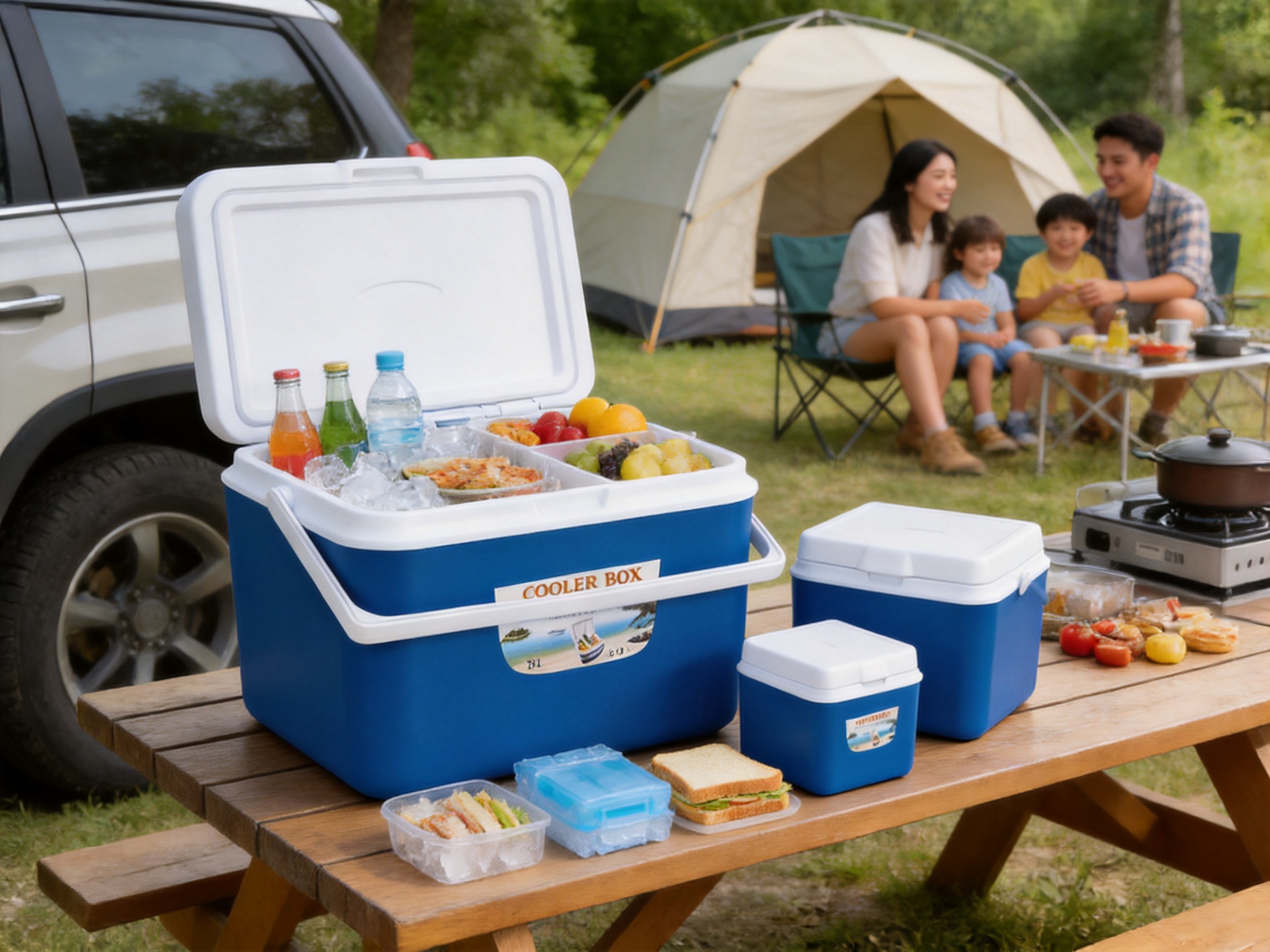
Outdoor activities become more comfortable when food, beverages, and fresh provisions can be kept at a dependable temperature. The 26-litre outdoor foam insulated cooler box is designed for camping, picnics, road trips, family outings, fishing, sporting events, and other situations where portable cold storage is needed. Its medium capacity provides a practical balance between storage space and portability, making it suitable for users who need more room than a small personal cooler but do not want the bulk of a large commercial ice chest.
With a nominal volume of 26 litres, the cooler can hold up to approximately 40 cans of 330 ml cola under suitable packing conditions. It is manufactured from food-grade PP, PE, and EPS materials and uses insulation in both the lid and the body. This construction is intended to help preserve the temperature of food and drinks for extended outdoor use, with an insulation performance of up to 48 hours under appropriate conditions and depending on the amount of ice, the ambient temperature, and how frequently the lid is opened.
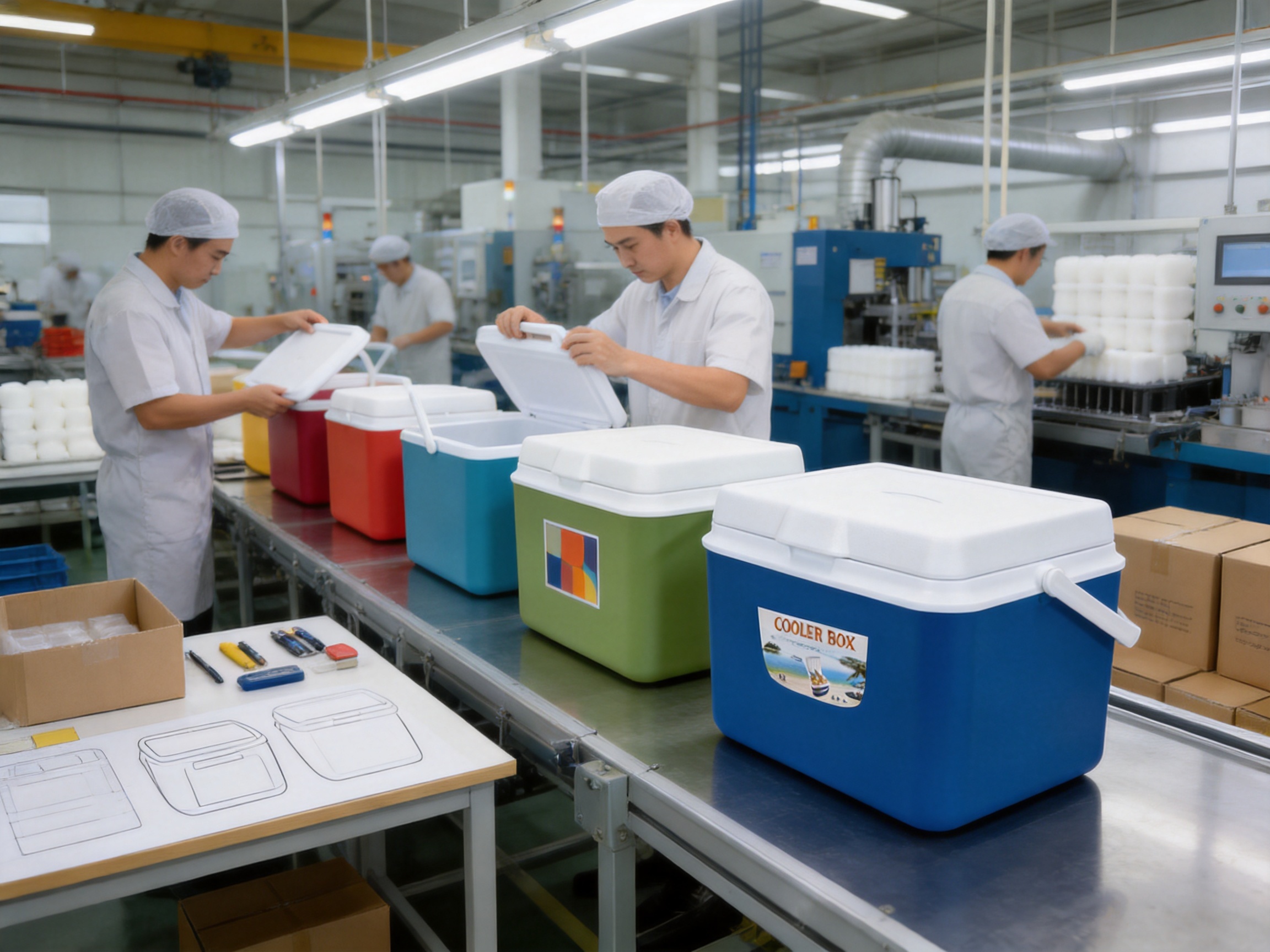
The cooler is produced by Ningbo Junlong Outdoor Products Co., Ltd., a Chinese manufacturer specializing in insulated cooler products, cooler jugs, ice buckets, outdoor water containers, and related plastic products. The company combines product development, injection molding, blow molding, foaming, assembly, quality management, and customization services in one manufacturing operation. This integrated capability supports stable production for importers, wholesalers, retailers, promotional product distributors, outdoor brands, and other business customers.
A Practical Medium-Size Cooler for Outdoor Use
The 26-litre cooler belongs to the medium cooler category, generally defined here as products with capacities from 15 to 38 litres. This size range is widely used because it serves several common outdoor requirements at once. It can support a small family on a day trip, carry food and drinks for a group of friends, or provide a compact cold-storage solution for a campsite, worksite, boat, or recreational vehicle.
Small coolers are easy to carry but can become restrictive when users need to store meals, bottles, cans, fresh produce, and ice together. Large coolers offer considerable capacity but may be difficult to transport, store, or fit into a vehicle. A 26-litre format sits between these two extremes. It offers useful internal volume while remaining compact enough for regular handling by one person.
The product measures approximately 420 by 280 by 330 millimetres. These dimensions give the cooler a relatively narrow and efficient footprint, which can be useful when placing it in a car boot, on a picnic table, inside a tent vestibule, or beside other camping equipment. The rectangular form also supports organized packing and makes the available space easier to use than irregularly shaped storage containers.
The approximate product weight is 2,600 grams. Actual shipping weight may vary according to packaging, accessories, order configuration, and customization. Even with a robust insulated construction, the cooler is designed to remain manageable when transported to a picnic site, campsite, beach, fishing location, or outdoor event.
Core Product Specifications
| Specification | Details |
|---|---|
| Product type | Outdoor foam insulated cooler box |
| Nominal volume | 26 litres |
| Category | Medium cooler box, approximately 15 to 38 litres |
| Approximate dimensions | 420 × 280 × 330 millimetres |
| Approximate product weight | 2,600 grams |
| Main materials | Food-grade PP, PE, and EPS |
| Insulation structure | EPS insulation in the lid and main body |
| Indicative beverage capacity | Up to approximately 40 cans of 330 ml cola, depending on packing arrangement |
| Insulation duration | Up to 48 hours under suitable conditions |
| Customization | Colour, logo, printing, packaging, and OEM/ODM development options |
These specifications make the product suitable for both consumer retail and business-to-business distribution. Retailers can position it as a family camping cooler, picnic cooler, travel food box, or general outdoor ice chest. Commercial buyers can use the same base product for private-label programs, promotional campaigns, hospitality supply, outdoor equipment collections, and branded event merchandise.
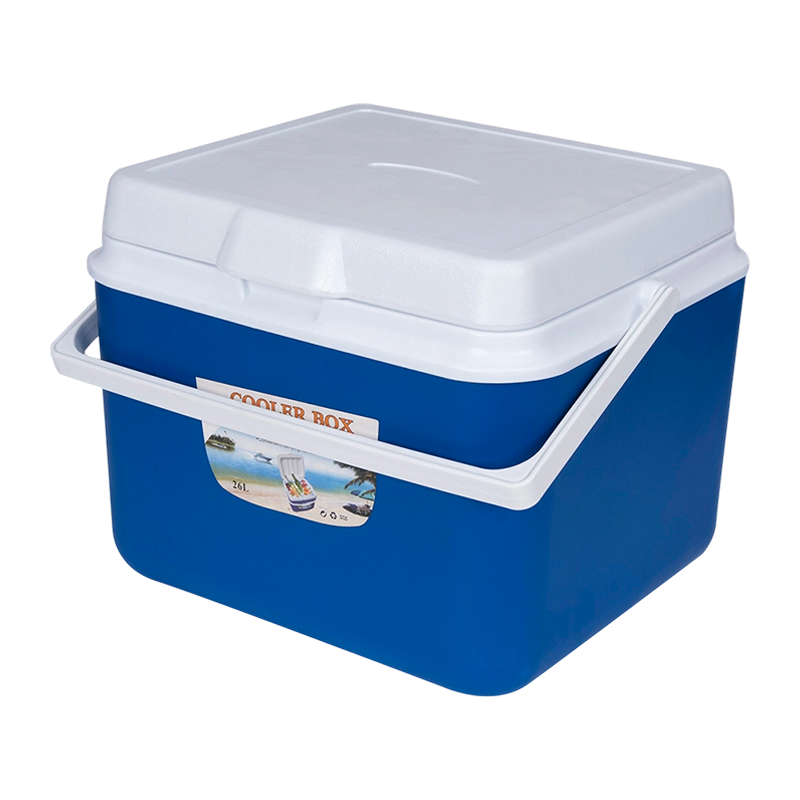
26 Litres Outdoor Foam Insulated Cooler Box For Camping
Food-Grade Material Selection
The cooler uses a combination of food-grade polypropylene, polyethylene, and expanded polystyrene. Each material contributes different properties to the finished product. PP is commonly used for durable plastic components because it offers a useful balance of strength, weight, chemical resistance, and processability. PE is valued for toughness and impact resistance, making it suitable for products that may be moved, transported, and used outdoors.
EPS provides the primary insulating function. Its cellular structure contains air pockets that slow the transfer of heat from the surrounding environment into the cooler. By incorporating insulation into both the lid and the body, the design helps reduce thermal leakage through the top and side walls. This is important because a lid with limited insulation can become a weak point in an otherwise well-insulated container.
The use of food-grade materials is particularly relevant for a cooler intended to store beverages, packaged foods, fruit, vegetables, snacks, and prepared meals. Users still need to follow normal food-safety practices, including suitable packaging, correct ice handling, and regular cleaning. However, food-grade construction provides a suitable material foundation for this type of application.
The material combination also supports product durability. Outdoor equipment may be exposed to drops, knocks, contact with vehicle surfaces, and repeated loading. The cooler is designed with durable, drop-resistant materials to help withstand the practical conditions associated with camping and travel. As with any plastic product, service life depends on handling, temperature exposure, loading, cleaning, and storage practices.
Double-Sided EPS Insulation for Longer Cooling
A central advantage of this cooler is the use of EPS insulation in both the body and the lid. This double-insulated design helps maintain a more stable internal environment than a thin-wall container with minimal thermal protection. When ice or chilled products are placed inside, the insulation slows the movement of external heat into the storage compartment.
The stated insulation time is up to 48 hours. This figure should be understood as an indicative performance level rather than a guarantee for every use condition. Cooling performance is influenced by the starting temperature of the contents, the amount and type of ice, outdoor temperature, direct sunlight, how often the lid is opened, and the ratio of empty space to stored products.
For the best results, users should pre-chill food and beverages before loading the cooler. Frozen ice packs or solid ice should be distributed around the contents, and unnecessary empty space should be minimized where practical. Keeping the cooler in shade and opening it only when needed can also help extend the effective cooling period.
Compared with soft-sided bags or single-wall plastic boxes, a foam-insulated cooler generally provides stronger thermal resistance and greater structural protection. Soft bags may be convenient for light personal use, but they can be less suitable for carrying heavy cans, protecting delicate food containers, or maintaining a rigid storage shape. The 26-litre cooler is intended for users who need both insulation and a firm external structure.
Capacity for Family Outings and Group Refreshments
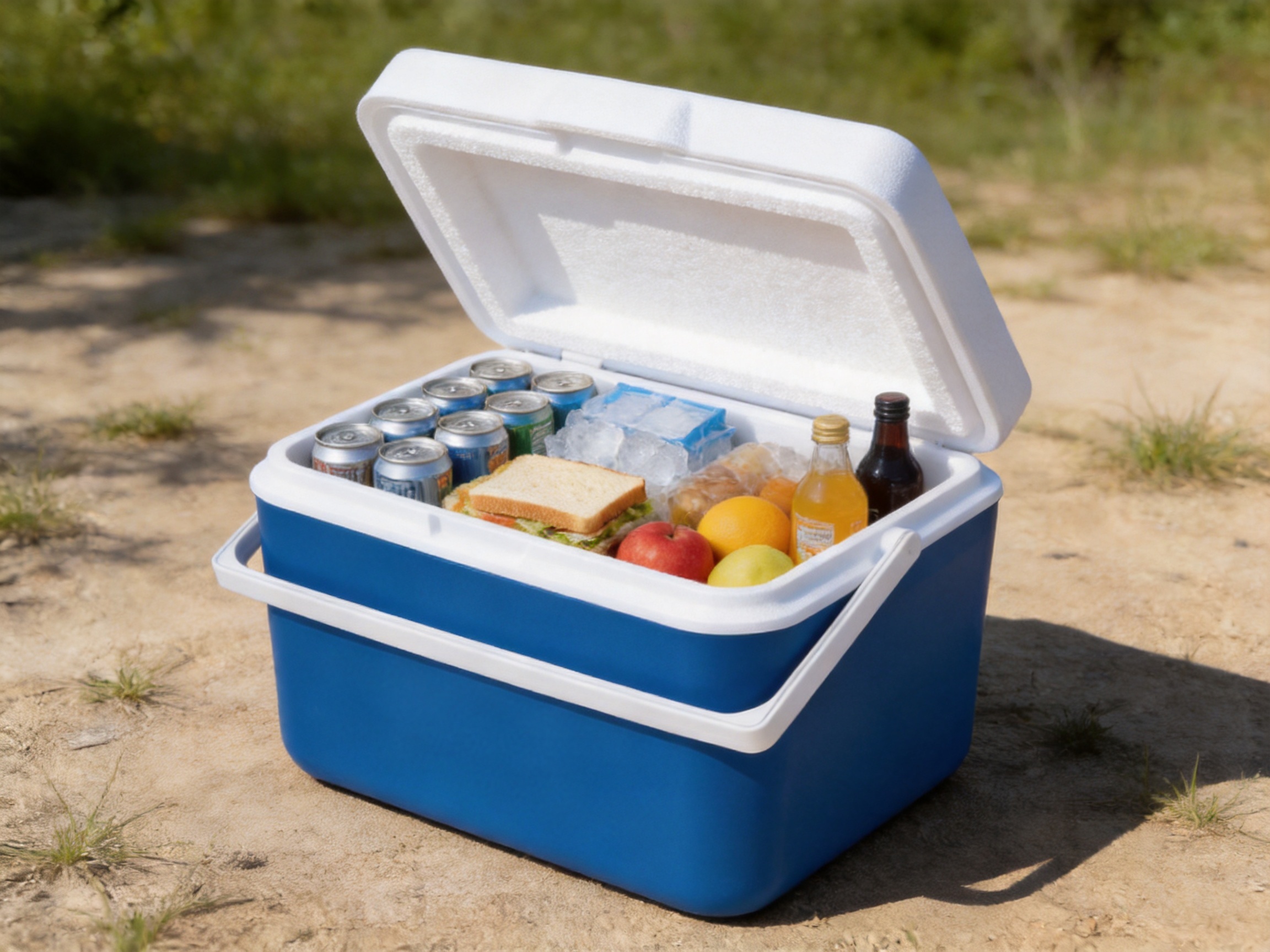
The 26-litre capacity is large enough to support a small family during a day outdoors. Depending on the packing method, the cooler can hold drinks, sandwiches, fruit, dairy products, prepared meals, snacks, and ice. Its capacity is also suitable for a group of workers, a sports team, or several friends attending an outdoor event.
The stated capacity of approximately 40 cans of 330 ml cola provides a straightforward way to understand the internal volume. Actual usable capacity will vary because beverages may be mixed with ice, food containers, bottles, ice packs, or dividers. Users who need maximum cooling performance may intentionally leave space for a larger quantity of ice, while users focused on storage volume may pack more beverages and use less cooling material.
The box can also be combined with 5-litre and 13-litre insulated boxes to form a coordinated set. The internal space of the 26-litre model can accommodate one 5-litre and one 13-litre insulated box according to the supplied product information. This modular approach gives distributors and end users additional flexibility.
A modular cooler system can be useful when different food categories need to be separated. For example, one smaller box may be used for drinks, another for snacks or fruit, and the larger box for main meals. Smaller boxes can also be removed from a vehicle or campsite individually instead of carrying the complete volume every time.
Modular Compatibility and Product Set Opportunities
Compatibility with 5-litre and 13-litre boxes creates opportunities for a coordinated product family. Retailers can offer the 26-litre cooler as a standalone product, a larger family cooler, or part of a multi-size set. Sets can appeal to customers who want a consistent appearance and several storage options for different activities.
For outdoor brands and private-label buyers, a product family can simplify merchandising. The 5-litre unit may be positioned as a personal lunch or beverage cooler, the 13-litre unit as a compact day-trip box, and the 26-litre model as a family or group cooler. Matching colours, logos, labels, and packaging can create a coherent range across multiple retail price points.
The nested or combined storage concept may also help reduce storage requirements when products are not in use. Businesses can evaluate the exact packing arrangement and shipping configuration during the sampling and order-development process. This is especially relevant for distributors managing warehouse space or retailers planning seasonal inventory.
Durable Construction for Travel and Outdoor Conditions
Outdoor coolers are often exposed to demanding handling. They may be loaded into cars, carried across grass or sand, placed on rough ground, or transported with other camping equipment. The product’s rigid plastic construction helps provide a stable enclosure for food and drinks while reducing the risk of the cooler collapsing under normal handling.
The durable PP and PE exterior is intended to resist ordinary impacts and drops better than many lightweight fabric alternatives. A sturdy handle supports portability and allows the cooler to be moved from a vehicle to a campsite, picnic area, sports field, or work location. Users should still avoid deliberately dropping or overloading the product, since excessive impact can damage hinges, handles, lids, and insulation components.
The rigid structure also provides advantages during packing. A stable opening can make it easier to arrange cans, bottles, food containers, and ice. The box shape helps prevent soft contents from being compressed by external objects, and it can serve as a dependable storage unit when placed in a vehicle or under a camping table.
Surface design is another practical feature. The smooth exterior is easy to wipe and suitable for printing. This supports both consumer use and commercial customization. A smooth surface can provide a clean appearance after routine maintenance, while also offering a suitable area for logos, promotional graphics, product identifiers, or private-label decoration.
Easy Cleaning and Branding Potential
Outdoor food-storage products need regular cleaning because they may come into contact with condensation, spilled drinks, food residue, melted ice, dust, and soil. The smooth outer surface of this cooler is designed to make routine wiping more convenient. Cleaning procedures should follow the final product instructions and should avoid harsh chemicals or methods that could damage the plastic, printing, or insulation.
The surface is also described as easy to print and customizable with different forms of logo decoration. This is an important advantage for business customers. A plain cooler can become a branded outdoor product for a retailer, beverage company, hotel, travel company, sporting organization, camping brand, or promotional campaign.
Customization may include colour matching, printed logos, labels, packaging artwork, and other presentation details. The available method depends on the design, order quantity, logo complexity, colour requirements, and production specifications. Customers should review artwork, print placement, colour samples, and packaging proofs before mass production.
Branded coolers can offer strong visibility because they are used in public outdoor environments. A logo printed on a picnic cooler may be seen at beaches, parks, campsites, sporting events, tailgating areas, and family gatherings. Unlike many short-term promotional products, a durable cooler may remain in use for an extended period, creating repeated brand exposure.
Advantages Compared with Competing Cooler Formats
Compared with Soft-Sided Cooler Bags
Soft-sided bags are often lightweight and foldable, but they may provide less structural protection and limited resistance to compression. They can also become difficult to organize when filled with mixed food containers and beverages. The 26-litre rigid cooler provides a firm storage cavity, a more stable shape, and stronger protection for contents.
The foam insulation in the lid and body is another distinction. Many soft bags depend on thin flexible insulation, which may be suitable for short trips but can offer less thermal resistance than a thicker rigid foam structure. The appropriate choice depends on the user’s priorities, but the 26-litre cooler is particularly suitable when cooling duration and structural stability are important.
Compared with Small Personal Coolers
Small personal coolers are convenient for a single lunch or a few drinks, but their limited capacity can require users to carry several separate containers. A 26-litre cooler offers more space for family meals, group beverages, ice, and food containers while remaining smaller than a large commercial ice chest.
The medium format can also reduce the number of containers needed for a day trip. One well-organized 26-litre box may be easier to load, carry, and secure in a vehicle than several small bags. The availability of compatible 5-litre and 13-litre units provides an option for customers who still prefer separated storage.
Compared with Large Commercial Ice Chests
Large ice chests can be useful for extended trips or large groups, but their size and weight may make them inconvenient for everyday outings. They often require more vehicle space and can be difficult for one person to carry after being filled. The 26-litre cooler offers a more manageable alternative for day trips, small families, and moderate quantities of food and drinks.
The medium size also supports better portability and more efficient use of space. Customers who do not need a very large storage volume can avoid carrying unnecessary empty capacity. For retailers, the product may appeal to a broader range of consumers because it serves common outdoor occasions without requiring the storage space associated with oversized coolers.
Compared with Basic Single-Wall Plastic Boxes
A basic single-wall plastic box may provide containment but limited thermal protection. It can be useful for dry storage, but it is not designed to slow heat transfer in the same way as a foam-insulated cooler. The 26-litre model combines a rigid exterior with dedicated EPS insulation, making it more appropriate for chilled food and beverages.
The insulated lid is particularly relevant in warm conditions because the upper surface is exposed directly to surrounding air and sunlight. By including insulation in the lid as well as the body, the product addresses an important area of potential heat entry.
Manufacturing Expertise and Integrated Production
The product is manufactured by Ningbo Junlong Outdoor Products Co., Ltd., which was established in 2000 and is located in Cixi, Ningbo, Zhejiang Province. Cixi is part of the Yangtze River Delta manufacturing region, an area known for extensive industrial supply chains, plastic processing, tooling, logistics, and export-oriented production.
The company operates an independent factory covering approximately 12,000 square metres and employs more than 100 people. Its production capabilities include automatic injection molding machines, blow molding machines, and foaming equipment. This combination is relevant to cooler manufacturing because different product components and product families may require different plastic-processing methods.
Injection molding can be used to produce repeatable plastic components with controlled dimensions and consistent surface quality. Automatic equipment helps support production efficiency and repeatability when manufacturing larger quantities. Blow molding is suitable for certain hollow plastic forms and container-related products. Foaming equipment is essential for producing insulated structures that use foam as a thermal barrier.
Having these capabilities within an integrated factory can improve coordination between product design, tooling, material processing, assembly, and quality inspection. It may also simplify communication for OEM and ODM customers because development discussions can be handled with a manufacturer that understands both the exterior plastic structure and the insulation requirements.
Product Development and OEM/ODM Support
The company provides OEM and ODM services for customers that require more than an off-the-shelf product. Product development can be based on drawings, samples, or a customer’s functional requirements. This allows buyers to explore different colours, dimensions, logo placements, packaging formats, and product configurations.
OEM production is suitable when a customer already has a defined design or brand specification and needs a manufacturing partner to produce the item. ODM development can be useful when a customer wants to adapt an existing platform or create a product based on a market opportunity without managing every stage of engineering internally.
For the 26-litre cooler, customization discussions may cover external colour, lid appearance, logo position, print method, packaging design, carton configuration, labels, and compatible product sets. If the customer needs a special structure, additional development may be required. Sampling and technical review should be completed before final production to confirm dimensions, performance expectations, decoration quality, and packaging suitability.
Manufacturing based on drawings or samples requires accurate communication. Buyers should provide clear technical files, colour references, logo artwork, target markets, regulatory expectations, packaging requirements, and estimated order quantities. A structured development process can reduce misunderstandings and support a smoother transition from prototype to mass production.
Quality Management and Production Consistency
Cooler quality depends on more than appearance. Important considerations include material selection, insulation thickness, body and lid fit, dimensional accuracy, handle strength, surface quality, print adhesion, packaging protection, and overall assembly. A rigorous quality-management approach helps manufacturers monitor these factors throughout production.
Incoming materials may need to be checked against approved specifications before processing. During molding and foaming, production teams can monitor process conditions and part quality. Finished products may be inspected for visual defects, dimensional consistency, functional operation, and packaging condition.
For export customers, quality control should also consider shipping conditions. Products may experience vibration, stacking pressure, temperature changes, and repeated handling during transportation. Appropriate cartons, internal protection, pallet arrangements, and shipping marks can help reduce the risk of damage before the goods reach the customer.
Buyers may request specific inspection standards, pre-shipment inspections, sampling procedures, or test requirements depending on their market. The final quality plan should be agreed during order confirmation so that the manufacturer and buyer share the same expectations.
Applications Across Multiple Outdoor Markets
Camping and Hiking Base Camps
The cooler is suitable for storing drinks, packed meals, fruit, vegetables, sauces, and snacks at a campsite. Its 26-litre capacity can support a small family or a group of campers during a day of outdoor activity. The sturdy handle allows it to be moved between a vehicle, tent, picnic table, and cooking area.
For longer camping trips, the cooler can be combined with smaller compatible boxes. Separate containers can be assigned to breakfast foods, drinks, or frequently accessed snacks. This organization may reduce the number of times the main cooler needs to be opened, which can help preserve internal cooling.
Picnics and Family Day Trips
For a picnic, the cooler can hold chilled beverages, sandwiches, salads, fruit, desserts, and ice packs. Its rigid construction helps protect food containers during transport, while the smooth outer surface can be wiped after use. The medium format is practical for a family without taking up excessive space on a picnic blanket or in a vehicle.
Road Trips
Road-trip users often need a cooler that can fit within limited vehicle space and remain accessible during stops. The 420 by 280 by 330 millimetre form can be evaluated against the storage dimensions of a car boot, van, recreational vehicle, or boat. The firm body can help keep food and drinks organized while the vehicle is moving.
Fishing, Boating, and Beach Activities
The insulated cooler can be used for cold drinks, packed food, bait-related storage where appropriate, or fresh provisions during recreational activities. At beaches and waterfront locations, the cooler provides a compact cold-storage option for a small group. Users should protect the product from unnecessary exposure to saltwater, abrasive sand, and prolonged direct sunlight, and clean it after use.
Sports and Events
Sports clubs, outdoor event organizers, and teams can use the cooler to transport refreshments. Its smooth surface and printable exterior make it suitable for team logos, sponsor marks, event branding, or promotional campaigns. Multiple branded coolers can also provide a coordinated appearance at tournaments, races, festivals, and company events.
Worksites and Outdoor Operations
Workers at construction sites, agricultural locations, maintenance projects, and outdoor service areas may need a practical way to keep drinks and meals cool. The medium capacity can support several workers without the excessive size of a large chest. A branded unit may also support company identification and asset organization.
Packaging, Logistics, and Commercial Distribution
For commercial buyers, product performance is only one part of the purchasing decision. Packaging efficiency, carton dimensions, shipping weight, container loading, and warehouse handling can significantly influence landed cost. These details should be confirmed according to the final product configuration and order volume.
The rigid cooler needs packaging that protects the body, lid, handle, and printed surfaces during transportation. If the product is customized, packaging should also prevent rubbing or contact that could damage the logo or decorative finish. Export cartons may include product labels, quantity marks, destination information, and handling instructions according to the buyer’s requirements.
Retail packaging can be developed for different sales channels. A basic carton may suit wholesale distribution, while a colour-printed retail box may be more appropriate for supermarkets, outdoor stores, e-commerce fulfillment, or branded promotional programs. Packaging design should communicate capacity, applications, material information, and care instructions clearly.
Importers should also consider the product’s seasonal demand. Cooler sales may increase before summer, holiday periods, camping seasons, and outdoor event calendars. Early production planning can help buyers manage lead times, artwork approval, sampling, and inventory availability.
Responsible Use and Care Recommendations
To obtain the best cooling performance, users should chill food and beverages before placing them into the cooler. Ice or frozen packs should be distributed around the contents rather than placed only on top. The lid should remain closed as much as possible, and the cooler should be positioned away from direct sunlight or other heat sources whenever possible.
The cooler should not be overloaded beyond the intended capacity. Overloading may prevent the lid from closing correctly and can place unnecessary stress on the handle or body. Heavy items should be packed in a stable arrangement, and glass containers should be protected from direct impact.
After use, meltwater and food residues should be removed. The interior and exterior should be cleaned with a suitable mild cleaning solution and dried thoroughly before storage. The cooler should be stored in a dry location away from sharp objects, excessive heat, and prolonged ultraviolet exposure.
Users should remember that the 48-hour insulation statement depends on conditions. A cooler opened frequently in high ambient temperatures will not perform in the same way as one kept closed in a shaded environment. Product instructions and market-specific warnings should be supplied with the finished product where appropriate.
Why This Product Is Suitable for Private-Label Programs
The 26-litre cooler combines a widely useful capacity with a surface suitable for branding. This makes it a strong candidate for private-label programs targeting outdoor recreation, beverage marketing, food distribution, travel accessories, hospitality, and promotional merchandise.
Private-label buyers can use the product as a foundation for a differentiated range. Colour selection can align with an existing brand identity, while logo printing can reinforce recognition. Packaging can be adapted for retail presentation, online fulfillment, or bulk promotional distribution. The product can also be paired with 5-litre and 13-litre units to create a complete collection.
The manufacturer’s experience in product development and plastic processing can support customers that require design adaptation. Instead of working separately with multiple suppliers for the body, insulation, printing, and packaging, buyers may coordinate these requirements through one factory. This can reduce communication complexity and improve control over the final product specification.
Before placing a large order, customers should request samples and confirm all relevant details. These may include dimensions, capacity, material declarations, insulation structure, printing quality, colour, logo position, packaging, carton quantity, and shipping marks. A complete approval process helps ensure that the finished goods match the brand’s expectations.
Company Manufacturing Strengths
Ningbo Junlong Outdoor Products Co., Ltd. has operated since 2000 and focuses on outdoor cooling and water-storage products. Its product range includes insulated cooler boxes, cooler jugs, ice buckets, and outdoor water containers. This specialization provides experience in designing products that combine plastic construction, portability, storage capacity, insulation, and outdoor usability.
The independent 12,000-square-metre factory and workforce of more than 100 employees provide a foundation for coordinated manufacturing and order support. Automatic injection molding, blow molding, and foaming equipment allow the company to address different product structures and material requirements. A dedicated research and development team supports the continuous introduction and improvement of products.
The company also emphasizes a quality-management system and stable manufacturing for different customer requirements. Its OEM and ODM services cover development from drawings or samples, as well as colour, logo, and packaging customization. These capabilities are relevant to buyers that want a long-term supply partner rather than a one-time trading arrangement.
Located in Zhejiang Province, the company benefits from access to the broader Ningbo manufacturing and export ecosystem. This can support coordination with material suppliers, tooling providers, packaging manufacturers, logistics companies, and international buyers.
Frequently Asked Questions
What is the capacity of this cooler?
The nominal capacity is 26 litres. The usable space depends on the shape and size of the contents, the amount of ice or ice packs, and whether food containers or smaller boxes are placed inside.
How many beverage cans can it hold?
The supplied product information states that it can hold approximately 40 cans of 330 ml cola. The actual number may change when ice, dividers, bottles, food, or other packing materials are included.
How long can it keep products cold?
The double EPS insulation in the lid and body is specified with an insulation time of up to 48 hours under suitable conditions. Actual performance depends on ambient temperature, starting temperature, ice quantity, sunlight, and frequency of opening.
What materials are used?
The cooler is made from food-grade PP, PE, and EPS. PP and PE contribute to the rigid plastic structure, while EPS provides thermal insulation.
Is the cooler suitable for camping?
Yes. Its 26-litre capacity, portable handle, rigid construction, and foam insulation make it suitable for camping, picnics, road trips, fishing, beach activities, and other outdoor uses.
Can the cooler be customized?
Yes. The smooth surface is suitable for printing, and OEM/ODM services may include colour, logo, packaging, and product-development options. Final customization depends on the customer’s requirements, artwork, order quantity, and production review.
Can it be used with smaller cooler boxes?
Yes. The 26-litre unit can be combined with 5-litre and 13-litre insulated boxes. The supplied information indicates that its internal space can accommodate one 5-litre and one 13-litre insulated box.
Who manufactures this product?
The product is manufactured by Ningbo Junlong Outdoor Products Co., Ltd., an outdoor cooling and water-storage product manufacturer based in Cixi, Ningbo, Zhejiang Province, China.
What types of customers can purchase it?
The product is suitable for outdoor brands, wholesalers, retailers, importers, promotional product companies, beverage companies, hospitality businesses, sporting organizations, and other buyers seeking a medium-size insulated cooler.
What should buyers confirm before mass production?
Buyers should confirm the approved sample, dimensions, capacity, materials, insulation requirements, colour, logo artwork, print position, packaging, carton quantity, inspection standards, shipping marks, and any market-specific compliance requirements.
Conclusion
The 26-litre outdoor foam insulated cooler box offers a balanced solution for customers who need portable cold storage with useful capacity, rigid construction, and extended insulation. Its 420 by 280 by 330 millimetre dimensions and approximate 2,600-gram weight support practical handling, while the 26-litre volume is appropriate for families, small groups, travelers, campers, sports teams, and outdoor workers.
The combination of food-grade PP, PE, and EPS materials provides a foundation for durability, food-storage use, and thermal performance. Double insulation in the lid and body helps distinguish the cooler from basic single-wall containers, while the smooth printable exterior creates opportunities for private-label and promotional customization. Compatibility with 5-litre and 13-litre insulated boxes further supports modular product sets.
Behind the product is an established manufacturer with an independent factory, automatic injection molding equipment, blow molding machines, foaming capabilities, product-development resources, and OEM/ODM support. These strengths allow business customers to develop customized coolers with coordinated colours, logos, packaging, and product-family options.
For buyers seeking a medium cooler that combines portability, storage capacity, insulation, branding potential, and manufacturing support, this product represents a practical platform for outdoor retail and commercial distribution. Its final performance and presentation should be confirmed through approved samples, clear technical specifications, and appropriate quality inspections before mass production.
References
Ningbo Junlong Outdoor Products Co., Ltd. Product information for the 26-litre outdoor foam insulated cooler box.
Ningbo Junlong Outdoor Products Co., Ltd. Company profile and manufacturing capability information.
General principles of thermal insulation for portable food and beverage containers.
General guidance on food-safe plastic materials and reusable outdoor storage products.
General product-development and quality-control practices for injection-molded and foam-insulated plastic goods.
Product: 26 Litres Outdoor Foam Insulated Cooler Box For Camping

Product Recommendation
link
Office
- TEL: +86-574-63787606
- Phone: +86-13777994798
- E-mail: sales@nbjunlong.com
- WhatsApp: 13777967488
- Address: No. 1, Lane 3, Development Road, Longtouchang, Longshan Town, Cixi City, Zhejiang Province, China
Get In Touch
Copyright © Ningbo Junlong Outdoor Products Co., Ltd. All Rights Reserved.
China Plastic Insulated Cooler Box Manufacturer Custom Cooler Box Supplier
