- SMALL ORDERS FOR STANDARD ITEMS. Contact Now
- OUTDOOR COOLING SOLUTIONS, MADE IN‑HOUSE. Contact Now
- COOLER BOXES THAT FIT REAL OUTDOOR LIFE. Contact Now

 LANGUAGE
 日本語
 Español
 عربى

Content
- 1 Why Portable Water Storage Matters Outdoors
- 2 Product Overview
- 3 Food-Grade PE Construction
- 4 Convenient 10-Liter Capacity
- 5 Integrated Faucet for Controlled Dispensing
- 6 Sealing Cover and Leak-Reduction Design
- 7 Portable Handle and Outdoor Ergonomics
- 8 Applications Across Outdoor Activities
- 9 Advantages Compared with Common Alternatives
- 10 Manufacturing Capability and Production Strength
- 11 Research and Development Support
- 12 OEM and ODM Customization
- 13 Quality and Production Control
- 14 Efficient Use and Care Instructions
- 15 Commercial and Wholesale Opportunities
- 16 How the Product Supports a Broader Outdoor Product Range
- 17 Frequently Asked Questions
- 17.1 What is the capacity of the outdoor water carrier?
- 17.2 What material is used to make the product?
- 17.3 Does the carrier include a faucet?
- 17.4 Does the cover help prevent leakage?
- 17.5 How much does the empty carrier weigh?
- 17.6 What are the approximate dimensions?
- 17.7 Is the product suitable for drinking water?
- 17.8 Can the carrier be used for chemicals or fuel?
- 17.9 Is the product suitable for long-distance hiking?
- 17.10 Can the product be customized?
- 17.11 What manufacturing equipment supports production?
- 17.12 What should buyers confirm before placing a wholesale order?
- 18 Conclusion
- 19 References
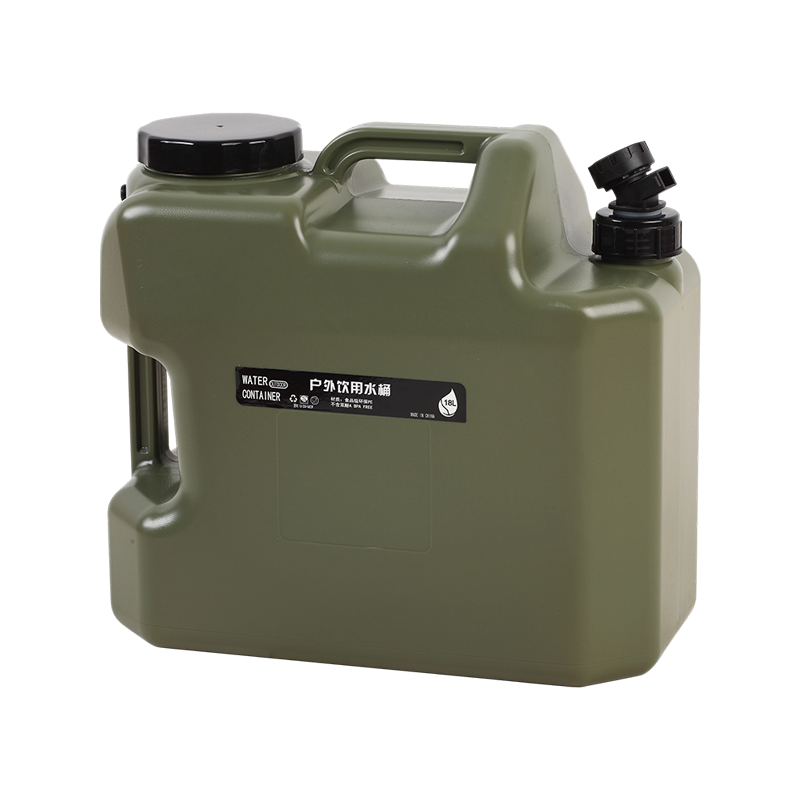
- 20 Product: 10L Plastic Portable Outdoor Water Carrier For Camping
Reliable access to clean water is one of the most important requirements for camping, hiking, biking, paddling, road trips, and overlanding. A practical water container must do more than simply hold liquid. It should be safe for drinking water, easy to transport, resistant to everyday outdoor use, simple to operate, and convenient to store when it is not full. The 10L Plastic Portable Outdoor Water Carrier is designed to meet these requirements in a compact and user-friendly format.
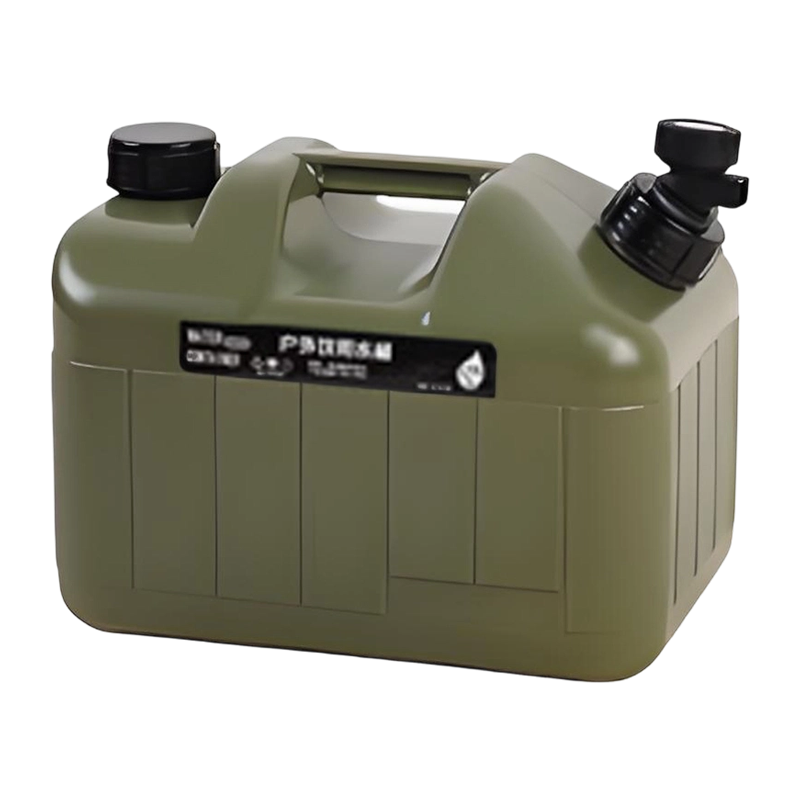
With a 10-liter capacity, food-grade PE construction, an integrated faucet, a sealing cover, and a comfortable carrying handle, this outdoor water carrier provides a dependable water-storage solution for both short trips and extended stays away from regular water sources. Its dimensions of approximately 300 × 215 × 235 mm make it practical for use in tents, campsites, vehicle trunks, cabins, boats, and outdoor kitchens.
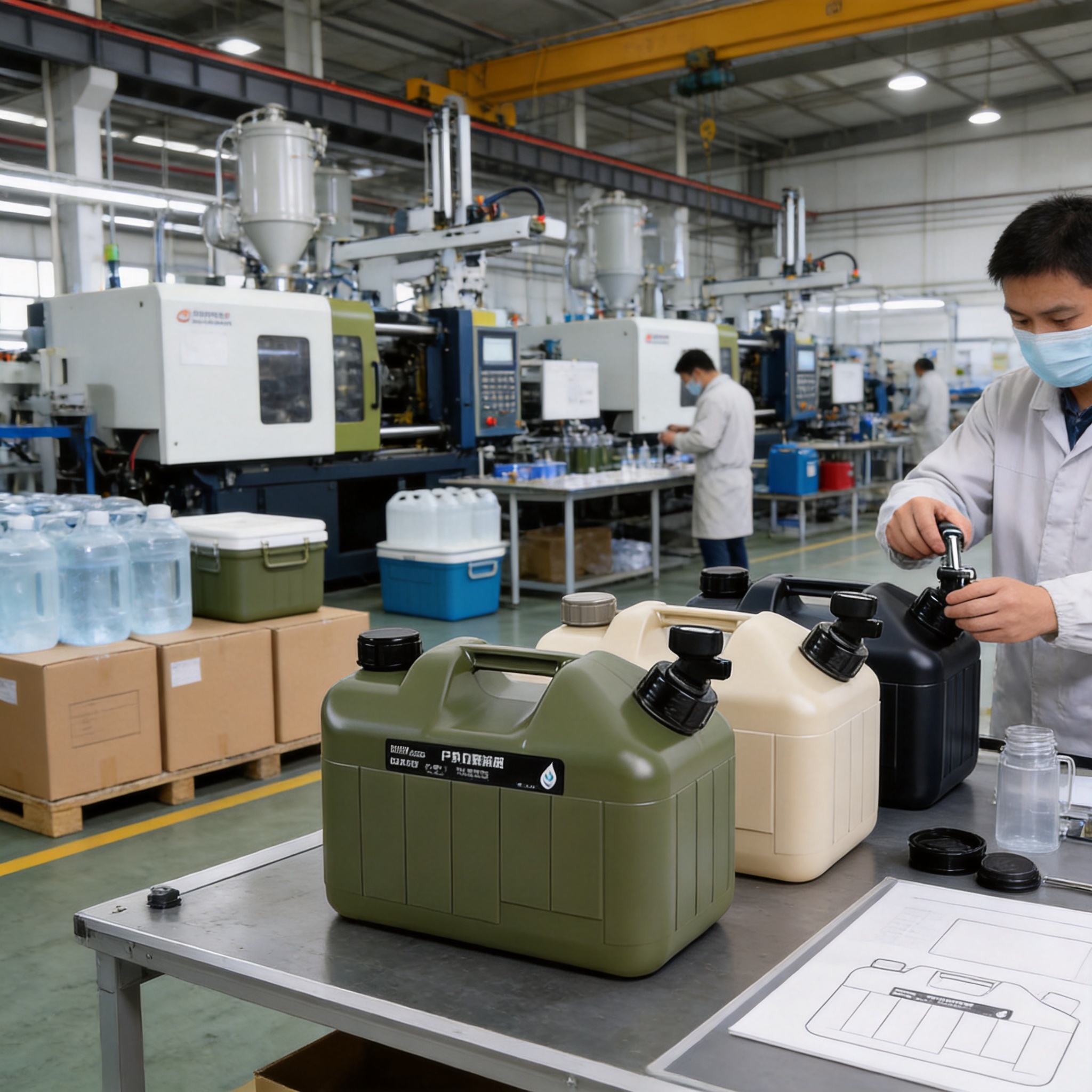
Manufactured by an experienced outdoor product producer with injection molding, blow molding, foaming, research and development, and quality-control capabilities, the carrier is suitable for individual users as well as distributors, retailers, hospitality businesses, promotional programs, and wholesale buyers. Custom color, logo, packaging, and product-development services can also support different market requirements.
Why Portable Water Storage Matters Outdoors
Outdoor travel often takes people beyond the reliable reach of household plumbing. A campsite may be located beside a lake or river but still lack a safe, convenient, or accessible drinking-water point. A hiking group may need water for drinking, cooking, cleaning utensils, and basic personal hygiene. A family traveling by vehicle may want to carry reserve water without using several small bottles. In each situation, a dedicated water carrier can make daily activities easier and more organized.
Carrying water in individual disposable bottles can create unnecessary waste and may not provide enough volume for a group. Small bottles also occupy more space because they leave gaps between containers. A single 10-liter carrier offers a more efficient way to organize water in a vehicle or campsite. Its rectangular form can be positioned on a flat surface, while the handle makes it easier to move from a storage area to a table or outdoor cooking station.
Water availability is especially important during overnight camping. Water may be needed for drinking during the night, brushing teeth, washing hands, preparing food, making hot drinks, or cleaning small items. When water is stored in a container with a built-in faucet, users do not need to lift and pour the entire vessel each time they need a small amount. This reduces effort and can help prevent accidental spills around tents, sleeping areas, and cooking equipment.
A portable carrier also provides flexibility for locations where no tap is available. It can be filled before departure, transported to a remote site, and used gradually throughout the trip. This gives travelers more freedom to choose campsites based on scenery, privacy, or access to trails rather than relying only on locations with permanent water infrastructure.
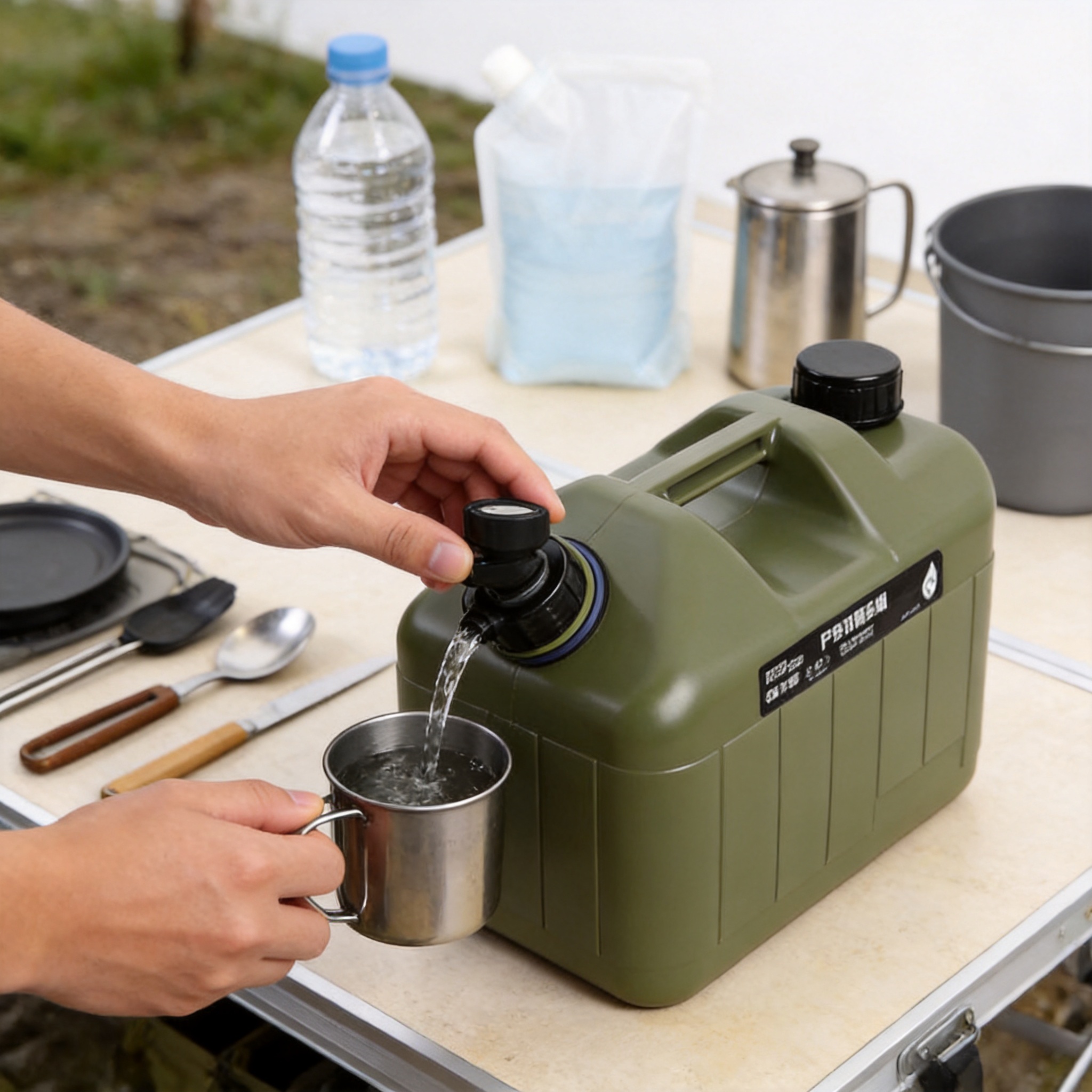
10L Plastic Portable Outdoor Water Carrier For Camping
Product Overview
The 10L Plastic Portable Outdoor Water Carrier is intended for the storage and controlled dispensing of water during outdoor activities. It combines a useful capacity with a compact footprint, making it suitable for personal use, family camping, group travel, and commercial outdoor applications.
| Product Feature | Specification or Benefit |
|---|---|
| Capacity | 10 liters |
| Material | Food-grade PE |
| Approximate dimensions | 300 × 215 × 235 mm |
| Approximate weight | 500 g |
| Dispensing method | Integrated faucet |
| Closure | Cover with sealing ring |
| Portability | Built-in carrying handle |
| Typical applications | Camping, hiking, biking, paddling, overlanding, travel, outdoor cooking, and basic washing |
| Customization options | Color, logo, packaging, and OEM or ODM development |
The combination of capacity, weight, and dimensions is one of the product’s main advantages. A 10-liter container provides meaningful water reserves without becoming excessively difficult to carry when full. Since water itself weighs approximately one kilogram per liter, a full container weighs considerably more than the empty unit. The integrated handle is therefore important because it supports controlled lifting and relocation.
The carrier is designed for practical daily use rather than occasional emergency storage alone. Its faucet supports measured dispensing, while the cover and sealing ring help reduce leakage during storage and transport. The food-grade PE material is intended for water-contact applications, and the molded body offers a durable alternative to thin disposable containers or soft bags that may be more vulnerable to puncture and deformation.
Food-Grade PE Construction
Material selection has a direct effect on the safety, durability, appearance, and service life of a water container. This model uses food-grade polyethylene, commonly abbreviated as PE. Polyethylene is widely used in containers and storage products because it combines toughness, low weight, chemical resistance, and suitability for many water-contact applications when the correct grade is selected.
For outdoor users, a rigid or semi-rigid PE container can provide several practical benefits. It is less likely to collapse during handling than a soft water bag, and it can maintain a stable shape when placed on a table or vehicle floor. The material is also suitable for molding into integrated features such as handles, shoulders, corners, openings, and mounting areas for dispensing components.
The food-grade specification is particularly relevant for users who plan to store drinking water or water used in cooking. While any stored water should be handled responsibly, clean water should be placed in a clean container, and the container should be maintained according to appropriate sanitation practices. The use of food-grade material provides a suitable foundation for these applications.
Polyethylene also performs well in common outdoor conditions. It can tolerate routine handling, movement in a vehicle, and ordinary contact with camping equipment. Compared with some fragile alternatives, a molded PE body is better suited to the knocks and pressure that can occur during packing and unpacking. Its low weight helps reduce the burden of transporting an empty container or carrying it to a filling point.
The material should not be interpreted as a substitute for proper storage procedures. Users should avoid storing unsuitable chemicals, fuel, or other substances in a water carrier. The container should be cleaned regularly, dried when appropriate, and protected from prolonged exposure to extreme heat or conditions outside its intended use. These practices help preserve water quality and extend the useful life of the product.
Convenient 10-Liter Capacity
Capacity determines how useful a water container will be in real outdoor situations. A container that is too small requires frequent refilling, while an oversized container may be difficult to lift, transport, or position. Ten liters offers a practical middle ground for many camping and travel scenarios.
For an individual traveler, 10 liters can provide a reserve for drinking and simple hygiene during a day or overnight stay, depending on weather, activity level, and personal consumption. For two or more people, it can serve as a supplementary supply alongside other containers. It may also be dedicated to washing, food preparation, or emergency backup while separate bottles are used for direct drinking.
The capacity is also suitable for vehicle-based travel. A camper van, recreational vehicle, pickup truck, or passenger car can accommodate the carrier without requiring a large dedicated water tank. It can be placed in a trunk, storage compartment, cargo area, or camping box, provided that it is secured against movement during transportation.
Ten liters is large enough to reduce dependence on multiple small containers but compact enough to remain manageable. This balance can be valuable for retailers because it gives the product broad appeal. It can be marketed to family campers, outdoor enthusiasts, emergency-preparedness customers, event organizers, and consumers seeking a reusable alternative to single-use water packaging.
Capacity can also support organized campsite routines. Users may fill the carrier at a clean water source, place it on a stable surface, and use the faucet for controlled access throughout the day. The carrier can become a central water point for a small outdoor kitchen, reducing repeated trips to a tap or water station.
Integrated Faucet for Controlled Dispensing
One of the most useful features of this water carrier is the integrated faucet. Traditional jerry cans and large bottles often require the user to tilt the whole container in order to pour water. That method can be inconvenient when the vessel is full, and it may cause splashing or excessive water flow. A faucet provides a more controlled alternative.
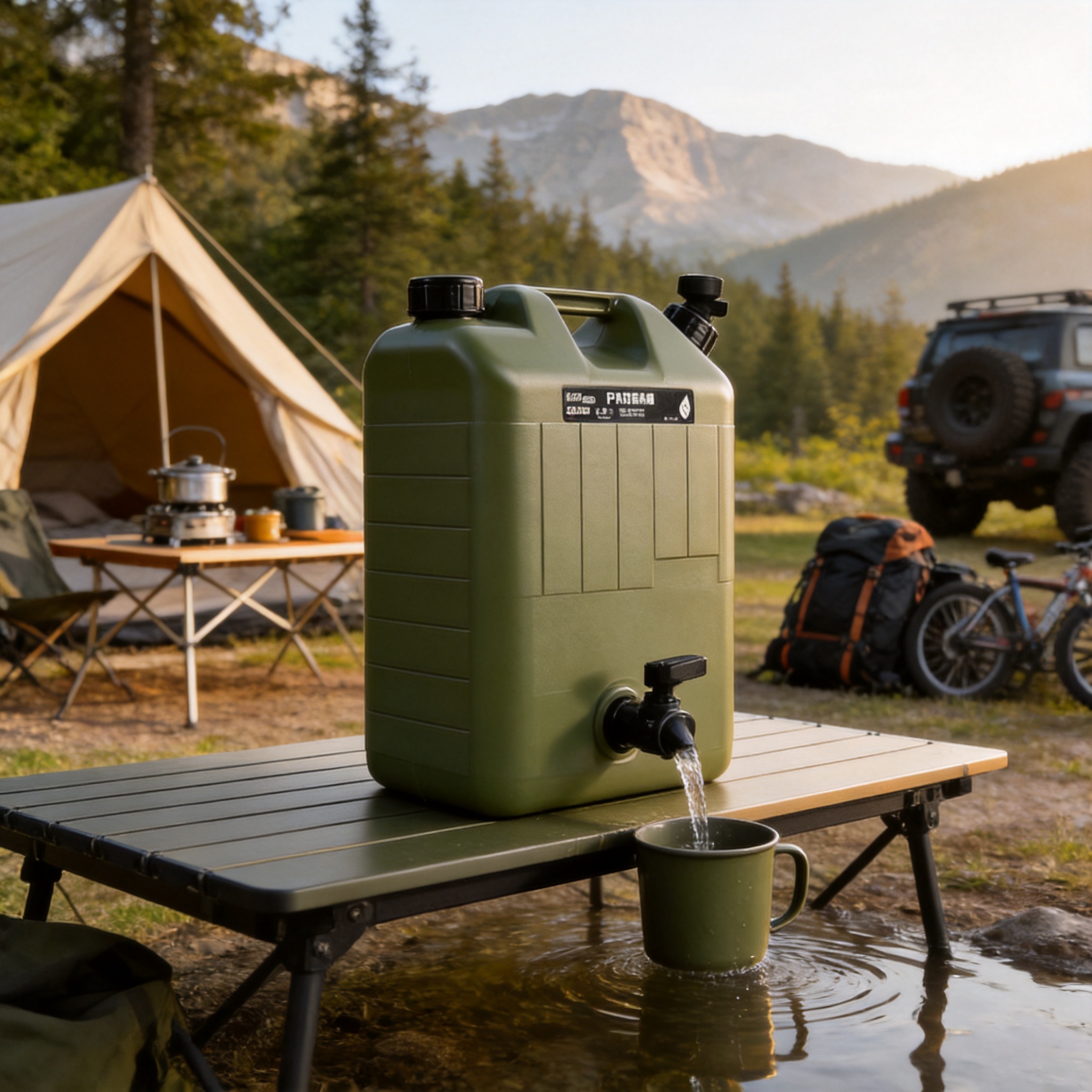
With the carrier placed on a stable table, platform, or raised surface, users can open the faucet and dispense water into a cup, cooking pot, wash basin, or bottle. This reduces the need to lift the full container repeatedly. It can also make the water supply more accessible to children or users who may find a full 10-liter carrier difficult to handle.
Controlled dispensing helps reduce waste. A user can release only the amount needed for brushing teeth, washing hands, rinsing utensils, or preparing a drink. This is especially useful when water supplies are limited and the next refill point is far away. The faucet can also support a cleaner campsite by reducing spills around food-preparation areas.
The faucet makes the carrier suitable for more than drinking-water storage. It can provide water for simple washing up, rinsing equipment, cleaning food, or preparing coffee and tea. At night, a camper can keep the container near the entrance of a tent or in an outdoor kitchen area and access water without searching for a bottle or carrying a heavy vessel.
Like any dispensing component, the faucet should be kept clean and protected from impact. Users should check that it is properly fitted before filling the carrier and should close it after use. For long-distance transport, the carrier should be positioned upright and secured to reduce pressure on the faucet assembly.
Sealing Cover and Leak-Reduction Design
A water carrier must remain closed during transport and storage. The cover on this model includes a sealing ring designed to help prevent water leakage. A secure cover is important because even a small leak can wet clothing, sleeping bags, electronic equipment, food packaging, or vehicle interiors.
The sealing ring helps create a closer fit between the cover and the container opening. This contributes to safer movement when the carrier is carried over short distances or transported in a vehicle. It also helps protect the stored water from external dust and debris when the cover is properly closed.
Leak reduction depends on correct assembly and handling. The sealing ring should be seated correctly, the cover should be tightened or closed according to the product design, and the container should not be overfilled. Before a trip, users can perform a simple inspection by filling the carrier with a small amount of water, closing it, and checking the cover and faucet area for leakage.
The cover also supports more hygienic storage. When an opening is covered, the water is less exposed to airborne particles, insects, and campsite dust. This is useful in dry environments, crowded campgrounds, beaches, and locations where wind may carry sand or dirt.
Although the cover provides useful protection, stored water should still be used within a reasonable period and refreshed regularly. The container should be emptied and cleaned after use, especially when it has held water for an extended period or has been used in warm conditions.
Portable Handle and Outdoor Ergonomics
The handle is a simple feature, but it has a major effect on usability. A full 10-liter carrier can be heavy because of the water inside it. A molded carrying handle gives the user a designated gripping point and helps distribute lifting force more safely than holding the body, cover, or faucet.
The handle supports several common activities. It can be used to move the carrier from a vehicle to a campsite, carry it from a filling station, reposition it beside an outdoor table, or transport it to a washing area. It also allows users to carry the product when wearing gloves or handling other equipment.
Good ergonomics are especially important during group camping. A water container may be moved several times each day as the campsite changes. The handle makes these movements more predictable and helps reduce the chance of dropping the container. A stable grip can also make it easier to maintain an upright position and protect the faucet from contact with the ground.
The handle is integrated into the molded design, which can provide a more unified appearance than a separately attached strap. Molded features also reduce the need for additional hardware. This can simplify product assembly and support consistent production across large quantities.
Users should still lift the container with care and should avoid carrying it by the faucet, cover, or any component not intended for lifting. When the carrier is full, two-person handling may be appropriate for some users or circumstances.
Applications Across Outdoor Activities
Camping
Camping is the primary application for this water carrier. It can be filled before departure and used at the campsite for drinking, cooking, handwashing, rinsing utensils, and preparing hot beverages. The faucet is particularly useful when the carrier is placed on a camp table or a stable raised platform.
For tent camping, the product can be positioned near the cooking area or entrance, provided it is protected from direct contamination and cannot be knocked over. For family camping, it can serve as a shared water point that reduces the need for every person to handle separate bottles.
Hiking and Trekking Support
Although a full 10-liter carrier may be too heavy for a long-distance backpacking route, it can be useful at a trailhead, base camp, picnic location, or vehicle-supported hiking site. Hikers can leave it at a central point and return to it during breaks. It can also support group outings where equipment is transported by vehicle to a fixed campsite.
The empty weight of approximately 500 grams makes the container relatively easy to transport before filling. Users can decide whether to fill it completely or carry a smaller quantity depending on the trip. This flexibility is helpful when water demand, distance, and available transport vary from one outing to another.
Biking and Paddling Trips
For cycling tours, the carrier can be used as a reserve water source at a base location, rest point, or support vehicle. It may be especially useful for groups that need more water than standard bicycle bottles can provide. During paddling trips, it can be stored in a suitable dry or protected compartment, provided the dimensions and load capacity of the craft are appropriate.
Because outdoor travel involves movement and vibration, the carrier should be secured during transport. The sealing cover and compact shape can support organized storage, but users should always prevent the container from sliding, tipping, or making contact with sharp equipment.
Overlanding and Road Travel
Overlanding often involves remote routes, irregular access to services, and extended periods between resupply points. A 10-liter water carrier can provide reserve water for drinking, cooking, and cleaning. It can be stored in a vehicle and deployed at camp without requiring a permanent plumbing installation.
The carrier is also useful for road-trip travelers who want a reusable water source without carrying a large tank. It can be filled at home or at a reliable water station and used progressively during travel. Its compact footprint helps make better use of limited cargo space.
Outdoor Cooking and Beverage Preparation
Water is needed for more than hydration. Campers use it to boil pasta, prepare soup, brew coffee, make tea, wash produce, rinse utensils, and clean cooking equipment. A carrier with a faucet can become a convenient part of the outdoor kitchen, allowing users to control water flow while keeping both hands available for preparing food.
When water is used for cooking or direct consumption, users should fill the carrier with clean water and keep the opening, cover, and faucet sanitary. The container should be cleaned between trips and should not be used for incompatible substances.
Emergency and Backup Storage
A reusable water container can also serve as a backup supply during power interruptions, severe weather, temporary service disruptions, or evacuation preparation. Its 10-liter capacity is manageable for household storage and can be rotated as part of a broader water-management plan.
Emergency use requires careful attention to cleaning, filling, labeling, rotation, and storage conditions. The carrier should be stored away from chemicals and extreme heat, and water should be replaced according to an appropriate household plan.
Advantages Compared with Common Alternatives
Consumers can choose from disposable bottles, flexible water bags, metal jugs, large rigid tanks, and ordinary plastic buckets. Each option has advantages, but the 10L Plastic Portable Outdoor Water Carrier offers a practical combination of features for everyday outdoor use.
Compared with Disposable Bottles
Disposable bottles may be convenient for short trips, but they require many individual units to provide a similar volume. This increases packaging waste and can make storage less efficient. A reusable 10-liter carrier consolidates water into one organized container and supports controlled dispensing through its faucet.
A single carrier can also simplify campsite management. Instead of collecting and disposing of numerous empty bottles, users can refill and reuse the container. This may be attractive to environmentally conscious consumers and outdoor retailers promoting reusable equipment.
Compared with Flexible Water Bags
Flexible bags are lightweight and can fold when empty, but they may be less stable when placed on a table and may require careful handling to avoid punctures. A molded PE carrier maintains its shape and can be positioned as a stable water source. The integrated faucet also provides a dedicated dispensing method rather than requiring a separate nozzle or manual pouring.
Compared with Metal Containers
Metal water containers can be strong, but they may be heavier and can become uncomfortable to handle when full. They may also transmit temperature more quickly and may dent if dropped. A food-grade PE carrier offers a lightweight alternative with a molded handle and a design intended for practical portability.
Compared with Large Water Tanks
Large tanks are appropriate for permanent installations or high-volume commercial use, but they can be difficult to move and may require dedicated mounting systems. The 10-liter format is more adaptable. It can be carried by one person in many situations, placed in different locations, and used without modifying a vehicle or campsite.
Compared with Ordinary Buckets
A bucket may hold water, but it generally lacks a secure cover, integrated faucet, and dedicated drinking-water design. The water carrier provides better control over dispensing and can reduce exposure to dust and accidental contamination when closed properly.
| Alternative | Common Limitation | Water Carrier Advantage |
|---|---|---|
| Disposable bottles | More packaging and inefficient volume storage | Reusable 10-liter capacity and centralized storage |
| Flexible water bags | May be unstable or vulnerable to puncture | Shaped PE body and integrated handle |
| Metal jugs | Often heavier and more rigid to transport | Lightweight molded construction |
| Large tanks | Difficult to relocate and install | Portable format for flexible use |
| Ordinary buckets | Limited closure and dispensing control | Sealing cover and faucet |
Manufacturing Capability and Production Strength
Product performance begins with design, but consistent manufacturing is essential for delivering reliable quality at scale. The manufacturer behind this outdoor water carrier operates an independent factory of approximately 12,000 square meters and employs more than 100 people. The company integrates product development, production, and sales, allowing customer requirements to be communicated across multiple stages of the supply process.
The factory includes automatic injection molding machines, blow molding machines, and foaming equipment. These capabilities are valuable for an outdoor-product manufacturer because different product structures require different molding technologies. Injection molding can support precise components, accessories, closures, and detailed molded parts. Blow molding is commonly suited to hollow plastic bodies such as containers and jugs. Foaming equipment supports the production of insulated products, including cooler boxes and related outdoor cooling products.
Access to several production processes can improve manufacturing flexibility. It allows the company to develop a broader range of outdoor products while selecting an appropriate process for each component. For buyers, this can simplify sourcing because related products may be developed and produced through one experienced supply partner rather than multiple disconnected factories.
Automatic equipment can also support production consistency. Controlled molding parameters help maintain repeatable dimensions, wall formation, component fit, and appearance. Consistency is important for the water carrier because the cover, sealing ring, faucet, and body must work together effectively. Reliable production controls can help reduce variation between batches.
Manufacturing strength is not limited to machinery. A capable production organization also requires trained operators, process supervision, raw-material management, inspection procedures, assembly controls, packaging systems, and shipment coordination. The company’s quality-management approach and product-development resources support the goal of delivering stable products for domestic and international customers.
Research and Development Support
Outdoor consumers expect products to be functional, attractive, durable, and easy to use. Meeting these expectations requires continuous product development rather than simply repeating an existing design. The manufacturer maintains a creative research and development team focused on creating and improving outdoor cooling and water-storage products.
Research and development can involve many stages. Product teams may study customer feedback, review competing formats, evaluate dimensions, improve handle comfort, refine closure systems, adjust faucet placement, and develop packaging suitable for transportation. They may also work with customers who have specific requirements for color, branding, capacity, or application.
For a water carrier, design refinement can focus on the balance between capacity and portability. A larger body may provide more water but become difficult to lift. A narrower body may be easier to carry but less stable. The selected dimensions represent a practical approach to space efficiency, usability, and transport.
R&D also supports customization. A distributor may need a specific color for a retail collection, while a corporate customer may require a logo and customized packaging. An importer may want to adapt the product for a regional market or create a coordinated set with cooler boxes, ice buckets, or cooler jugs. Product-development experience helps turn these requirements into manufacturable solutions.
OEM and ODM Customization
Wholesale customers often require more than a standard product. They may need private labeling, coordinated colors, packaging changes, special dimensions, or a product based on an existing drawing or sample. The manufacturer provides OEM and ODM services to support these needs.
OEM customization may include the customer’s logo, brand colors, labels, printed packaging, instruction materials, and carton design. These options help distributors create a consistent product line and improve recognition at retail or online sales channels.
ODM cooperation can involve product development from an early concept. Customers may provide a drawing, sample, functional requirement, or market brief. The manufacturing team can then review the concept, assess production feasibility, recommend material or structural adjustments, and prepare a design suitable for molding and assembly.
Customization can also cover product color. Different markets may favor neutral outdoor colors, bright family-oriented colors, professional commercial colors, or coordinated colors that match a retailer’s existing range. Color masterbatch selection and production planning should be managed carefully to support visual consistency between batches.
Packaging is another important area. A carrier intended for e-commerce may require protective packaging and clear product information. A retail product may need shelf-ready cartons, barcode placement, multilingual instructions, or a presentation box. Bulk commercial buyers may prefer simplified packaging to reduce material and handling costs. A flexible manufacturer can help align packaging with the sales channel.
Quality and Production Control
Quality control should begin with incoming materials and continue through molding, assembly, inspection, packaging, and shipment. For a water carrier, relevant checkpoints may include material identification, body dimensions, visual appearance, cover fit, sealing-ring placement, faucet installation, leakage testing, handle integrity, and packaging condition.
Dimensional consistency is important because the carrier must fit expected storage spaces and its components must align correctly. Visual inspections can identify surface defects, incomplete molding, discoloration, sharp edges, or other issues that may affect customer satisfaction. Functional checks can confirm that the faucet opens and closes properly and that the cover forms an appropriate seal.
Leak testing is especially valuable. A carrier may look acceptable while still having a poorly seated seal or an incorrectly installed faucet. A controlled inspection process can identify such problems before products are packed and shipped. This helps protect the buyer’s reputation and reduces returns caused by preventable defects.
Packaging inspections are also relevant because products may experience vibration, stacking pressure, and handling during transportation. Proper internal protection and carton strength help ensure that the carrier arrives in good condition. Wholesale customers benefit when product presentation is maintained from factory to warehouse and then to the final sales channel.
A rigorous quality system should be supported by documentation, traceability, process discipline, and communication between production and customer-service teams. These practices are particularly important for international orders, where the distance between factory and buyer makes rapid physical inspection more difficult.
Efficient Use and Care Instructions
Before first use, the carrier should be rinsed and cleaned according to the supplier’s recommendations. The cover, sealing ring, faucet, and interior should be checked for cleanliness and correct assembly. The product should be filled only with suitable water or other liquids approved for the specific design.
When filling the carrier, users should leave sufficient space for the cover and avoid overfilling. The cover should be fitted correctly, and the faucet should be closed before the container is moved. A short leak check is recommended before placing the carrier inside a vehicle or near fabric equipment.
The carrier should be placed on a stable, level surface during use. If the faucet is positioned too close to the edge of a table, water may flow onto the ground or equipment. A raised platform can improve dispensing convenience, but it should be strong enough to support the full weight of the container.
After use, the carrier should be emptied and rinsed. For more thorough cleaning, users should follow suitable food-contact cleaning practices and ensure that no detergent residue remains. The interior should be allowed to dry when practical. The faucet and sealing ring should receive particular attention because water and residue can remain in small areas.
The container should be stored away from sharp objects, extreme heat, and incompatible chemicals. It should not be used to transport fuel, solvents, pesticides, or other substances unless the product has been specifically designed and approved for those materials. Once a container has been used for a non-water substance, it should not be returned to drinking-water use.
Commercial and Wholesale Opportunities
The product’s broad application range makes it suitable for several sales channels. Outdoor retailers can position it as a camping essential, while travel stores can offer it as a reusable water-storage accessory. Vehicle-accessory distributors may include it in overlanding, road-trip, or emergency-preparedness collections.
Hospitality businesses, event organizers, campsites, and recreational facilities may also find value in a portable water carrier. It can support temporary outdoor stations, cleaning points, refreshment areas, or field operations. Construction, agricultural, and service teams may use similar products for approved non-industrial water applications, subject to their own safety and handling requirements.
For wholesalers, the 10-liter capacity provides a clear and easy-to-understand product proposition. The key selling points include food-grade PE, portability, a faucet, a sealing cover, a carrying handle, and suitability for a wide range of outdoor activities. These features can be communicated effectively through packaging, catalogs, online listings, and retail displays.
OEM and ODM services further increase the product’s commercial potential. A distributor can build a private-label range around the carrier and add related products such as cooler boxes, insulated cooler jugs, ice buckets, and outdoor containers. A coordinated product family can help retailers create stronger category presentation and encourage multiple-item purchases.
Bulk customers should discuss order quantity, color, logo method, packaging requirements, sample approval, lead time, inspection standards, and shipping arrangements with the supplier. Clear communication at the beginning of a project helps ensure that the final product meets both technical expectations and market needs.
How the Product Supports a Broader Outdoor Product Range
A water carrier naturally complements products designed for cooling, food storage, and outdoor hospitality. Cooler boxes can keep food and beverages cold, while a water carrier provides clean water for drinking and cooking. Cooler jugs can support beverage service, and ice buckets can be used for temporary chilling or event presentation.
A manufacturer that produces several related categories can help buyers source a more complete outdoor collection. Shared knowledge of plastic materials, molding, insulation, closures, handles, and packaging can support coordinated development across products. This may reduce the complexity of managing several suppliers for one seasonal collection.
The manufacturer’s range includes outdoor cooling and water-storage products, supported by injection molding, blow molding, and foaming equipment. This combination provides a useful foundation for customers seeking outdoor products with different structures and performance requirements.
For retailers, a complete category can be more valuable than a single item. Customers who purchase a cooler box may also need a water carrier. Travelers buying an outdoor water container may be interested in an insulated jug or ice bucket. A coordinated selection can support cross-selling and improve the overall shopping experience.
Frequently Asked Questions
What is the capacity of the outdoor water carrier?
The carrier has a capacity of 10 liters. This size is suitable for drinking-water storage, cooking, basic washing, and backup water during camping, hiking support, biking trips, paddling activities, overlanding, and road travel.
What material is used to make the product?
The body is made from food-grade PE, or polyethylene. This material is lightweight, durable, moldable, and suitable for many water-storage applications when used and maintained correctly.
Does the carrier include a faucet?
Yes. The product includes an integrated faucet for controlled dispensing. Users can release water into cups, bottles, cooking pots, wash basins, and other suitable containers without lifting the entire carrier.
Does the cover help prevent leakage?
The cover includes a sealing ring designed to help prevent water leakage when properly fitted. The carrier should be closed correctly, kept upright during transport, and checked before use in a vehicle or around sensitive equipment.
How much does the empty carrier weigh?
The approximate empty weight is 500 grams. The total weight increases substantially when filled because water is heavy, so users should lift and move a full container carefully.
What are the approximate dimensions?
The listed dimensions are approximately 300 × 215 × 235 millimeters. Buyers should confirm final production dimensions and packaging measurements with the supplier for specific orders.
Is the product suitable for drinking water?
The food-grade PE construction is intended to support water-contact applications, including drinking-water storage. Users should fill it with clean water, maintain proper hygiene, clean it regularly, and follow all applicable local handling practices.
Can the carrier be used for chemicals or fuel?
It should not be used for fuel, solvents, pesticides, or other chemicals unless the specific product has been expressly designed and approved for that substance. A water carrier should be reserved for suitable water or approved liquid applications.
Is the product suitable for long-distance hiking?
A full 10-liter container can be heavy for backpacking. It may be more suitable for vehicle-supported hiking, base camps, trailheads, picnic locations, or group outings where the carrier does not need to be carried over a long distance.
Can the product be customized?
OEM and ODM services are available. Potential options include product color, customer logo, packaging, development from drawings or samples, and other project-specific requirements subject to technical review and order conditions.
What manufacturing equipment supports production?
The factory operates automatic injection molding machines, blow molding machines, and foaming equipment. These technologies support the production of water containers, cooler boxes, cooler jugs, ice buckets, and other outdoor products.
What should buyers confirm before placing a wholesale order?
Buyers should confirm capacity, dimensions, material, colors, logo requirements, packaging, sample approval, order quantity, inspection standards, delivery schedule, shipping terms, and any market-specific compliance requirements.
Conclusion
The 10L Plastic Portable Outdoor Water Carrier provides a balanced solution for people who need dependable water storage away from permanent water supplies. Its 10-liter capacity is large enough for meaningful outdoor use while remaining more manageable than oversized tanks. Food-grade PE construction supports water-contact applications, while the integrated faucet makes dispensing easier and helps reduce unnecessary lifting and spills.
The sealing cover and ring help protect the stored water and reduce leakage during transport, and the carrying handle improves portability. Together, these features give the product advantages over disposable bottles, ordinary buckets, soft water bags, and larger fixed tanks. Its applications include camping, vehicle travel, overlanding, outdoor cooking, hiking support, paddling trips, emergency preparation, and commercial outdoor activities.
For wholesale and private-label buyers, the product is supported by an experienced manufacturing organization with a 12,000-square-meter factory, more than 100 employees, automatic molding equipment, foaming capabilities, research and development resources, and quality-management processes. OEM and ODM services allow customers to develop color, logo, packaging, and product solutions suited to specific markets.
By combining practical design with established manufacturing capabilities, this water carrier can serve as both a dependable outdoor essential and a strong addition to a broader product range that includes cooler boxes, cooler jugs, ice buckets, and other water-storage products.
References
1. Product specification information for the 10L Plastic Portable Outdoor Water Carrier, including capacity, material, dimensions, weight, faucet, sealing cover, and carrying handle.
2. Manufacturer-provided information concerning outdoor water containers, cooler boxes, cooler jugs, ice buckets, OEM services, ODM services, and product-development capabilities.
3. General food-contact plastic handling principles for reusable water-storage containers.
4. General outdoor equipment practices for water storage, transport, cleaning, and campsite hygiene.
5. General manufacturing references concerning injection molding, blow molding, foaming processes, molded polyethylene products, and quality-control procedures.
Product: 10L Plastic Portable Outdoor Water Carrier For Camping

Product Recommendation
link
Office
- TEL: +86-574-63787606
- Phone: +86-13777994798
- E-mail: sales@nbjunlong.com
- WhatsApp: 13777967488
- Address: No. 1, Lane 3, Development Road, Longtouchang, Longshan Town, Cixi City, Zhejiang Province, China
Get In Touch
Copyright © Ningbo Junlong Outdoor Products Co., Ltd. All Rights Reserved.
China Plastic Insulated Cooler Box Manufacturer Custom Cooler Box Supplier
